Picking Solar Controller (Quick Q)
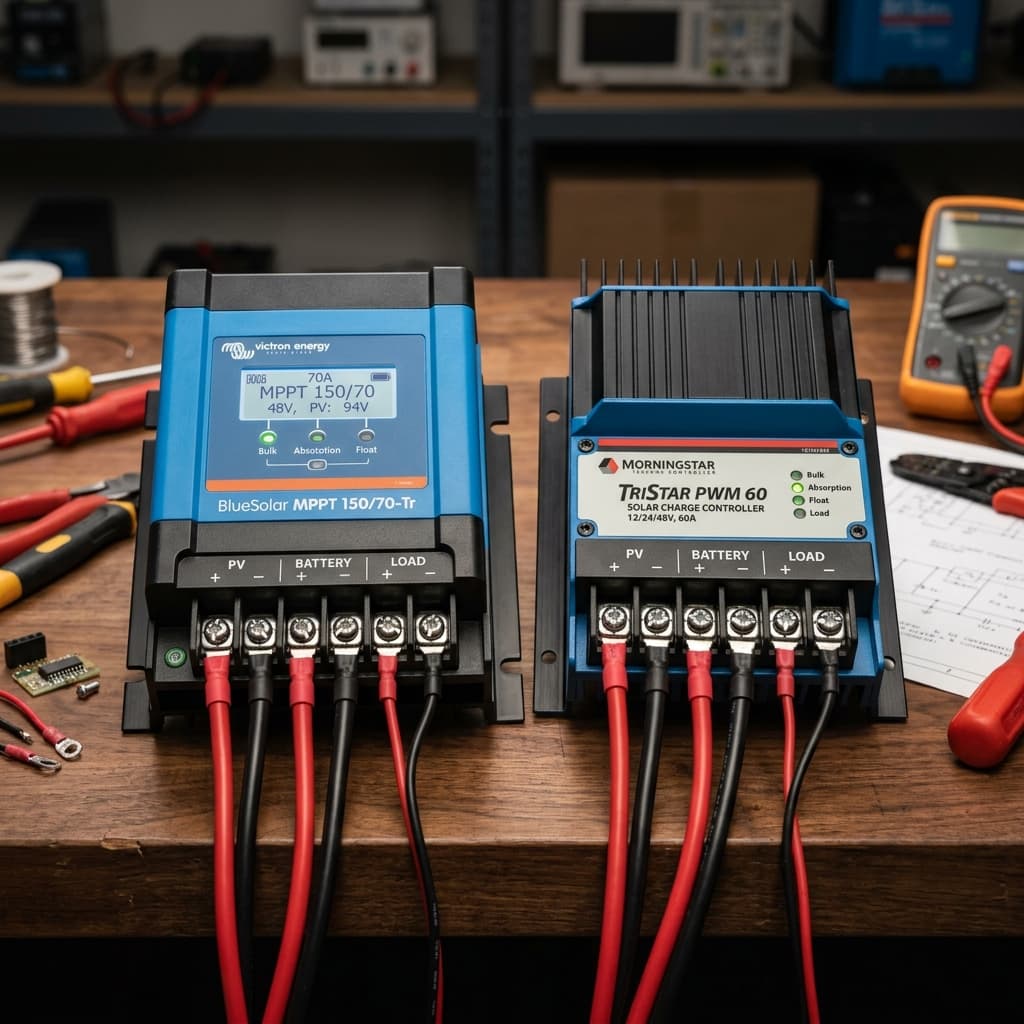
In the evolving landscape of off-grid solar for nomadic living, selecting and installing the correct charge controller is a critical technical decision that directly impacts system efficiency, battery health, and overall energy independence. This elite guide synthesizes professional electrical principles with 2026-forward perspectives, delivering a definitive step-by-step framework for designing and installing a robust, future-ready solar power system in your RV, motorhome, or camper van.
The 2026 Off-Grid Solar Imperative: Beyond Basic Power
The paradigm of recreational vehicle and van life electrical systems has shifted irrevocably. No longer an auxiliary amenity, a robust solar installation is now the primary power plant for lighting, refrigeration, computing, and climate control. As we approach 2026, industry standards are being redefined by higher voltage battery banks (24V/48V), the integration of Lithium Iron Phosphate (LiFePO4) chemistry as a baseline, and the nascent adoption of next-generation components like Gallium Nitride (GaN) inverters and Sodium-Ion storage buffers. This guide is engineered for the installer who demands not just functionality, but system elegance, fault tolerance, and forward compatibility.
The foundational question—often simplified in forums like Reddit's "Picking Solar Controller (Quick Q)"—reveals a deeper technical cascade. The choice between PWM (Pulse Width Modulation) and MPPT (Maximum Power Point Tracking) controllers dictates every subsequent component specification and wiring decision. This article will deconstruct that choice with empirical data, then guide you through a professional-grade installation process, incorporating essential wiring schematics, a comprehensive tool and materials list, and non-negotiable safety protocols for working with high-current DC systems.
Chapter 1: Solar Charge Controller Deep Dive – The System's Brain
A charge controller's primary function is to regulate voltage and current from solar panels to the battery bank, preventing overcharge and deep discharge. The 2026 landscape, however, demands controllers with advanced telemetry, programmable load outputs, and compatibility with Lithium battery communication protocols (e.g., CANbus, RS485).
PWM vs. MPPT: A Quantitative Analysis
The classic debate distilled. PWM controllers are essentially switches connecting the panel directly to the battery, clipping the panel voltage to the battery voltage. MPPT controllers are DC-DC converters that dynamically find the panel's maximum power point (Vmp) and down-convert the voltage while increasing current, harvesting up to 30% more energy, especially in suboptimal conditions.
PWM Controller Analysis
Advantages
- Lower unit cost and simpler circuitry.
- High reliability with fewer points of failure.
- Adequate for small systems (<200W) with matched panel/battery voltages.
- Minimal self-consumption (parasitic drain).
Disadvantages
- Inefficient with panel Vmp significantly higher than battery voltage.
- Wasted potential energy, especially in cold, bright conditions.
- Limited scalability and poor compatibility with future high-voltage panels.
- Typically lacks advanced battery programming for modern chemistries.
MPPT Controller Analysis
Advantages
- Superior energy harvest, particularly in low-light or cold environments.
- Enables use of higher voltage panel strings, reducing wire gauge and cost.
- Essential for large systems and 24V/48V battery banks.
- Advanced features: data logging, programmable stages, load control.
Disadvantages
- Higher initial cost and greater circuit complexity.
- Marginally higher self-consumption (negligible in quality units).
- Requires careful sizing to avoid operating outside specifications.
- Potential for electromagnetic interference (EMI) if poorly designed.
Controller Sizing Table (2026 Reference)
Critical parameters for selection based on a nominal 12V LiFePO4 system. For 24V systems, double the panel power for the same current.
| Total Solar Array (W) | Recommended Controller Type | Max Input Voltage (VOC) | Min Controller Current Rating (A) | Next-Gen Consideration |
|---|---|---|---|---|
| 100 - 300 | PWM or Entry MPPT | 50V | 25A | Compatible with Perovskite hybrid panels (higher VOC). |
| 300 - 600 | MPPT | 100V - 150V | 40A - 50A | Look for controllers with GaN-based DC-DC stages for efficiency >98%. |
| 600 - 1200+ | High-Voltage MPPT | 200V - 250V | 60A - 100A | Essential for future 48V systems and Sodium-Ion battery integration. |
Chapter 2: The Elite Installation Protocol – A Step-by-Step Guide
This procedure assumes a medium-scale system: 600W of solar, a 30A MPPT charge controller, a 300Ah 12V LiFePO4 battery bank, and a 2000W pure sine wave inverter. Always consult local electrical codes and manufacturer datasheets.
Phase 1: Pre-Installation Planning & Tooling
Comprehensive Tool & Material List
| Category | Item | Specification / Purpose |
|---|---|---|
| Safety & Measurement | Digital Multimeter (DMM) | True-RMS capable, CAT III 600V minimum. For voltage, continuity, and current (with clamp). |
| Insulated Hand Tools | VDE-certified screwdrivers, wrenches, and cable cutters. | |
| Personal Protective Equipment (PPE) | Safety glasses, insulated gloves (Class 0, 1000V), fire extinguisher (Class C). | |
| DC Power Analyzer/Shunt | For monitoring current flow and state of charge (e.g., 500A/50mV shunt). | |
| Wiring & Connections | Tinned Copper Cable | AWG 4/0 for battery links, AWG 8 for solar runs, AWG 2 for inverter. Marine-grade (BC5W2). |
| High-Quality Lugs & Terminals | Copper, heat-shrink insulated, crimped with hydraulic tool. | |
| Fuses & Breakers | ANL or MRBF fuses (sized at 1.25x max current), DC-rated breakers for isolation. | |
| Mounting & Fabrication | Panel Mounting Brackets, Cable Conduit | Aluminium, corrosion-resistant. UV-stable conduit for roof runs. |
Phase 2: Wiring Diagrams & Circuit Design
A correct schematic is the blueprint for safety and performance. Below are two core diagrams for a standard installation.
Diagram 1: High-Level System Architecture
This illustrates the power flow and critical protection points. Always connect batteries first, then solar, then loads.
        [Solar Panel Array (+)]
                |
                |---PV FUSE (Isc x 1.56)---|
                |                           |
                |                      [PV ISOLATOR SWITCH]
                |                           |
        [Solar Panel Array (-)]             |
                |                           |
                |---PV FUSE-----------------|
                |                           |
                |                [MPPT CHARGE CONTROLLER]
                |                           |
        [Battery Bank (+)] <---ANL FUSE---<|>---[DC LOAD CENTER]
                |                           |
        [Battery Bank (-)]------------------|----------------[SHUNT]---[CHASSIS GROUND]
                |
                |---MEGA FUSE (Inverter Rating)---
                |
        [INVERTER/CHARGER]
                |
                |---AC OUTPUT--->[AC DISTRIBUTION PANEL]
Key Note (2026): Future systems may integrate a dedicated DC-DC converter module for GaN-based high-frequency charging from alternator or shore power, parallel to the solar controller.
Diagram 2: Detailed Controller Hookup
Specific connections for a modern MPPT controller with battery temperature sensor (BTS) and communication.
        CONTROLLER TERMINAL BLOCK:
        PV+ ---> [FUSE] ---> [SWITCH] ---> SOLAR ARRAY +
        PV- ------------------------------------------ SOLAR ARRAY -

        BAT+ ---> [CLASS T FUSE] ---> BATTERY BANK +
        BAT- ---> [SHUNT] -----------> BATTERY BANK -

        LOAD OUT ---> [DC BREAKER] ---> FUSED DC DISTRIBUTION (Lights, Fan, etc.)

        ACCESSORY PORTS:
        BTS ---> Temperature probe attached to battery terminal.
        COMM ---> RS485/CAN to Battery Management System (BMS) for LiFePO4.
Phase 3: Physical Installation & Safety Procedures
Step 1: Mounting Components & Cable Runs
Mount the charge controller and DC distribution center in a cool, dry, ventilated location, away from batteries to avoid corrosive fumes. Use conduits for all roof-to-interior cable penetrations, sealed with marine-grade sealant (e.g., Sikaflex-221). Route cables away from sharp edges and heat sources.
Step 2: Battery Connections & Fusing
Safety Tip: Always install main battery fuses last, after all connections are verified. For LiFePO4, ensure the BMS is activated and communication with the controller is established. Use torque specifications on battery terminals to prevent hot spots. Connect batteries in parallel using balanced cabling (same length from each terminal to the bus bar) to prevent imbalance.
Step 3: Solar Array to Controller
Critical: Cover panels with an opaque cloth during connection. Measure open-circuit voltage (VOC) with the DMM to ensure it is below the controller's maximum input voltage, even in cold conditions (VOC increases as temperature decreases). Connect PV wires to the controller only after the battery connection is live and the controller is powered on.
Step 4: System Commissioning & Testing
1. Verify all polarities with the DMM.
2. Program the controller for your battery chemistry (select "LiFePO4" or custom voltage setpoints: Bulk/Absorption 14.2V-14.6V, Float 13.6V).
3. Remove panel cover, check for PV input current and voltage.
4. Test each fuse and breaker for isolation functionality.
5. Load test the inverter with a known appliance, monitoring for voltage drop.
Chapter 3: The 2026+ Horizon – Next-Generation Technologies
Installing a system today requires foresight for tomorrow's breakthroughs. Here’s how emerging technologies will integrate.
Gallium Nitride (GaN) Power Electronics
GaN transistors enable switch-mode power supplies (SMPS) and DC-DC converters that are significantly smaller, cooler, and more efficient (>98%) than traditional silicon-based ones. By 2026, expect MPPT controllers and inverters using GaN to dominate the premium market, reducing heat sinks and allowing for higher power density in compact RV installations.
Installation Impact: Future-proof by allocating space for controller upgrades and ensuring your wiring can handle higher currents from more efficient conversion.
Sodium-Ion (Na-Ion) Batteries
Emerging as a potential successor to Lithium, Sodium-Ion chemistry offers lower cost, excellent thermal stability, and abundance of raw materials. While energy density is currently lower than LiFePO4, it is improving rapidly. For off-grid storage where weight is less critical than cost, Na-Ion could be a game-changer.
Installation Impact: Design your battery compartment with modularity in mind. Ensure your charge controller has user-programmable voltage setpoints to accommodate new chemistries.
Perovskite & Tandem Solar Cells
Perovskite solar cells promise dramatically higher efficiencies and lower manufacturing costs. Tandem cells (Perovskite on silicon) could push panel efficiencies beyond 30%. These panels may have different voltage-current characteristics and potentially higher degradation rates initially.
Installation Impact: Choose a charge controller with a wide input voltage range (e.g., up to 250V VOC) and robust maximum power point tracking algorithms to adapt to the unique curves of next-gen panels.
Final Synthesis: The Professional's Checklist
Mastering off-grid solar installation is a blend of precise electrical work and strategic planning. To encapsulate this guide, adhere to this final checklist before energizing your system.
- 1 Controller Sizing Validated: PV short-circuit current (Isc) x 1.25 < Controller current rating. PV open-circuit voltage (VOC at record low temp) < Controller max VOC.
- 2 Every DC Power Path Fused: Battery positive (within 7 inches), PV positive, inverter positive. Fuse rating = 1.25 x maximum continuous current.
- 3 Polarity Double-Checked: With a multimeter, before connecting any source to a load or battery.
- 4 Battery Profile Programmed: Controller set to the exact voltage parameters for your battery chemistry (Gel, AGM, LiFePO4, or custom).
- 5 Mechanical Security Verified: All cable lugs crimped and torqued, no loose strands, cables secured against vibration.
- 6 System Grounding Established: DC negative bonded to vehicle chassis at a single point, near the battery bank.
- 7 Documentation Complete: As-built wiring diagram saved, controller settings logged, and all manuals filed for future reference.
The journey from the simple question of "Picking Solar Controller (Quick Q)" to a fully realized, professional-grade power system is one of meticulous detail. By embracing the principles outlined here—from foundational electrical theory to the forward-looking integration of GaN and Sodium-Ion tech—you equip yourself not just for the needs of today, but for the electrified, autonomous nomadic lifestyle of 2026 and beyond. Your vehicle's power system is its lifeblood; install it with the precision it demands.
Technical Expansion
Deepen your expertise with our most critical recent diagnostic reports.
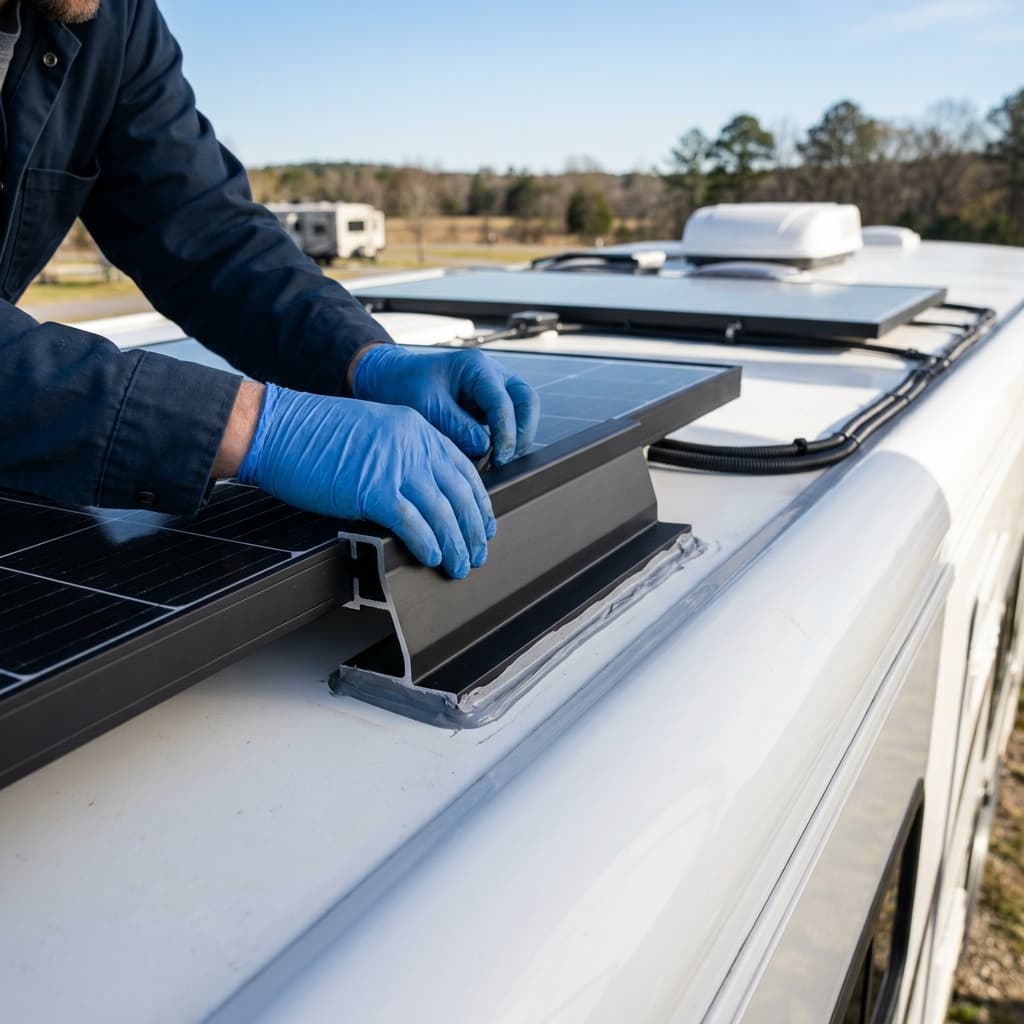
How to mount RV solar panels without drilling! - RVtravel
In the evolving landscape of off-grid RV energy systems for 2026 and beyond, this elite guide delivers a meticulous, step-by-step methodology for deploying high...

Solar panel for wifi router
In the evolving landscape of off-grid connectivity, a dedicated solar power system for your Wi-Fi router is no longer a luxury but a critical infrastructure com...

My batteries are full and I don't have anything that needs electricity
In the context of modern off-grid RV solar systems, the scenario "my batteries are full and I don't have anything that needs electricity" highlights a critical ...