
My batteries are full and I don't have anything that needs electricity
In the context of modern off-grid RV solar systems, the scenario "my batteries are full and I don't have anything that needs electricity" highlights a critical inefficiency in energy management. This elite guide provides a comprehensive, step-by-step framework for designing and installing a robust solar power system that not only meets 2026 standards but also integrates advanced strategies for utilizing excess energy, incorporating next-generation components like GaN-based inverters, Sodium-Ion batteries, and Perovskite solar cells to future-proof your nomadic lifestyle.
As we approach 2026, the landscape of solar energy for recreational vehicles (RVs), motorhomes, camper vans, and off-grid nomadic living is undergoing a transformative shift. Driven by advancements in photovoltaic efficiency, energy storage density, and smart power management, the modern installer must navigate a complex array of technologies to build systems that are not only reliable but also intelligently adaptive to fluctuating energy demands. The perennial issue of excess solar generation—where batteries reach full charge with no immediate load—is no longer a mere inconvenience but an opportunity for optimization through strategic design and cutting-edge hardware. This guide delves into the intricacies of off-grid solar installation, offering a meticulous step-by-step approach that balances foundational principles with forward-looking innovations, ensuring your system is resilient, efficient, and ready for the evolving standards of mid-decade energy independence.
The evolution from basic lead-acid setups to sophisticated lithium-based architectures, coupled with the emergence of high-frequency components like Gallium Nitride (GaN) transistors, has redefined what's possible in compact mobile environments. By 2026, we anticipate widespread adoption of Sodium-Ion batteries for their cost-effectiveness and safety, alongside Perovskite solar cells that promise unprecedented efficiency gains in flexible formats. This article contextualizes these developments within a practical installation framework, emphasizing safety, precision, and scalability. Whether you're a seasoned technician or a dedicated DIY enthusiast, the following sections will equip you with the knowledge to execute a flawless install, complete with wiring diagrams, tool lists, and proactive strategies to harness every watt of solar potential, turning the "problem" of full batteries into a testament to system prowess.
1. Understanding the Core Challenge: Excess Energy in Off-Grid RV Systems
The Reddit sentiment "my batteries are full and I don't have anything that needs electricity" encapsulates a common scenario in solar-equipped RVs: during peak sun hours, photovoltaic arrays can generate surplus power that exceeds both immediate consumption and battery storage capacity. In traditional setups, this leads to charge controllers entering float mode or, worse, energy being curtailed and wasted. For 2026 standards, this inefficiency is unacceptable; modern systems must incorporate diversion loads, grid feedback mechanisms (where legal), or advanced battery cycling to utilize excess energy. This section explores the technical underpinnings of energy surplus, setting the stage for a design philosophy that prioritizes holistic energy utilization over mere storage.
1.1 The Dynamics of Solar Harvesting and Load Matching
Solar irradiation is inherently variable, with peaks often occurring when occupants are away or minimal appliances are active. Without proper management, this mismatch between generation and demand can strain components and reduce the overall return on investment. Key factors include panel orientation, seasonal sun paths, and the thermal coefficients of next-gen Perovskite cells, which may offer higher yields in diffuse light conditions. Understanding these dynamics is crucial for sizing systems that minimize waste while ensuring reliability during low-light periods.
| Component | Traditional Role | 2026 Evolution for Excess Energy |
|---|---|---|
| Charge Controller | Regulates voltage/current to batteries, enters float when full. | Smart controllers with load diversion or grid-tie capabilities; MPPT algorithms optimized for Perovskite IV curves. |
| Battery Bank | Stores energy for later use, limited by cycle life and depth of discharge. | Sodium-Ion batteries with higher tolerance for partial cycling, integrated BMS for predictive energy redirect. |
| Inverter | Converts DC to AC for appliances, often idle during low load. | GaN-based inverters with ultra-high efficiency at low loads, programmable outlets for excess energy tasks (e.g., water heating). |
2. Pre-Installation Planning: System Sizing and Component Selection
A successful installation begins with meticulous planning. For 2026, this involves not only calculating energy needs but also anticipating future tech integrations. Start by auditing all electrical loads, considering both continuous and surge demands. Factor in the efficiency gains from GaN inverters (up to 98% vs. 90% for silicon) and the potential for Perovskite panels to yield 30% more power in limited space. Use solar insolation maps for your typical travel regions, and always oversize the array slightly to account for degradation and excess energy strategies. This phase should result in a detailed schematic, including all key components: solar panels, charge controller, battery bank, inverter, and ancillary devices like shunt monitors and diversion controllers.
2.1 Next-Gen Component Overview
Gallium Nitride (GaN) Inverters: These semiconductors operate at higher frequencies with lower heat loss, enabling smaller, more efficient inverters that handle partial loads excellently—ideal for managing excess energy without wasting power in conversion.
Sodium-Ion Batteries: Emerging as a sustainable alternative to lithium, they offer similar energy density with better thermal stability and lower cost, though cycle life is still improving. Perfect for systems where full charges are frequent, as they tolerate shallow cycling well.
Perovskite Solar Cells: With laboratory efficiencies surpassing 25%, these thin-film panels are becoming commercially viable, offering lightweight, flexible installation options for curved RV roofs, potentially increasing total harvest and reducing surplus waste.
Pros of Advanced Components
GaN Inverters: Higher efficiency (up to 98%), reduced size/weight, better thermal performance, ideal for variable loads.
Sodium-Ion Batteries: Lower cost, abundant materials, enhanced safety (non-flammable), good performance at low temperatures.
Perovskite Solar Cells: High efficiency potential, flexibility for unconventional mounts, low-cost manufacturing prospects.
Cons/Considerations
GaN Inverters: Currently higher upfront cost, limited market penetration in RV sector, sensitivity to voltage spikes.
Sodium-Ion Batteries: Lower energy density than LiFePO4, shorter cycle life in early models, limited BMS compatibility.
Perovskite Solar Cells: Durability issues (moisture/UV degradation), scalability challenges, shorter lifespan than silicon.
3. Step-by-Step Installation Guide: From Roof to Outlet
This section provides a detailed, sequential approach to installing a solar power system tailored for 2026 standards. Emphasis is placed on safety, precision wiring, and integration of excess energy management features. Follow these steps meticulously, adjusting for your specific vehicle and component choices.
3.1 Tools and Safety Equipment List
Gather all necessary tools before beginning. Safety is paramount: always wear insulated gloves and eye protection when working with electrical components. Ensure your workspace is dry and well-ventilated.
| Tool Category | Specific Items | Purpose and Notes |
|---|---|---|
| Safety Gear | Insulated gloves, safety glasses, fire extinguisher (Class C), voltage tester. | Protect against electrical shock and arc flashes; essential for working with high-voltage DC from panels. |
| Hand Tools | Wire strippers, crimping tool, torque wrench, multimeter, cable cutters, screwdrivers (insulated). | For precise connections; torque wrench ensures proper terminal tightness to prevent hotspots. |
| Power Tools | Drill with hole saw bits, cordless driver, heat gun (for heat-shrink tubing). | For mounting panels and running cables through RV walls; use caution to avoid damaging existing structures. |
| Wiring & Materials | Solar cable (10 AWG or thicker), MC4 connectors, busbars, fuses/breakers, conduit, cable ties, anti-corrosion paste. | Use copper cable with high-temperature rating; properly size fuses per NEC guidelines for DC systems. |
3.2 Safety Tips for Off-Grid Installers
Electrical Safety: Always disconnect power sources before working—cover solar panels with opaque material to halt generation, and disconnect batteries. Use a multimeter to confirm circuits are dead. DC arcs can be sustained longer than AC, posing severe fire risks.
Structural Safety: When mounting panels on an RV roof, reinforce attachment points to withstand wind loads up to 100 mph. Avoid drilling into critical framework or wiring harnesses; use sealants rated for automotive use to prevent leaks.
Battery Safety: Even with safer Sodium-Ion chemistries, store batteries in vented compartments, away from heat sources. Install appropriate fuses within 7 inches of battery terminals to protect against short circuits.
Personal Safety: Work with a partner when handling heavy components like batteries or large panels. Stay hydrated and take breaks to maintain focus, reducing error risk.
3.3 Wiring Diagrams and Configuration
Proper wiring is the backbone of a reliable system. Below are conceptual diagrams for common setups, adaptable for next-gen components. Always refer to manufacturer datasheets for specific voltage and current ratings.
Diagram 1: Basic Off-Grid RV Solar System with Excess Energy Diversion
This diagram illustrates a system designed to manage surplus power via a diversion load controller, such as a water heater or air fan, activated when batteries are full. Components are labeled with suggested wire sizes for a 12V system with 400W of solar (compatible with Perovskite panels) and a 200Ah Sodium-Ion battery bank.
[Solar Panels (Perovskite, 2x200W in series)]
        │
        ▼
[MC4 Connectors]
        │
        ▼
[DC Isolator Switch (40A)]
        │
        ▼
[MPPT Charge Controller (Smart, with diversion output)]
        │
        ├────→ [Battery Bank (Sodium-Ion, 12V 200Ah) with BMS and Fuses]
        │
        └────→ [Diversion Load Controller] ───→ [Resistive Load (e.g., Dump Load)]
        │
        ▼
[DC Busbar]
        │
        ├────→ [DC Loads (LED lights, fans)]
        │
        └────→ [Inverter (GaN-based, 3000W)] ───→ [AC Loads (appliances)]
Key Notes: Use 10 AWG wire from panels to controller for low loss; install 80A fuse on battery positive; ground all components to chassis per ABYC standards. The diversion controller should be programmed to activate at 14.4V for lead-acid or 13.8V for Sodium-Ion, diverting excess to a load that can safely dissipate heat.
Diagram 2: Advanced System with Bi-Directional Inverter for Grid Feedback
For RVs that occasionally connect to shore power, a bi-directional inverter can feed excess solar back into the grid (where permitted), effectively turning your system into a micro-generator. This setup requires compliance with local utility regulations and may incorporate GaN technology for efficient conversion.
[Solar Array (Perovskite, 600W total)]
        │
        ▼
[DC Combiner Box with Fuses]
        │
        ▼
[MPPT Charge Controller]
        │
        ▼
[Battery Bank (Sodium-Ion, 24V for efficiency)]
        │
        ▼
[Bi-Directional Inverter (GaN-based, 3000W)]
        │
        ├────→ [AC Distribution Panel] ───→ [RV AC Loads]
        │
        └────→ [Transfer Switch] ───→ [Shore Power Inlet / Grid Feedback]
Key Notes: This configuration demands precise synchronization with grid frequency; consult an electrician for installation. Use 6 AWG wire for 24V battery connections to handle high currents efficiently.
3.4 Step-by-Step Installation Process
Step 1: Roof Preparation and Panel Mounting
Clean the RV roof thoroughly. If using flexible Perovskite panels, adhere them with high-bond adhesive; for rigid panels, install aluminum brackets with stainless steel bolts. Ensure panels are angled for optimal sun exposure (adjustable mounts recommended). Leave a gap for airflow to prevent overheating. Run conduit from roof to interior, sealing penetrations with Dicor sealant.
Step 2: Charge Controller and Battery Installation
Mount the charge controller in a cool, dry location near the batteries. Connect batteries in series or parallel to achieve desired voltage (e.g., 12V or 24V), following BMS instructions for Sodium-Ion packs. Install main battery switches and fuses as per diagram.
Step 3: Wiring and Connections
Route cables from panels to charge controller, using strain reliefs. Keep DC and AC wiring separate to avoid interference. Crimp all terminals securely and cover with heat-shrink tubing. Label every wire for future maintenance.
Step 4: Inverter and Load Integration
Mount the GaN inverter close to the battery bank to minimize cable length. Connect to AC distribution panel, ensuring proper grounding. Test with a small load before full operation.
Step 5: System Commissioning and Testing
Uncover panels, switch on isolators, and monitor charge controller display. Verify battery voltage and charging stages. Use a clamp meter to check currents. Program diversion loads or grid-feedback settings as needed.
4. Advanced Energy Management for Excess Power
Addressing the "full batteries" dilemma requires creative solutions. Beyond diversion loads, consider integrating smart home automation to schedule high-power tasks—like running an air conditioner or water pump—during peak solar hours. With GaN inverters, efficiency remains high even at low loads, making it feasible to power ancillary devices continuously. For long-term storage, explore hydrogen fuel cells or compressed air systems, though these are still emerging for RV use. The key is to view excess energy as a resource, not a waste product.
| Strategy | Implementation | 2026 Tech Enablers |
|---|---|---|
| Diversion Loads | Use a charge controller with auxiliary output to power resistive heaters or fans when batteries are full. | Smart controllers with IoT connectivity for remote control and scheduling. |
| Grid Feedback | Bi-directional inverters feed excess AC power back to shore power grid, potentially earning credits. | GaN inverters with pure sine wave output and grid-sync capabilities. |
| Battery Cycling | Intentionally discharge batteries to 80% and recharge to extend life, using excess solar for the cycle. | Sodium-Ion BMS with predictive algorithms for optimal cycling. |
| Thermal Storage | Convert excess electricity to heat for water or space heating, stored in insulated tanks. | High-efficiency heat pumps powered by GaN inverters. |
5. Maintenance and Troubleshooting for Longevity
A well-installed system requires minimal upkeep, but regular checks are essential. For Perovskite panels, inspect for delamination or discoloration annually. Sodium-Ion batteries should be kept at partial charge during storage to prevent degradation. GaN inverters benefit from dust-free environments to maintain cooling efficiency. Use a monitoring system—like a Bluetooth-enabled shunt—to track energy flows and identify issues early. Common problems include voltage drops from loose connections or reduced yield from shading; address these promptly to maximize harvest and manage excess energy effectively.
6. Conclusion: Embracing the Future of Off-Grid Solar
The journey from "my batteries are full" to a seamlessly managed energy ecosystem is within reach for 2026 installers. By adhering to this step-by-step guide, incorporating next-generation components, and prioritizing safety, you can build an RV solar system that not only meets but exceeds contemporary standards. The integration of GaN, Sodium-Ion, and Perovskite technologies promises lighter, more efficient, and more adaptable systems, turning excess solar generation into an asset rather than a quandary. As the nomadic lifestyle evolves, so too will the tools to sustain it—stay informed, innovate responsibly, and harness the sun's boundless power with confidence.
Disclaimer: This guide is for informational purposes only. Always consult local electrical codes and professionals when installing solar systems. The author assumes no liability for any damages or injuries resulting from the use of this information.
Continue Your Solar Journey
Master the art of off-grid energy with our most recent expert-vetted guides and reviews.
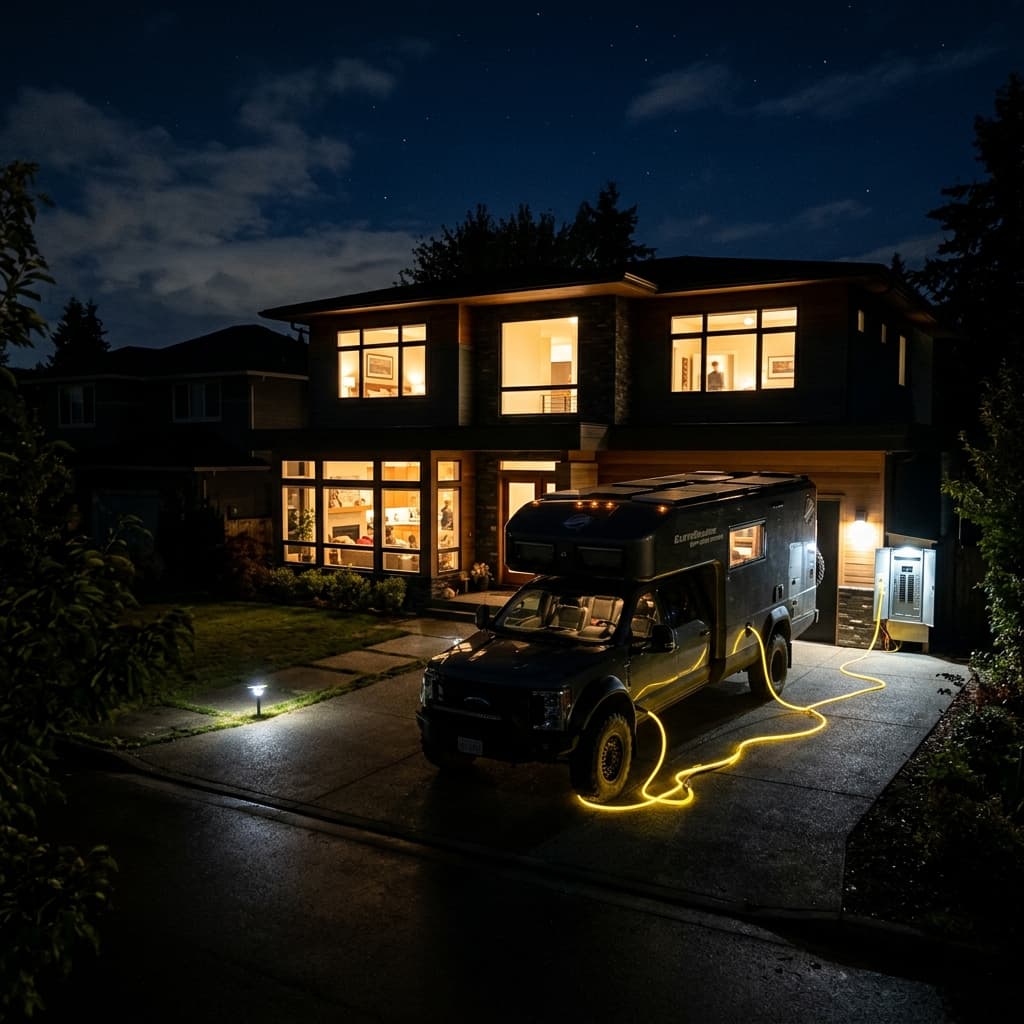
V2H (Vehicle-to-Home) RV Guide: Using Your Camper as a Backup Generator
Don't let your RV battery sit idle. Learn how to configure a V2H (Vehicle-to-Home) system to use your camper's massive solar and lithium bank as an emergency house backup generator.
Read Full Guide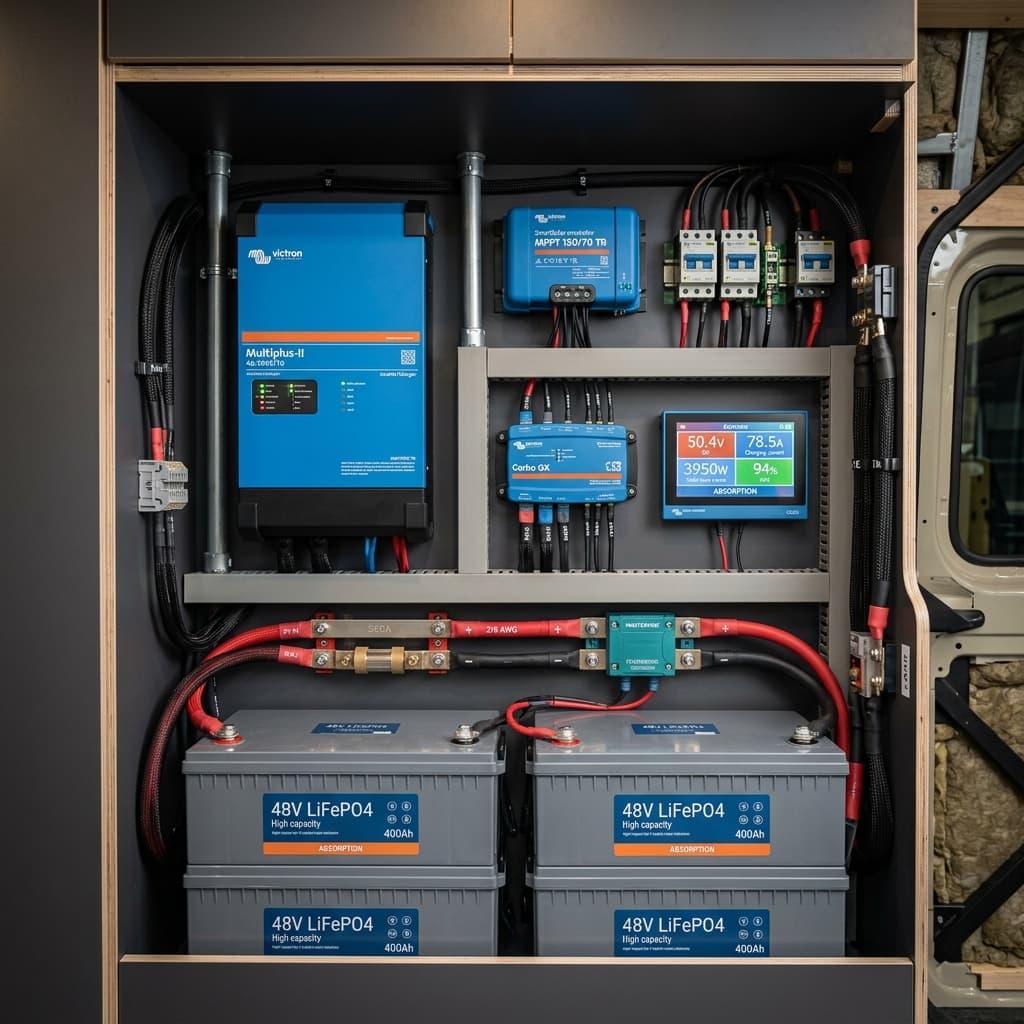
The 48V Architecture Revolution: Why Skipping 12V and 24V is the Right Choice for 2026 Installations
Stop struggling with thick 4/0 cables and overheating inverters. Discover why 48V is the only logical choice for high-demand RV systems in 2026.
Read Full Guide
The Digital Nomad Power Audit: Calculating Solar for Starlink and Pro-Grade Gear in 2026
Digital nomad RV power audit: Running Starlink and high-end laptops 24/7. Learn the daily Ah math and native DC conversion physics.
Read Full Guide