How to mount RV solar panels without drilling! - RVtravel
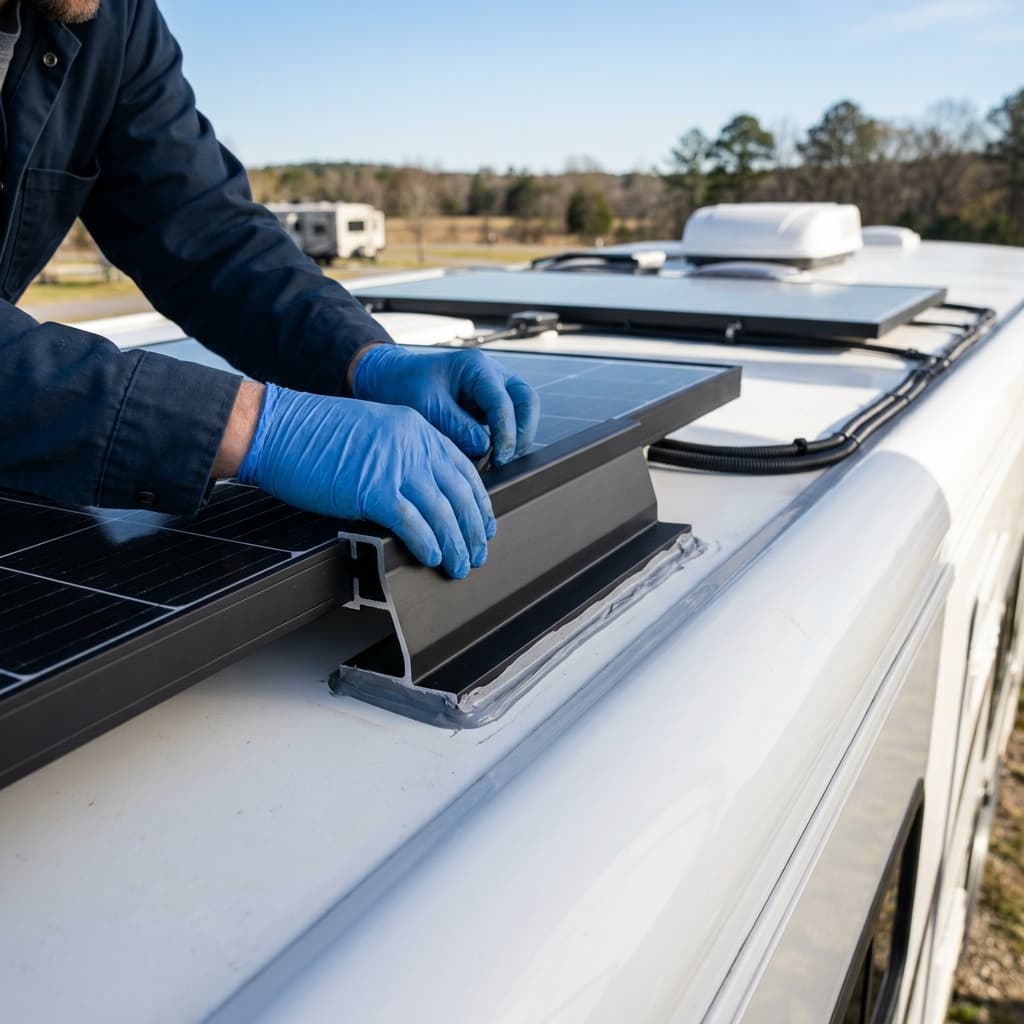
In the evolving landscape of off-grid RV energy systems for 2026 and beyond, this elite guide delivers a meticulous, step-by-step methodology for deploying high-output solar arrays without permanent roof penetrations. It integrates advanced electrical schematics, professional tooling lists, and critical safety protocols, while contextualizing emerging technologies like GaN inverters and perovskite cells for the nomadic technician.
The paradigm for recreational vehicle solar installations is undergoing a significant shift. As we approach 2026, the industry standard is moving away from invasive, irreversible drilling methods toward sophisticated, non-destructive mounting solutions. This transition is driven by the need to preserve vehicle resale value, prevent water ingress and structural compromise, and accommodate the rapid iteration of solar panel technologies. For the owner of a motorhome, camper van, or fifth-wheel, mastering a non-drilling installation is no longer a niche skill but a fundamental competency for sustainable, off-grid living.
This guide is engineered for the serious installer, whether a DIY enthusiast or a professional, seeking to implement a robust, high-efficiency solar system. We will dissect the mechanics of adhesion, tension, and magnetic mounting, provide explicit wiring diagrams for both traditional and next-generation components, and furnish a comprehensive tool list. Safety, the paramount concern in any 12V, 24V, or 48V DC system, will be interwoven throughout the procedural steps. Furthermore, we will project current practices into the near future, examining the implications of gallium nitride (GaN) power electronics, sodium-ion storage chemistry, and perovskite solar cell integration for non-invasive RV setups.
The Rationale for Non-Invasive Solar Mounts
Choosing a non-drilling mount is a decision rooted in both practicality and forward-thinking vehicle management. It eliminates the single greatest point of failure in a traditional RV solar installation: the roof penetration. Every hole drilled is a potential future leak, a thermal bridge, and a point of structural fatigue. Non-invasive methods, by contrast, offer unparalleled flexibility, allowing for panel reconfiguration, upgrade, or complete removal without leaving lasting damage—a critical factor for leased vehicles or those in frequent resale cycles.
Pros and Cons Analysis
Advantages
Considerations & Limitations
Non-Drilling Mounting System Typology
Three primary methodologies dominate the non-drilling landscape, each with distinct mechanical principles and application scenarios. Selecting the correct type is the first critical step in the installation process.
1. High-Strength Bonded Mounts
These systems use industrial-grade structural adhesives (e.g., 3M VHB tape, Sikaflex-252) to permanently bond aluminium or composite brackets directly to the roof. The bond is chemical, creating a union often stronger than the substrates themselves. Preparation is absolutel key: surfaces must be immaculately clean and primed.
2. Tension-Based Systems (Z-Brackets & Cross Rails)
This elegant solution uses the vehicle's existing rain gutters, roof rails, or a perimeter frame. Adjustable brackets clamp onto these features, creating a rigid superstructure upon which cross-rails and panel clamps are mounted. No adhesion or drilling is required; stability is derived from mechanical tension and distributed load.
3. Magnetic Mounts (For Metal Roofs Only)
Exclusively for vehicles with steel or aluminium roofs, these mounts incorporate powerful neodymium magnets within a protective housing. They offer instant placement and removal but require meticulous calculation to ensure magnetic force exceeds wind lift forces by a significant safety margin. Not suitable for fibreglass or composite roofs.
Comprehensive Tool and Material Inventory
Professional results mandate professional tools. This list is curated for a complete installation, from mounting to electrical termination.
| Tool/Material Category | Specific Items | Technical Notes & 2026 Outlook |
|---|---|---|
| Surface Preparation | Isopropyl alcohol (99%), lint-free cloths, plastic scraper, surface primer (specific to adhesive). | Future adhesives may require UV or plasma pretreatment for optimal bonding with advanced composites. |
| Mounting Hardware | Chosen non-drill brackets (bonded, tension, magnetic), structural adhesive/sealant, torque wrench, hex key set. | Brackets for perovskite panels may need enhanced UV stability and lower thermal mass to prevent cell overheating. |
| Electrical | MC4 crimping tool, wire strippers, cable cutters, multimeter, heat gun, soldering iron, assorted fuses/breakers. | GaN-based charge controllers and inverters are smaller, cooler, and more efficient; tooling for their installation remains standard. |
| Cable & Roof Entry | Solar cable (10AWG recommended), cable conduit, gland plates, butyl tape, dicor self-leveling sealant. | Integration with wireless power transfer for data/sensors is emerging, reducing physical cable runs. |
| Safety & General | Safety harness, roof mat, gloves, eye protection, electrical tape, cable ties, label maker. | Standard PPE remains constant; harness systems are increasingly lightweight and integrated. |
Step-by-Step Installation Guide
Step 1: System Design and Pre-Installation Planning
Begin with a detailed schematic. Calculate your energy needs, panel wattage, and battery capacity. Physically lay out the panels on the roof (without adhesive) to determine optimal placement for sun exposure, avoiding shadows from vents and antennas. Plan the cable route from the panels to the entry point, ensuring minimal length to reduce voltage drop. Decide on your entry method—common non-drill techniques include using a fridge vent, satellite cable entry, or installing a dedicated gland plate sealed over an existing, unused roof penetration.
Step 2: Roof Surface Preparation
This is the most crucial step for bonded systems. Thoroughly clean the mounting areas with isopropyl alcohol. For maximum adhesion, follow the adhesive manufacturer's instructions to the letter—this may involve abrading the surface slightly and applying a specific primer. The roof must be completely dry and at a recommended temperature (typically between 15°C and 35°C). Mark the bracket positions using a non-permanent marker.
Step 3: Bracket Mounting
For Bonded Mounts: Apply the structural adhesive to the bracket base as a continuous bead or as specified. Firmly press the bracket onto the pre-marked location, applying consistent pressure. Use temporary tape or weights to hold it in place as per the adhesive's cure time (which can be 24-72 hours). For Tension Systems: Attach the gutter or rail clamps, ensuring they are evenly tightened to the manufacturer's torque specification to avoid damaging the gutter. Install the cross-rails, checking for level. For Magnetic Mounts: Place the mounts, ensuring the magnetic surface is clean. Verify the hold by attempting to slide the mount—it should not move under significant hand force.
Step 4: Panel Attachment and Mechanical Securing
Once brackets are secure, attach the solar panels using the provided clamps. For bonded and tension systems, use mid-clamps and end-clamps to fix the panel frames to the cross-rails. Leave a small gap (as per panel specs, usually 5-10mm) between panels for thermal expansion. Do not overtighten clamps, as this can warp the frame and damage the solar cells. For magnetic mounts, the panel is typically bolted directly to the mount's platform.
Step 5: Electrical Wiring and Circuit Integration
Run pre-measured solar cables from the panels to the planned entry point, securing them with adhesive-backed cable clips or within conduit. Use UV-resistant cable ties sparingly to avoid point stress. Connect panels in series or parallel based on your charge controller's input voltage specifications, using MC4 connectors. Pass the cables through your chosen non-drill entry (e.g., a gland plate sealed with butyl and dicor over a pre-existing hole). Inside the vehicle, route the cables to the charge controller location, keeping them clear of sharp edges and heat sources.
Wiring Diagrams and Electrical Configuration
Below are two common wiring schematics for a non-drill RV solar system. Diagram A represents a traditional setup with Lithium-Iron-Phosphate (LiFePO4) batteries, while Diagram B illustrates a forward-looking configuration incorporating a GaN charge controller and a sodium-ion battery bank, reflecting 2026-era component availability.
Diagram A: Standard 12V System
        [Solar Panel Array] (Series-Parallel for ~40Vmp)
                |
                | (10AWG Solar Cable)
                v
        [Circuit Breaker - DC Rated] (Located near entry point)
                |
                v
        [MPPT Charge Controller] (e.g., 100A/50V)
                |                           |
                | (To Battery)              | (Optional Load Output)
                v                           v
        [DC Busbar]                     [12V Fuse Panel]
                |                           |
        [Battery Cut-Off Switch]           [AC/DC Loads]
                |
                v
        [LiFePO4 Battery Bank] (e.g., 400Ah @ 12V)
                |
                v
        [Inverter] (e.g., 3000W Pure Sine Wave)
                |
                v
        [AC Distribution Panel]
Key: All negative cables should terminate at a common negative busbar (not shown for simplicity). Fusing is critical on all positive connections within 18 inches of the battery.
Diagram B: Next-Gen 24V System with GaN & Sodium-Ion
        [Perovskite/Silicon Hybrid Panels] (Higher Voltage, ~60Vmp)
                |
                | (10AWG Solar Cable)
                v
        [DC Surge Protector]
                |
                v
        [GaN-based MPPT Controller] (Higher switching frequency, >98% efficiency)
                |
                | (To Battery - Thicker cable for 24V)
                v
        [DC Busbar with Integrated Shunt]
                |
        [Smart Battery Isolator]
                |
                v
        [Sodium-Ion Battery Bank] (e.g., 200Ah @ 24V - Lighter, wider temp range)
                |
                v
        [GaN Inverter/Charger] (Compact, high efficiency)
                |
                v
        [Smart Energy Management System]
                |
                +--> [DC Loads]
                +--> [AC Loads]
                +--> [Vehicle CAN Bus (Data)]
Key: This architecture reduces cable size for the same power, runs cooler, and integrates with vehicle data networks for predictive energy management. Sodium-ion batteries offer a sustainable alternative with superior cold-weather performance.
Critical Safety Protocols for the Off-Grid Installer
Working with electricity and on vehicle roofs inherently involves risk. Adhere to these non-negotiable safety rules.
- De-energize Everything: Cover panels with an opaque tarp before making any electrical connections. Disconnect the battery bank at the main negative terminal.
- Fall Arrestion is Mandatory: Always use a certified safety harness anchored to a properly rated secure point on the vehicle's structure, not just the roof rails.
- Correct Fusing: Install appropriately rated DC fuses or circuit breakers on ALL positive connections from the battery and from the solar array. Use only DC-rated components.
- Waterproof All Exterior Connections: Use heat-shrink tubing with adhesive lining for all splices. Ensure MC4 connectors are fully snapped and seated.
- Torque Specifications: Overtightening electrical lugs can break them; undertightening causes heat and fire. Use a torque wrench and follow manufacturer specs.
- Chemical Safety: Use gloves and eye protection when handling adhesives, primers, and sealants. Ensure adequate ventilation.
- System Grounding: Properly ground the solar array frame and the electrical system to the vehicle chassis to protect against lightning and fault currents.
The 2026 Horizon: Next-Generation Technologies
The non-drilling installation philosophy aligns perfectly with the rapid advancement in energy technologies. Here’s how emerging tech integrates with your installation.
Gallium Nitride (GaN) Power Electronics
GaN transistors switch faster and with less resistance than traditional silicon. For the installer, this means charge controllers and inverters that are up to 50% smaller and lighter, with efficiencies exceeding 98%. They generate significantly less heat, simplifying thermal management inside cramped RV compartments. Your wiring practices remain the same, but the compact size offers more mounting flexibility.
Sodium-Ion Batteries
As a potential successor to lithium, sodium-ion chemistry uses abundant materials, offers excellent performance in sub-zero temperatures, and has a safer thermal profile. For installation, they are often modular and may have different voltage characteristics. Your battery compartment design must accommodate their specific form factor, and your charge controller must be programmable for their unique charging algorithm (Constant Current, Constant Voltage, but with different voltage set points).
Perovskite Solar Cells
These promise higher efficiencies and the ability to be fabricated as lightweight, flexible laminates. For non-drilling mounts, this is revolutionary. Imagine a thin, adhesive-backed solar film that conforms to the curved roof of your camper van. Mounting becomes as simple as applying a large decal (with professional adhesive). However, current durability and encapsulation challenges mean hybrid perovskite-silicon panels will likely be the first commercial RV products. Their installation will use standard clamps but on lighter, potentially larger panels.
Ongoing Maintenance and Troubleshooting
A non-drill system requires vigilant upkeep. Biannually, inspect all adhesive bonds for signs of lifting or cracking. Check tension system clamps for loosening. Clean panels with water and a soft brush to maintain output. Monitor electrical connections for corrosion or heat marks using a thermal camera if possible. Use a multimeter to verify array voltage and charging current seasonally. If a panel underperforms, first check for shading, then connectivity at each MC4 link. The reversible nature of these mounts simplifies panel replacement—a key advantage as technology improves.
Conclusion
Mastering the art of the non-drilling RV solar installation is an essential skill for the modern nomad. It embodies a principle of stewardship over your vehicle while harnessing cutting-edge energy technology. By following this detailed guide—from surface preparation and bracket selection through to wiring with an eye on GaN and sodium-ion futures—you install not just a power system, but a flexible, upgradeable platform for indefinite off-grid independence. The roof of your RV is a precious resource; this methodology ensures it remains intact, waterproof, and ready for the next generation of solar innovation.
Technical Expansion
Deepen your expertise with our most critical recent diagnostic reports.
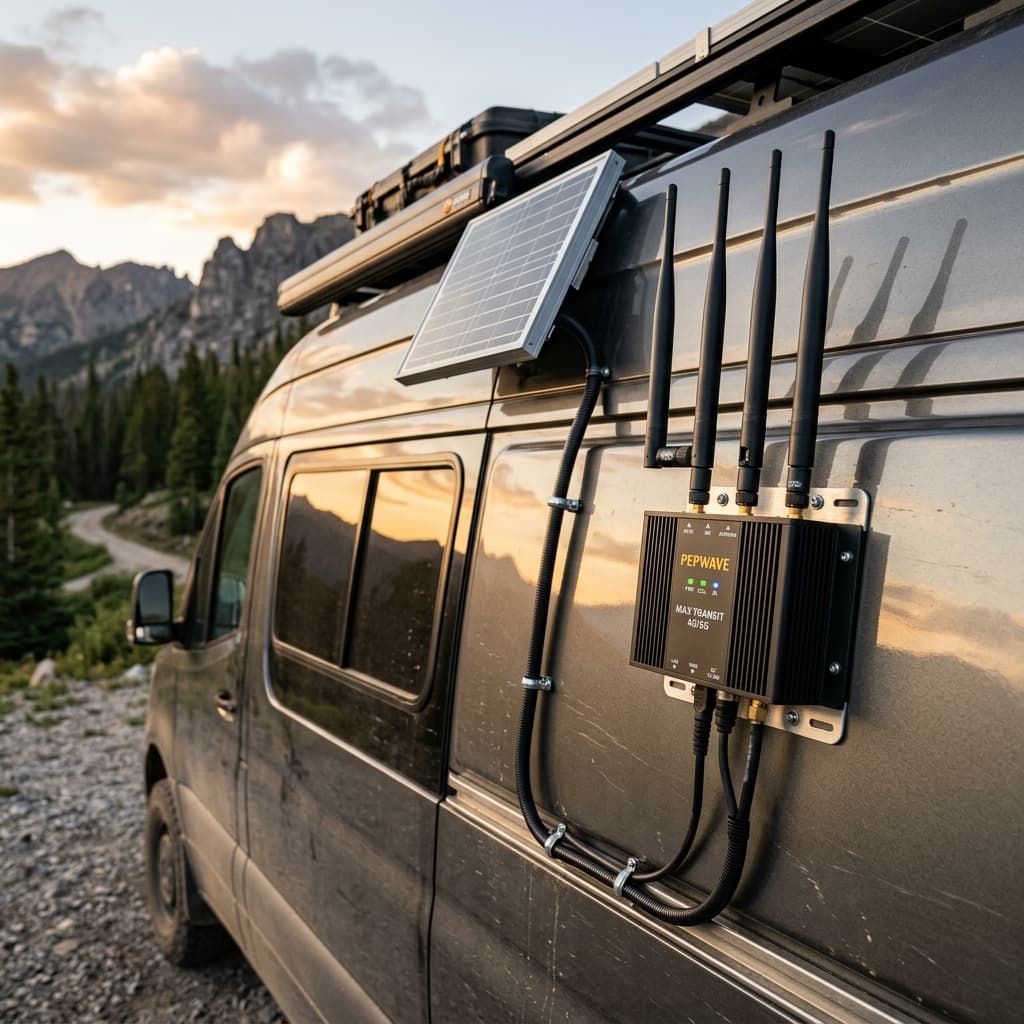
Solar panel for wifi router
In the evolving landscape of off-grid connectivity, a dedicated solar power system for your Wi-Fi router is no longer a luxury but a critical infrastructure com...

My batteries are full and I don't have anything that needs electricity
In the context of modern off-grid RV solar systems, the scenario "my batteries are full and I don't have anything that needs electricity" highlights a critical ...
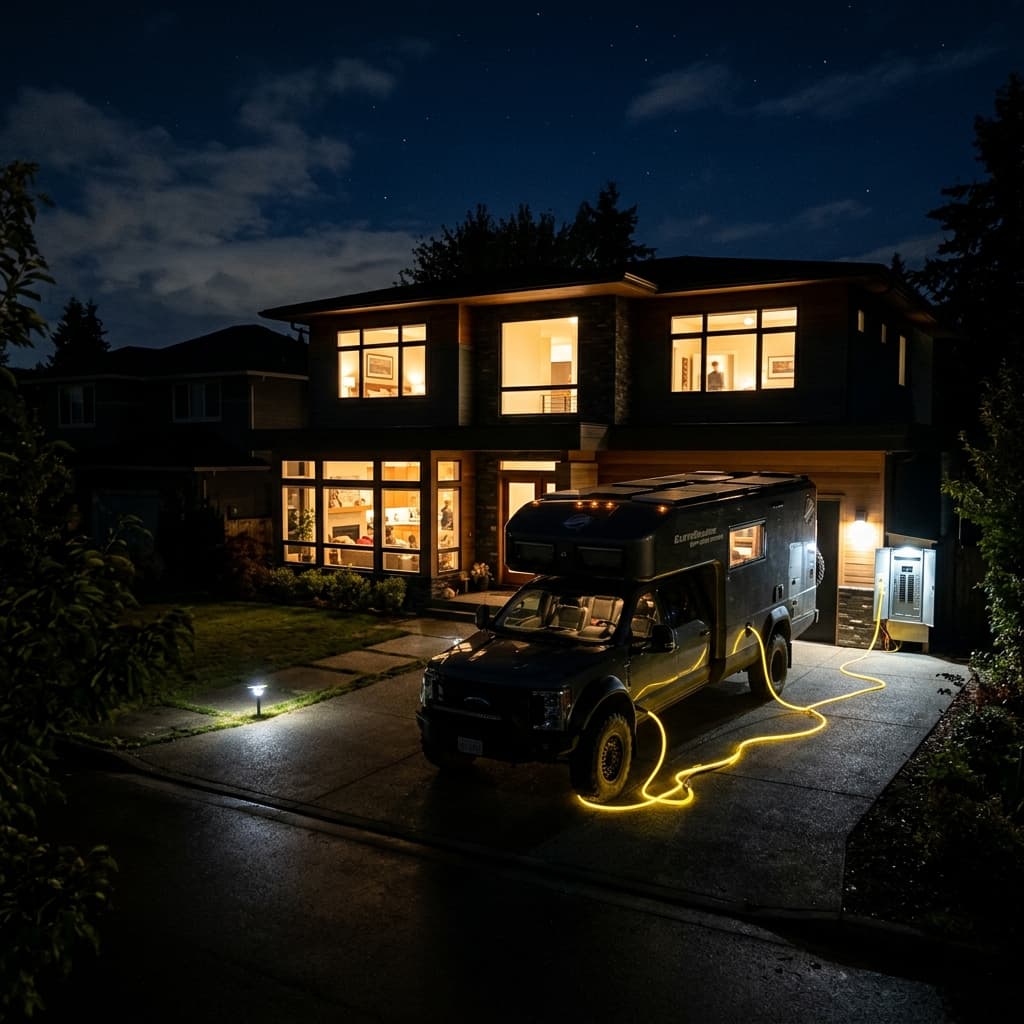
V2H (Vehicle-to-Home) RV Guide: Using Your Camper as a Backup Generator
Don't let your RV battery sit idle. Learn how to configure a V2H (Vehicle-to-Home) system to use your camper's massive solar and lithium bank as an emergency house backup generator.