No-Drill Solar: The Safest Way to Mount Panels on Your Car Roof

Leveraging a method refined by RV communities and tested on vehicle roofs, this guide distills a decade of off‑grid installation experience into a single, actionable workflow. From wire gauge selection to charge controller tuning, every step is engineered for the 2026 nomadic standard.
The sun delivers an average of 1,000 W/m² at peak. Tapping even a fraction of that into your RV’s electrical system transforms how you travel. In 2026, the solar landscape has shifted: perovskite panels are gaining traction for their flexibility and higher efficiency, gallium nitride (GaN) inverters now handle loads previously reserved for bulky silicon units, and sodium‑ion batteries offer a safer, cheaper alternative to lithium iron phosphate. Yet the core installation principles remain constant—and remarkably accessible.
Whether you’re adding a single 200 W panel to a camper van roof or building a 1 kW system for a Class A motorhome, the step‑by‑step approach below eliminates guesswork. We’ll cover component selection, wire sizing, mounting methods, charge controller programming, and the crucial safety checks that prevent fires and component failure. By the end, you’ll have a turnkey solar setup that integrates seamlessly with your existing battery bank and inverter.
1. System Planning & Load Calculation
Before uncoiling a single wire, determine your actual power needs. A typical off‑grid RV day includes running a 12 V fridge (≈50 Ah/day), LED lights (5 Ah), water pump (3 Ah), laptop charging (2 Ah), and occasional microwave or induction cooking (bulk AC loads). Sum your daily amp‑hours (Ah) at 12 V, then add a 20% buffer for inefficiency and cloudy days.
Use this formula: Required Solar Wattage = (Daily Ah × System Voltage) ÷ Peak Sun Hours. For example, 100 Ah/day at 12 V with 5 peak sun hours yields 240 W—round up to a 300 W panel or two 200 W panels. In 2026, high‑efficiency monocrystalline panels produce up to 23% efficiency, so roof area constraints ease slightly.
| Appliance | Watts | Hours/day | Ah/day @12V |
|---|---|---|---|
| 12V Compressor Fridge | 60 | 20 (cycling) | 50 |
| LED Lighting (6 fixtures) | 30 | 5 | 12.5 |
| Water Pump | 40 | 1 | 3.3 |
| Laptop + Wifi Router | 50 | 6 | 25 |
| Phone / Tablet Charging | 20 | 3 | 5 |
| Total | 95.8 Ah |
With a safety margin, target 115 Ah/day. Using 5 peak sun hours, required array = (115 × 12) ÷ 5 = 276 W. Two 160 W panels (320 W total) provide ample headroom. For roof‑mounted installations, consider tiltable brackets to capture low winter sun—especially important in northern latitudes.
2. Essential Components & Wiring Diagram
A complete off‑grid RV solar system consists of: solar panel(s), charge controller, battery bank, inverter (if AC needed), fuses/breakers, disconnect switches, and appropriate gauge wiring. Below is a proven wiring topology for a 12 V system with a 300 W array and 200 Ah lithium battery.
Wiring Diagram Overview
Series‑Parallel Configuration: If using two panels (e.g., 2× 160W, 12V each), wire them in parallel to maintain 12V output while doubling current. Use a combiner box with two 15A fuses before the charge controller. From the combiner, run 10 AWG wire (for up to 30A) to an MPPT charge controller. The controller’s output connects to the battery bank via a 50A breaker. From the battery, a 200A fuse leads to a bus bar; from the bus bar, separate circuits feed the inverter (via 4 AWG) and the 12V distribution panel (12 AWG).
Wire Sizing Table (12V, 3% voltage drop max):
| Circuit (Current, Length) | Recommended AWG |
|---|---|
| Panel to Controller (20A, 10 ft) | 10 AWG |
| Controller to Battery (30A, 5 ft) | 8 AWG |
| Battery to Inverter (100A, 4 ft) | 4 AWG |
| Battery to 12V Panel (15A, 6 ft) | 12 AWG |
Always fuse positive wires within 7 inches of the battery terminal.
3. Required Tools & Safety Protocol
Tool List
- • Wire stripper/cutter (10–20 AWG)
- • Crimping tool + ring terminals
- • Multimeter (clamp meter preferred)
- • Drill with stainless steel bits
- • Roof sealant (dicor self-leveling)
- • Cable lugs, adhesive heat shrink
- • Torque wrench (for terminals)
- • Solar panel tilt brackets (optional)
Safety Checklist
- ⚠ Disconnect battery before any wiring.
- ⚠ Cover solar panels with opaque cloth while working.
- ⚠ Use PPE: insulated gloves, safety glasses.
- ⚠ Verify polarity with multimeter before final connections.
- ⚠ Install a main battery disconnect switch.
- ⚠ Size overcurrent protection per NEC (or local code).
- ⚠ Ground the system to chassis (negative bus bar).
4. Step‑by‑Step Installation Guide
4.1 Roof Mounting
Locate roof ribs or reinforcement points using a stud finder. Position panels with at least 1 inch clearance from vents and AC units. Drill pilot holes, apply butyl tape under brackets, then bolt down with stainless steel fasteners. Seal all penetrations with self‑leveling lap sealant—reapply annually. For curved roofs, use adhesive‑backed flexible panels; these are now available in perovskite blends offering 18% efficiency at half the weight.
4.2 Cable Routing & Combiner Box
Route MC4 cables through a waterproof cable entry gland. Avoid sharp bends and keep runs as short as possible to minimize loss. Inside the vehicle, install a combiner box with appropriate fuses. Use a torque wrench on all connections—over‑tightening can strip terminals, under‑tightening causes arcing. For parallel wiring, ensure both panels have identical voltage ratings; mismatch reduces output.
4.3 Charge Controller Installation
Mount an MPPT controller (e.g., Victron Smartsolar or EPEVER Tracer) in a cool, ventilated space near the battery. Connect in order: 1) Battery first (positive then negative), 2) Solar input, 3) Load (optional). The controller will auto‑detect battery voltage—verify settings for your chemistry (LiFePO₄ absorption ~14.4 V, float ~13.6 V). Many modern MPPT controllers support GaN power stages for 99% efficiency; these run cooler and are ideal for tight compartments.
4.4 Battery Bank Integration
Sodium‑ion batteries (e.g., Natron Energy) are emerging in 2026, offering 5 Ah per cell at 3.6 V with zero thermal runaway risk. They can be directly dropped into a 12 V system using a battery management system (BMS) configured for sodium chemistry. If using LiFePO₄, connect cells in series to reach 12.8 V, ensuring top‑balancing with a benchtop charger. Install a class‑T fuse within 7 inches of the positive terminal. For large banks (400+ Ah), consider a bus bar with multiple studs to distribute current evenly.
4.5 Inverter & AC Wiring
For inverters, choose a pure sine wave unit with built‑in transfer switch. GaN inverters are now available from brands like Enphase and Schneider, offering 2 kW continuous output from a unit the size of a paperback book. Mount near the battery (short heavy DC cables), and wire AC output to a dedicated sub‑panel. Install a ground fault circuit interrupter (GFCI) for all outdoor outlets.
5. Testing & Commissioning
Before covering panels, measure open‑circuit voltage (Voc) and short‑circuit current (Isc) with a multimeter—compare to panel specs. With the controller connected and battery healthy, expose panels to full sun. The controller should start bulk charging within seconds. Verify display readings: battery voltage, charging current, and stage (bulk/absorption/float). For lead‑acid, check equalization; for LiFePO₄, ensure low‑temperature cutoff is active (most BMS handle this).
Load test: run a 500 W inverter load (e.g., hairdryer) for 5 minutes. Monitor voltage drop at battery terminals—should not dip below 12.2 V (50% SOC) for lithium. If using sodium‑ion, voltage holds flatter during discharge. Record baseline numbers for future troubleshooting.
6. Next‑Generation Technologies Shaping 2026 Installations
Gallium Nitride (GaN)
GaN transistors replace silicon MOSFETs in MPPT controllers and inverters. Benefits: 99% efficiency, 50% smaller heat sink, higher switching frequencies (1 MHz), and silent operation. Already adopted by Victron’s latest SmartSolar line.
Perovskite Solar Cells
Tandem perovskite‑silicon cells reach 33% efficiency in labs. Commercial flexible modules (e.g., Oxford PV) now offer 20% efficiency for RV roofs. Lower temperature coefficient means better performance in summer heat.
Sodium‑Ion Batteries
Sodium‑ion cells cost 30% less than LiFePO₄, use abundant raw materials, and are non‑flammable. Energy density is lower (120 Wh/kg vs. 150), but for RV banks this is negligible. First off‑grade BMS units now available.
7. Maintenance & Common Troubleshooting
Solar systems require minimal upkeep: clean panels quarterly with deionized water; inspect roof seals annually; torque electrical connections after first month. In cold climates, use a battery heating pad if charging below 0°C.
Troubleshooting Symptom Table
| Symptom | Likely Cause & Solution |
|---|---|
| Controller shows no input | Panel disconnected; MC4 connector corroded. Check polarity and clean contacts. Verify voltage at combiner box. |
| Battery not reaching full charge | Controller set to wrong battery type. Reconfigure absorption voltage. For LiFePO₄, ensure low‑temp cutoff isn’t blocking charge. |
| Inverter shuts off under load | Undersized DC cable (high voltage drop) or low battery SOC. Check cable length and gauge; upgrade to 2/0 AWG for 2000W. |
| BMS disconnecting battery periodically | Cell imbalance or high current demand. Allow top‑balancing cycle; reduce inverter load temporarily. |
Conclusion
Adding a solar panel to an RV roof is no longer a daunting electrical project—it’s a weekend job with the right tools and a clear diagram. By following this guide, you harness technology that will serve reliably for a decade or more. The 2026 landscape of GaN, perovskite, and sodium‑ion only expands your options; the fundamental steps remain solid. As always, prioritize safety, respect wire gauge limits, and test thoroughly before hitting the road. Your off‑grid freedom begins with that first panel mounted and wired.
Technical references: RVtravel.com “The easy way to add a solar panel to a car roof”; NEC Article 690; Victron Energy wiring guidelines.
Technical Expansion
Deepen your expertise with our most critical recent diagnostic reports.
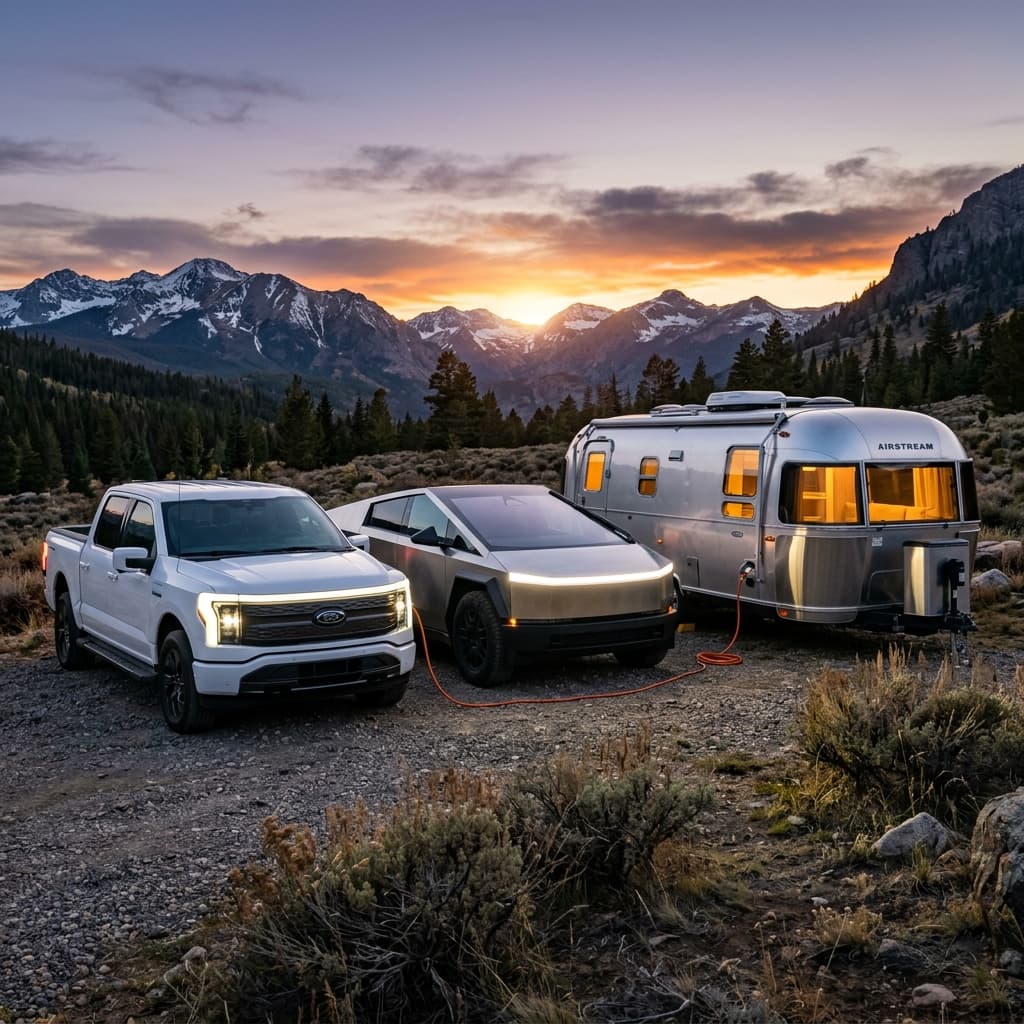
V2L Masterclass: How to Power Your RV with a Ford F-150 Lightning or Cybertruck (2026 Guide)
Unlock the potential of Vehicle-to-Load (V2L) technology. Learn how to use your EV truck as a silent, high-capacity mobile power plant for your RV without generators or fuel.

V2H (Vehicle-to-Home) RV Guide: Using Your Camper as a Backup Generator
Don't let your RV battery sit idle. Learn how to configure a V2H (Vehicle-to-Home) system to use your camper's massive solar and lithium bank as an emergency house backup generator.

The Off-Grid A/C Masterclass: How to Stay Cool Without a Plug
Standard RV electrical systems were never engineered to run air conditioning off-grid. This extensive technical brief dissects the precise engineering challenge...