New Off-Grid EV Charger Runs on Sunshine and Costs You Nothing - AOL.com
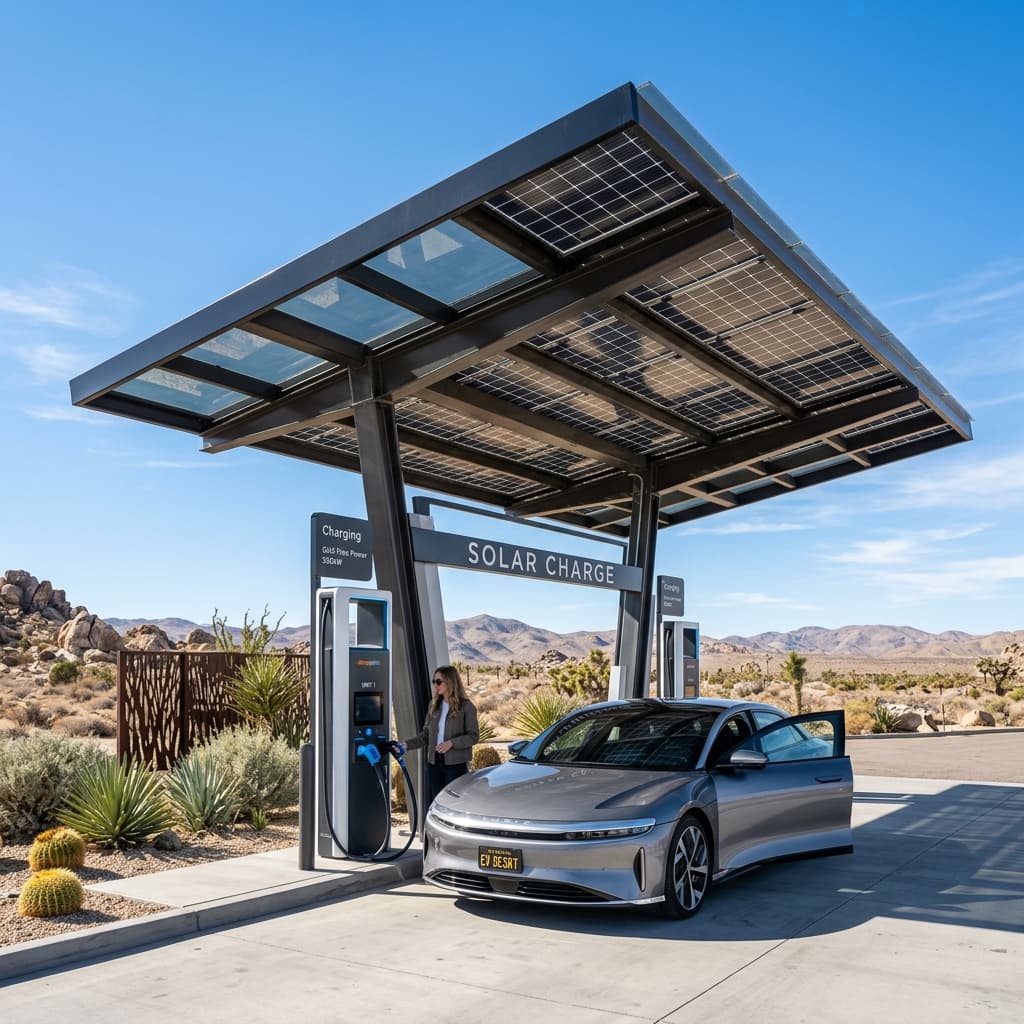
Beyond the Plug: The Physics, Economics, and Autonomy of Solar-Powered Nomadism in 2026
A Technical Analysis for the Energy-Independent Traveler
The convergence of high-efficiency photovoltaics, advanced battery chemistry, and ultra-efficient power electronics is catalyzing a paradigm shift. The recent emergence of dedicated, modular off-grid EV chargers—powered solely by photovoltaic arrays—is not merely a product launch but a symptom of a deeper socio-technical evolution. This article deconstructs the underlying physics, evaluates the 2026 technological landscape, and projects the profound socio-economic implications for the future of mobile, energy-sovereign living.
The archetype of the recreational vehicle—once synonymous with crowded campgrounds and umbilical cords to shore power—is undergoing a radical redefinition. As of 2026, the nomadic lifestyle is less about recreation and increasingly about a fundamental re-negotiation of one's relationship with energy infrastructure. The catalyst is the maturation of solar energy systems, transforming RVs, motorhomes, and camper vans from passive consumers into active, intelligent micro-grids. This shift is underscored by innovations like the recently highlighted off-grid EV charger, a device that would have been a physical impossibility a decade ago due to limitations in panel efficiency and power converter topology. We now stand at an inflection point where the energy harvested from a vehicle's roof can meaningfully extend the range of its electric tow vehicle or auxiliary transportation, creating a closed-loop energy ecosystem. This article provides a technical deep-dive into the components enabling this revolution, the trends shaping the industry, and the broader impact on the culture and economics of nomadic life.
The context for 2026 is defined by several key parameters: mainstream monocrystalline silicon cell efficiencies pushing beyond 23%, the commercial arrival of perovskite tandem cells in niche applications, the dominance of Lithium Iron Phosphate (LiFePO4) as the stationary storage chemistry of choice, and the proliferation of Gallium Nitride (GaN) semiconductors in power conversion devices. Simultaneously, the socio-economic drivers—remote work normalization, rising grid energy costs, and a growing cultural valuation of experiential living—have created a fertile market for true energy independence. The "off-grid EV charger" phenomenon is a tangible output of these converging vectors, symbolizing the ultimate decoupling from fixed infrastructure.
I. The Photovoltaic Foundation: From Sunlight to Mobile Electrons
At the core of every solar-nomadic system lies the photovoltaic (PV) effect. Modern RV panels are predominantly monocrystalline silicon with passivated emitter and rear cell (PERC) technology. This architecture minimizes electron recombination, allowing efficiencies of 22-24%. The physics is straightforward yet elegant: photons with energy exceeding the silicon bandgap (≈1.1 eV) excite electrons into the conduction band, creating electron-hole pairs. The built-in electric field of the p-n junction then drives these charges apart, generating a direct current.
The Roof as a Power Plant: Efficiency vs. Real Estate
The primary constraint for mobile applications is area. A Class A motorhome may boast only 100-150 square feet of viable roof space. Therefore, watts per square foot (W/ft²) is the critical metric. 2026's premium panels deliver 18-22 W/ft². This density is what makes powering high-load appliances—and even slow EV charging—feasible. The following table illustrates the energy harvest potential on a sunny day (5 peak sun hours) for various roof footprints.
| Vehicle Type | Typical Roof Area (ft²) | 2026 System Capacity (W) | Daily Harvest (kWh)* | Equivalent EV Range Added** |
|---|---|---|---|---|
| Camper Van | 60 - 80 | 600W - 900W | 3.0 - 4.5 kWh | 12 - 18 miles |
| Class C Motorhome | 100 - 130 | 1000W - 1500W | 5.0 - 7.5 kWh | 20 - 30 miles |
| Large Fifth-Wheel | 300 - 400 | 3000W - 5000W+ | 15 - 25+ kWh | 60 - 100+ miles |
* Assumes 5 peak sun hours, 85% system efficiency. ** Assumes 4 miles per kWh, a common efficiency for compact EVs. Real-world results vary.
II. The Energy Nexus: Battery Chemistry and Power Management
Solar harvest is intermittent; thus, storage is non-negotiable. The 2026 landscape is dominated by Lithium Iron Phosphate (LiFePO4) for its safety (stable chemistry), longevity (3000-5000 cycles to 80% depth of discharge), and tolerance for full state-of-charge maintenance. The charge controller, particularly the Maximum Power Point Tracking (MPPT) variety, is the unsung hero. It acts as an impedance-matching device, ensuring the PV array operates at its voltage-current sweet spot (Vmp, Imp) to extract every possible watt, especially critical under partial shading or low-light conditions.
Advantages of Modern LiFePO4 Systems
- Depth of Discharge (DoD): Can routinely be discharged to 90-100% without significant degradation, effectively doubling usable capacity vs. lead-acid.
- Cycle Life: 3,000+ cycles equate to over a decade of daily full cycling, aligning with RV ownership periods.
- Charge Efficiency: Near 99%, meaning almost all solar energy directed into the battery is stored, minimizing waste.
- Thermal Stability: Significantly lower risk of thermal runaway compared to NMC chemistries, a critical safety factor in confined spaces.
Persistent Challenges & Considerations
- Upfront Capital Cost: Despite falling prices, a 10kWh LiFePO4 system remains a significant investment (≈$3,000-$5,000).
- Low-Temperature Charging: Requires built-in heaters or management to prevent charging below 0°C (32°F), a concern for winter nomads.
- Energy Density by Volume: While better than lead-acid, still requires careful space planning for large-capacity installations.
- System Complexity: Integration of BMS, inverter, and solar controller demands proper design and installation expertise.
III. The Off-Grid EV Charger: A Technical Deconstruction
The "charger" referenced in the source material is more accurately a specialized, high-power DC-to-AC inverter with integrated MPPT and grid-forming capabilities. It is designed to interface directly with a large-scale RV solar array and battery bank, converting the stored DC energy into the AC required by an Electric Vehicle's onboard charger (Level 1 or Level 2). Its "zero-cost" operation is a function of its fuel being sunlight, but the system's viability hinges on the pre-existence of a substantial solar infrastructure.
The Role of Gallium Nitride (GaN) Semiconductors
The enabling technology here is the adoption of GaN transistors in the inverter's power conversion stage. Compared to traditional silicon MOSFETs, GaN devices switch at frequencies 10-100 times faster. This allows for:
- Dramatically Smaller Magnetics: High-frequency operation means transformers and inductors can be radically reduced in size and weight—critical for mobile applications.
- Higher Efficiency: Reduced switching losses yield efficiencies of 97-98%, minimizing thermal load and energy waste.
- Reduced Cooling Demands: Less waste heat allows for quieter, fan-less or minimal-fan designs, improving reliability.
A GaN-based, 3kW off-grid inverter can now be the size of a large textbook, whereas its silicon-based predecessor would have been a bulky, heavy, and noisy unit.
IV. Socio-Economic Impact: The Rise of the Energy-Sovereign Nomad
The technological advancements are not merely conveniences; they are reshaping the economics and social structures of nomadic life.
Economic Calculus: CapEx vs. OpEx Freedom
The initial investment in a robust solar system (CapEx) is traded for the complete elimination of recurring campground fees and fuel costs for generators (OpEx). For full-time nomads, the payback period can be under three years. Furthermore, it unlocks "zero-marginal-cost" travel, allowing indefinite boondocking on public lands without sacrificing modern comforts. This financial model enables a broader demographic, including remote workers and retirees on fixed incomes, to adopt a mobile lifestyle without energy anxiety.
Cultural Shift: From Campgrounds to Dispersed Communities
Dependence on crowded, expensive RV parks is diminishing. Solar-powered nomads are forming transient, decentralized communities around natural resources and scenic beauty rather than electrical hookups. This places new value on skills like water management, waste handling, and responsible land use, fostering a deeper environmental ethic. The community knowledge-sharing around system design and troubleshooting has become a cornerstone of the digital nomad culture, with forums and videos serving as the new "technical manuals."
V. Next-Generation Horizon: Perovskite, Sodium, and AI Management
The trajectory points toward even greater integration and efficiency.
Emerging Technology Pipeline
Perovskite Tandem Cells
Lab efficiencies >33%. Potential for lightweight, flexible panels that could be integrated into vehicle bodywork, not just roofs, dramatically increasing harvest area. Durability and commercial scaling remain the final hurdles.
Sodium-Ion Batteries
Emerging as a potential lower-cost, more sustainable alternative to lithium for stationary storage. Lower energy density is less critical in an RV than in an EV. Offers excellent performance in cold temperatures and uses abundant materials.
Predictive Energy Management
Systems that learn consumption patterns, access weather forecasts, and autonomously optimize charging/discharging schedules. Could automatically pre-cool the RV using excess solar or reserve battery capacity for an expected cloudy day.
VI. Conclusion: The Autonomous Energy Future
The off-grid EV charger is a potent symbol, but it is merely one node in a rapidly expanding network of technologies enabling energy sovereignty. The physics of photovoltaics, the chemistry of batteries, and the material science of GaN semiconductors have converged to create a viable alternative to the centralized grid for mobile applications. This is not a fringe hobbyist pursuit but a mainstream shift in how humans can inhabit space—temporarily and permanently. The socio-economic impact is profound, decoupling location from livelihood and fostering communities based on shared values of independence and sustainability. As perovskite cells and sodium-ion batteries mature, the efficiency and affordability of these systems will only accelerate. The future of nomadic living is not just off-grid; it is intelligently self-powered, resilient, and fundamentally redefining the concept of home.
Technical Note & Disclaimer: This article is based on 2026 projected technology standards and current scientific understanding. All specifications, efficiencies, and costs are estimates. Real-world system design requires careful load calculation, professional installation, and adherence to all applicable electrical and safety codes. The referenced off-grid EV charger represents a class of products; specific capabilities vary by manufacturer. Energy harvest is dependent on insolation, temperature, system configuration, and installation quality.
Technical Expansion
Deepen your expertise with our most critical recent diagnostic reports.

CyberLandr Turns Your Cybertruck into an RV with Starlink - Not a Tesla App
In the evolving landscape of nomadic living, the integration of advanced solar energy systems with vehicles like the Tesla Cybertruck, exemplified by the CyberL...
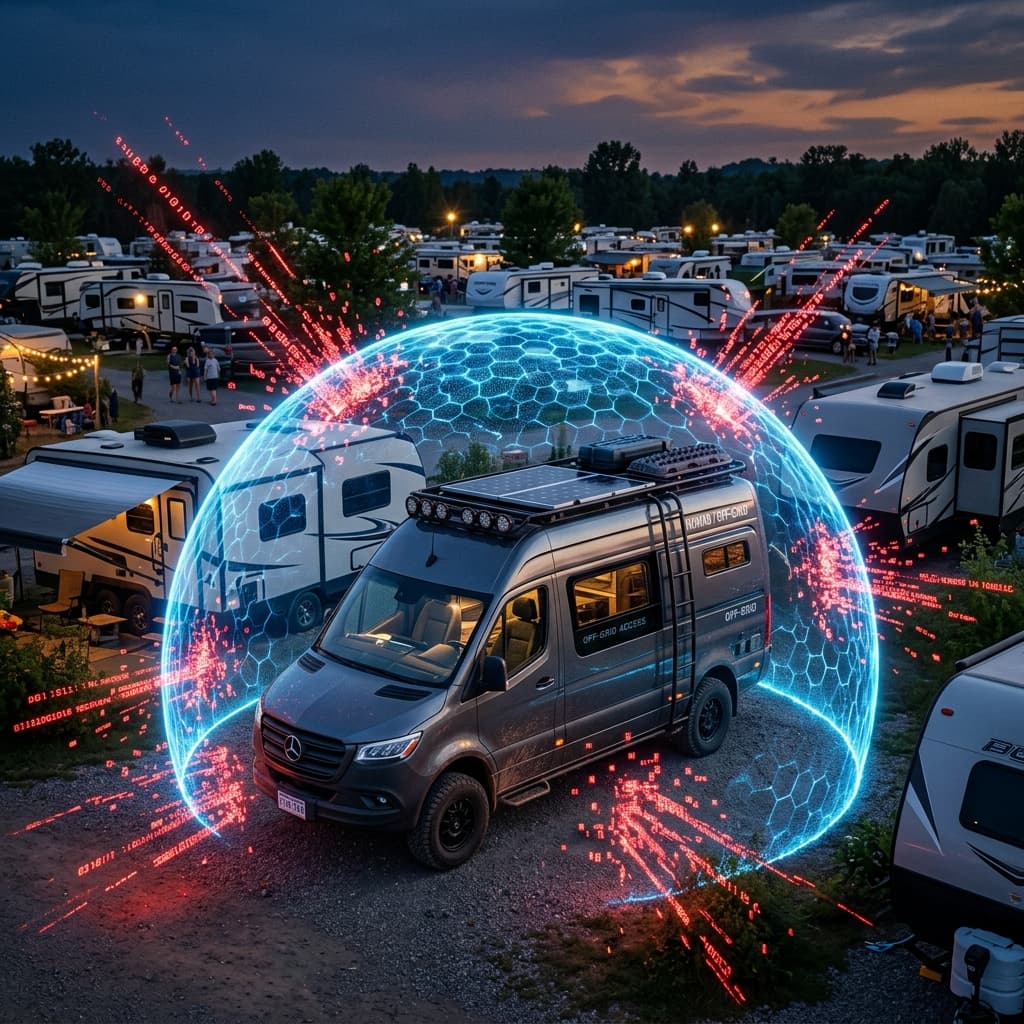
Smart RV Cybersecurity: Protecting Your Off-Grid Network in 2026
Your camper is a rolling data target. Learn how to physically and digitally secure your Starlink, Victron Gateway, and IoT devices from malicious actors roaming crowded RV parks.
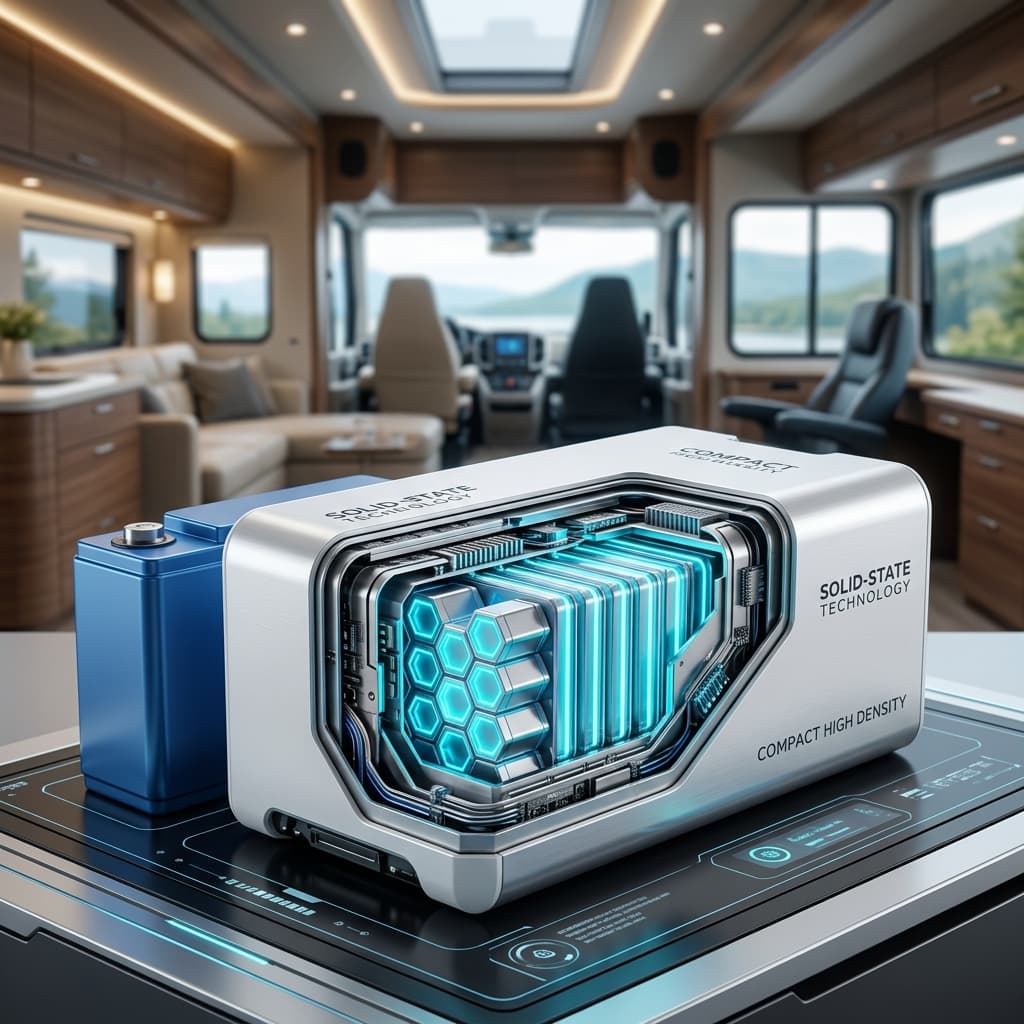
The End of LiFePO4? Solid State Batteries Arrive in the 2026 Caravaning Market
Twice the energy density, half the weight, and zero fire risk. Solid-state technology is no longer a dream, it's the 2026 reality for high-end RV builds.