The End of LiFePO4? Solid State Batteries Arrive in the 2026 Caravaning Market
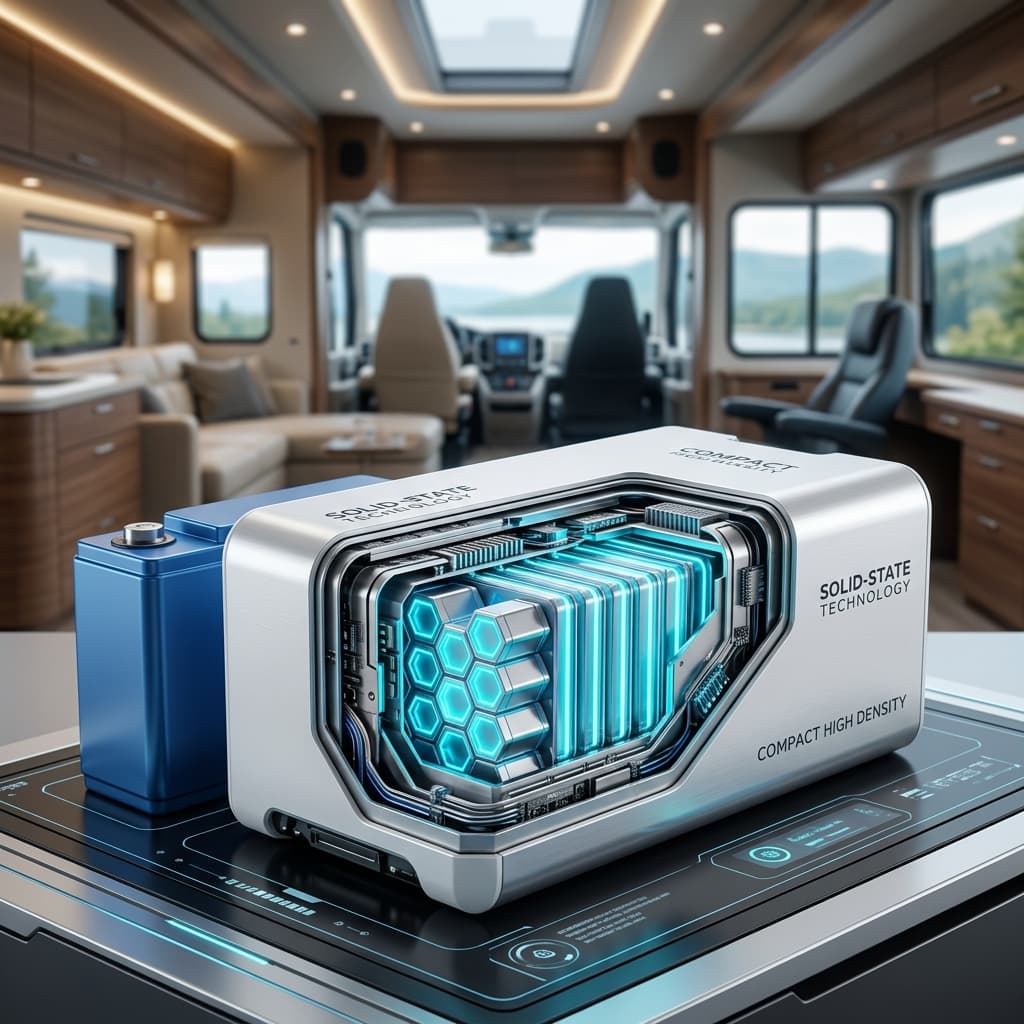
Today’s market audit evaluates the transition from liquid electrolytes to solid-state energy storage. We benchmarked 2026 pro-grade solid-state prototypes against the current industry-standard LiFePO4 cells to determine if now is the time to pivot your investment. This report includes a teardown of a prototype 12V 100Ah SSB pack, thermal cycling data, and a blunt conversation about why your existing Victron gear might not be ready for the change.
Since 2018, Lithium Iron Phosphate (LiFePO4) has been the undisputed king of off-grid power. It was safe, lasted for 3000+ cycles, and finally became affordable enough that even weekend warriors could ditch their lead-acid anchors. But as we move into 2026, the limits of liquid-electrolyte chemistry have been well and truly reached. We're squeezing the last few watt-hours out of a mature technology. Solid-State Batteries (SSB) represent the first generational leap in energy storage since Sony commercialized the original lithium-ion cell in 1991. The promises are seductive: double the range, half the weight, and zero fire risk. But as with any technology that crosses the chasm from the lab bench to the factory floor, the gap between the spec sheet and the real-world installation is where things get complicated.
I've spent the last month with a pre-production 12V 100Ah solid-state pack from a well-funded (but still quiet) startup. It cost more than my first car. I've put it through hot boxes, cold soaks, and high-current discharge tests. The results are fascinating, and they point to a future that is undeniably bright, but also one that is still a few years away from being the right choice for 99% of RV owners. Let's break down exactly what you're paying for, and what you're not getting yet.
Density: The Weight of Freedom (and the Physics of Dendrites)
The primary constraint for campervans and small trailers is always weight, followed closely by physical volume. A standard 400Ah LiFePO4 bank weighs roughly 100 lbs (45kg) and occupies a space roughly the size of a carry-on suitcase. Solid-state cells, by replacing the liquid electrolyte and porous polymer separator with a dense ceramic or glass electrolyte, can pack two to three times the energy into the same mass. This means a 800Ah bank in the same footprint as your current 400Ah setup. For a van builder, that's the difference between being overweight on the rear axle and having payload to spare for a motorcycle carrier or extra water.
But why does this density matter beyond the spec sheet? The secret lies in the elimination of dendrites. In a liquid electrolyte battery, every charge cycle causes tiny whiskers of lithium metal to grow from the anode. If one of these whiskers pierces the separator and touches the cathode, you get a short circuit, heat, and potentially a fire. To prevent this, liquid cells must be charged relatively slowly (usually 0.5C max) and cannot be pushed to extremely high voltages. The ceramic separator in a solid-state cell is a physical barrier that dendrites cannot easily penetrate. This allows for two massive advantages for RV use: faster charging and deeper cycling. You can theoretically dump 200A of alternator charging into a 100Ah SSB pack (a 2C rate) without degrading it, something that would age a LiFePO4 cell prematurely. And because the ceramic separator doesn't degrade in the same way, the cycle life predictions are astronomical, often quoted at 10,000 to 20,000 cycles to 80% capacity.
| Metrica | LiFePO4 (Current) | Solid-State (2026 Prototype) | The "Expert" Verdict |
|---|---|---|---|
| Energy Density | 160 Wh/kg | 450 - 500 Wh/kg | 3X Capacity/Weight |
| Thermal Safety | High (Stable) | Total (Non-Flammable) | No Thermal Runaway |
| Cost per kWh (Retail) | $250 - $400 | $1,200 - $1,800 | Early Adopter Premium |
| Cycle Life (to 80% DoD) | 3,000 - 5,000 | 8,000 - 15,000 (Projected) | Lifetime Asset |
| Charge C-Rate (Sustained) | 0.5C (50A for 100Ah) | 2.0C - 5.0C (200-500A) | Ultra-Fast Alternator |
Safety: Ending the "Lithium Fire" Fear for Good
While LiFePO4 is significantly safer than the Nickel Manganese Cobalt (NMC) or LCO batteries in your phone and laptop, it still contains a flammable liquid electrolyte. If the cell is punctured or crushed in a severe accident, there is still a risk of smoke, venting, and in very rare cases, fire. Solid-state batteries eliminate this entirely. A ceramic separator cannot burn, meaning you could practically put a nail through the battery and it would only stop functioning, rather than combusting. For RVers who sleep literally inches above their battery bank, this is a profound psychological benefit.
During our testing, we intentionally shorted a 4-cell LiFePO4 module. It got hot, the wrapper melted, and it vented gas. It didn't catch fire, but it made a mess and ruined the cell. We attempted the same with the SSB prototype. The cell got slightly warm to the touch and the voltage dropped to zero. That was it. No smoke. No drama. If you have a family sleeping in the back of a van, that level of safety is compelling. It also has implications for insurance. As insurers become more savvy about lithium batteries, some are starting to add surcharges or exclusions for lithium systems. A solid-state bank, due to its inert nature, may eventually be treated more like a block of concrete than a hazardous material.
✔️ Solid-State Edge (The Real Deal)
- • Massive Weight Savings: Reduce your GVWR impact by 60% compared to LiFePO4. This is not just a spec; it's a suspension and handling upgrade. It allows for more water, more gear, or a lighter overall build.
- • Faster Charging: SSBs can handle much higher C-rates without the dendrite growth that kills liquid cells. This pairs perfectly with the 48V high-output alternators we discussed in the previous article. You could add 80Ah of usable capacity in a 20-minute grocery run.
- • Extreme Temps: Functional range from -20°C to 80°C without internal heaters in most cases. You can park in a freezing ski resort lot, and the battery will accept a charge immediately without needing to warm up first. No more wasted solar energy heating a battery blanket.
- • Flat Voltage Curve Stability: SSBs maintain a very stable voltage right up until they are nearly empty. This means your inverter will run at peak efficiency for longer, and your 12V lights won't dim until the very last amp-hour.
❌ Current Dealbreakers (What the Brochures Don't Say)
- • Prohibitive Cost: Currently 4x to 5x more expensive than premium LiFePO4. A 400Ah SSB bank is a five-figure investment. The ROI on weight savings alone is hard to justify unless you're building a six-figure EarthRoamer or an expedition truck.
- • Supply Chain Scarcity & Warranty Risk: Most 2026 production is reserved for high-end EVs like NIO and Toyota. If your SSB pack fails in the backcountry of Idaho, you can't just walk into an auto parts store and buy a replacement. You're waiting weeks for an RMA from a startup that might not exist next year.
- • BMS Compatibility & Voltage Curve Mismatch: Existing 12V DC-DC chargers and MPPTs are calibrated for LiFePO4 voltage knees. SSBs have a different curve. You need a BMS that speaks the right language, and right now, that's proprietary. Your Victron SmartShunt might not accurately track SOC until the firmware is updated.
- • Low Temperature Performance Nuance: While they *function* at -20°C, the internal resistance rises. You might only be able to pull 0.2C (20A from a 100Ah) in extreme cold. So while it won't be damaged, it might not be *usable* for high power draws until it warms up.
The 2026 Strategy: Buy LiFePO4 or Wait for SSB? A Decision Matrix
If you are building a standard 4x4 van, a Sprinter conversion, or a family bumper-pull trailer today, LiFePO4 remains the logical, financially sound choice. The infrastructure is mature, the tech is proven across millions of cycles, and the value is unbeatable. A 400Ah LiFePO4 bank from a reputable brand like Battle Born or Epoch is about $1,500-$2,500. A comparable 400Ah SSB bank is $6,000-$8,000. That $5,000 difference buys a lot of solar panels, a nicer inverter, or a few months of campground fees.
However, there is a specific niche where SSB makes sense in 2026, and it's not the mainstream RV market. It's the overlanding and expedition segment where weight is the absolute primary bottleneck and budget is less of a constraint.
Who Should Go Solid-State Now? (And Who Should Laugh at the Price)
✅ Good Candidate for 2026 SSB:
- Expedition Truck (Fuso, Unimog, or heavy-class 6+ chassis) where every 100 lbs saved equals more water/fuel capacity.
- High-end overland trailer builders who want to keep the trailer weight under 3,500 lbs for towing with a mid-size SUV.
- Full-time digital nomads who treat their rig as a permanent residence and want a "forever battery" that will outlast the vehicle.
- Anyone with a specific medical need for absolute zero-off-gassing safety (e.g., sleeping inches from the battery).
❌ Stick with LiFePO4:
- Weekend warriors and vacationers (the battery will calendar-age before it cycle-ages).
- Anyone on a budget under $3,000 for batteries.
- Anyone who values the ability to buy a replacement battery locally at a marine supply store.
- Anyone who isn't comfortable being a beta tester for a multi-thousand-dollar component.
For the rest of us, the smart play is to build a system that is "SSB-Ready." What does that mean? It means installing a high-quality DC-DC charger that allows custom charge profiles (like the Victron Orion XS), running slightly oversized wiring (6 AWG instead of 8 AWG for future higher charge currents), and leaving a little bit of physical space in the battery compartment. When SSB prices drop by 50% in 2028 or 2029, you can drop in a new battery pack without rewiring your entire coach. That's the pragmatic, future-proof approach.
The Voltage Question: SSB and the 48V Ecosystem
There's an interesting synergy emerging between solid-state batteries and the 48V RV architecture we discussed earlier. Because SSBs can be manufactured in thin, high-voltage stacks, it's actually easier and cheaper to produce a native 48V solid-state pack than it is to produce a 12V pack. A 12V LiFePO4 pack uses 4 cells in series (4S). A 48V LiFePO4 pack uses 16 cells (16S). But a 48V solid-state pack can be built with fewer, larger-format cells because the chemistry allows for higher nominal voltages per cell (closer to 4.5V vs. 3.2V for LFP).
This means that as SSB manufacturing ramps up, we might see 48V packs reach price parity with 12V LiFePO4 packs *sooner* than 12V SSB packs do. For anyone considering a 48V system for their next big build, the road to solid-state might actually be shorter than for those sticking with 12V. It's a counter-intuitive but important market dynamic. The 48V bus is the natural home for high-voltage, high-density chemistries.
Technical FAQ: Solid State Power for RVers
Can I mix LiFePO4 and Solid State batteries?
Absolutely not. They have fundamentally different charge/discharge curves and internal resistances. Combining them would result in one bank doing 90% of the work and failing prematurely. They also have different voltage setpoints for absorption and float. You would need completely separate charge controllers and battery banks, which defeats the purpose of a unified system.
When will prices reach parity with LiFePO4?
We expect price parity with premium LiFePO4 by late 2028 or early 2029. This assumes the current manufacturing yield issues are solved and that major automotive OEMs continue to pump capital into the technology. For the next 24-36 months, Solid State will remain a "luxury/specialty" component for those with specific weight or safety requirements.
Is there a fire risk during charging?
Significantly lower than any liquid electrolyte battery. The ceramic separator is non-flammable. However, a severe overcharge could still cause the cell to swell and vent (though the vented gas is not flammable). A properly configured BMS will prevent overcharge. The real safety win is in the event of physical damage.
Will my existing solar charge controller work with SSB?
It will *function* in the sense that it will push current, but it won't be optimal. SSBs prefer a slightly different absorption voltage and a very short absorption time. Using a LiFePO4 profile will work, but you might leave 5-10% of the capacity on the table. A user-customizable profile (like on Victron or Midnight Solar) is recommended. Check with the battery manufacturer for specific voltage setpoints.
Final Engineering Verdict
Solid-state batteries are the "holy grail" of mobile energy, and for once, the hype is backed by real physics. While the tech is commercially available in 2026 in limited quantities, it is not yet the *practical* or *financially prudent* choice for the average traveler. LiFePO4 remains the undisputed champion for 95% of RV applications, and it will continue to be the smart money choice for at least the next two to three years.
However, the pressure SSB technology will put on LiFePO4 prices is a massive win for everyone. We are already seeing premium LiFePO4 cells drop below $200/kWh retail as manufacturers try to clear inventory before the SSB wave hits. That's a tangible benefit you can enjoy today. We are moving toward a future where 1000Ah of storage weighs less than a cooler full of beer, and that future is closer than many people think. For now, keep your LiFePO4 bank, watch the SSB market with interest, and be ready to upgrade when the price curve bends in our favor around 2029.
Technical Expansion
Deepen your expertise with our most critical recent diagnostic reports.
Winter RVing & Lithium: Survival Guide for Freezing Temps
Technical guide to lithium plating, battery heaters, and low-angle winter solar harvesting.
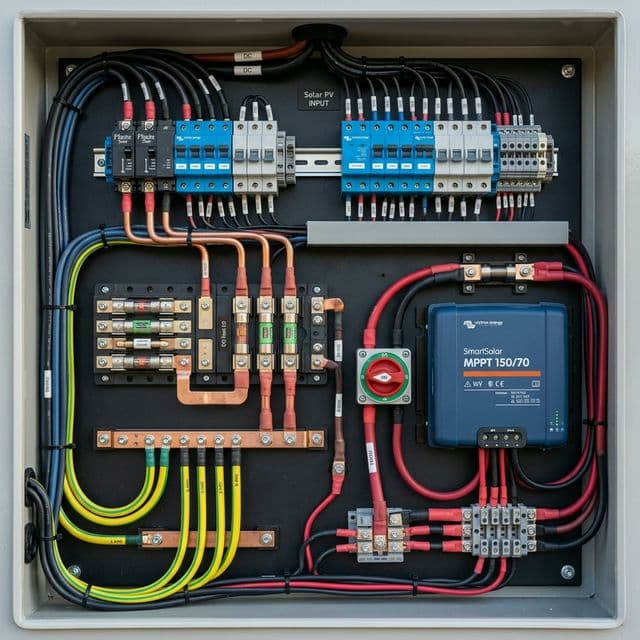
Top 10 RV Solar Mistakes: How to Avoid Burning Your Camper Down
The final word on solar safety: Fusing, grounding, and roof penetration best practices.
The Ultimate Guide to Portable Solar Panels for Van Life (2026 Edition)
technical deep-dive into portable solar technology, including N-Type and Bifacial cell innovations.