CyberLandr Turns Your Cybertruck into an RV with Starlink - Not a Tesla App
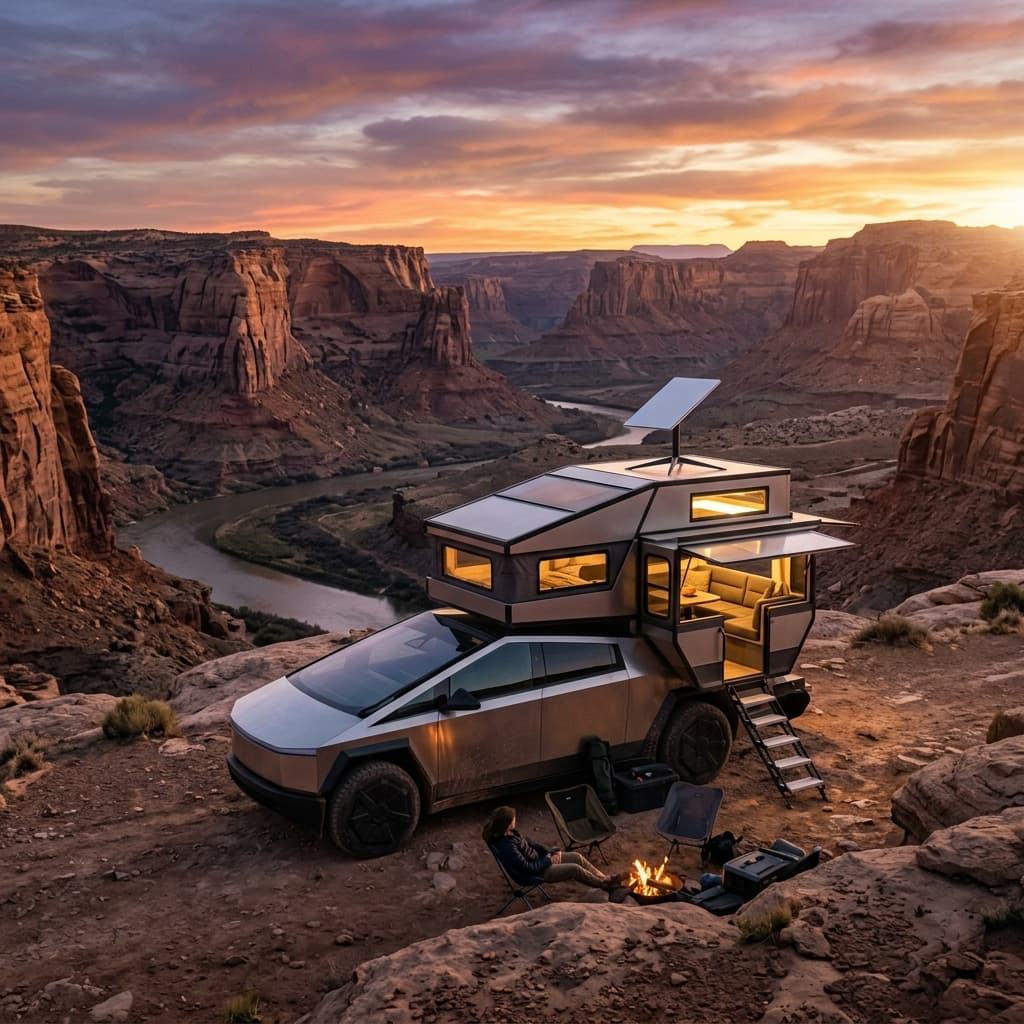
In the evolving landscape of nomadic living, the integration of advanced solar energy systems with vehicles like the Tesla Cybertruck, exemplified by the CyberLandr RV conversion, underscores a paradigm shift towards high-efficiency, connected off-grid capabilities. This article delves into the physics of next-generation photovoltaics, the socio-economic ramifications of energy independence, and the 2026 trends shaping solar-powered mobility, offering a comprehensive technical analysis for enthusiasts and engineers alike.
As we approach 2026, the confluence of renewable energy technology and recreational vehicle (RV) design has catalyzed a revolution in nomadic living. No longer confined to rudimentary camping, modern off-grid enthusiasts demand seamless integration of solar power, high-density energy storage, and global connectivity, turning vehicles like motorhomes, camper vans, and even electric pickup trucks into autonomous mobile habitats. The emergence of products such as the CyberLandr—a bespoke RV module for the Tesla Cybertruck with integrated Starlink internet—highlights a trend where solar energy systems are not mere accessories but core components of vehicle architecture. This article explores the industry trends driving this transformation, the underlying physics enabling greater efficiency, and the profound socio-economic impacts on communities embracing a solar-powered nomadic lifestyle.
The standard for off-grid power in 2026 has evolved beyond traditional lead-acid batteries and rigid solar panels. Today's systems leverage Gallium Nitride (GaN) semiconductors for power conversion, Sodium-Ion batteries for sustainable energy storage, and Perovskite solar cells for flexible, high-efficiency photovoltaics. These advancements are redefining what is possible in terms of energy harvest, weight distribution, and space utilization within compact mobile environments. From a socio-economic perspective, the democratization of solar technology is empowering individuals to decouple from fixed infrastructure, fostering new forms of remote work, sustainable tourism, and resilient living. This analysis provides a deep dive into these elements, tailored for technical audiences seeking to understand the future of solar energy in nomadic applications.
Industry Trends: The Convergence of Mobility, Energy, and Connectivity
The RV and off-grid solar industry is experiencing rapid innovation, driven by consumer demand for sustainability, autonomy, and digital connectivity. Key trends include the electrification of propulsion systems, modular vehicle designs, and the integration of renewable energy sources directly into vehicle bodies. The CyberLandr case study exemplifies this: it transforms the Cybertruck into a fully functional RV with built-in solar panels on its roof, coupled with Starlink satellite internet for uninterrupted connectivity. This trend is part of a broader movement towards "vehicle-to-home" (V2H) and "vehicle-to-grid" (V2G) systems, where electric vehicles serve as mobile power banks, capable of supplying energy to remote locations or back to the grid during peak demand.
Another significant trend is the miniaturization and efficiency gains in power electronics. Gallium Nitride (GaN) transistors are replacing silicon-based components in inverters and charge controllers, offering higher switching frequencies, reduced heat generation, and smaller form factors. This allows for more compact solar systems that can be integrated into sleek vehicle designs without compromising performance. Additionally, the adoption of smart energy management systems, powered by AI and IoT sensors, enables real-time optimization of energy consumption based on weather forecasts, battery health, and user behavior. These trends are making solar-powered nomadic living more accessible and reliable than ever before.
Modular Solar Solutions and Vehicle Integration
Modern RVs and camper vans are increasingly designed with integrated solar solutions from the ground up. Unlike retrofitted panels, these systems are aerodynamically optimized, reducing drag and improving vehicle efficiency. For instance, the CyberLandr incorporates semi-flexible solar panels that contour to the vehicle's roof, maximizing surface area without adding significant weight. This integration is complemented by modular battery packs, such as those using Sodium-Ion chemistry, which offer better thermal stability and resource abundance compared to traditional lithium-ion batteries. These packs can be easily swapped or expanded, allowing users to customize their energy capacity based on trip duration and power needs.
Pros and Cons of Integrated vs. Retrofit Solar Systems
Integrated Systems (e.g., CyberLandr)
- Pros: Superior aerodynamics, higher energy yield due to optimal placement, seamless aesthetics, often include pre-wired management systems.
- Cons: Higher upfront cost, limited flexibility for upgrades, vehicle-specific design may not be transferable.
Retrofit Systems (Traditional Add-ons)
- Pros: Lower initial investment, customizable for various vehicle types, easier to repair or replace components.
- Cons: Potential for wind resistance, installation challenges, may require drilling or modifications that affect warranties.
The Physics of Solar Energy Conversion: From Photons to Watts
At the heart of solar-powered nomadic living lies the photovoltaic effect, a quantum mechanical process where photons from sunlight dislodge electrons in semiconductor materials, generating direct current (DC) electricity. Understanding this physics is crucial for optimizing system design. Traditional silicon-based solar cells have dominated the market, with monocrystalline silicon offering efficiencies up to 22-24%. However, next-generation materials like Perovskite are pushing boundaries, with laboratory efficiencies exceeding 25% and potential for tandem cells that combine layers to capture a broader spectrum of light.
The efficiency of a solar panel is influenced by factors such as bandgap energy, temperature coefficients, and spectral response. For mobile applications, where space is limited, high-efficiency cells are paramount. Perovskite solar cells, for example, offer advantages like flexibility, lightweight, and lower production costs, making them ideal for curved surfaces on RVs. Moreover, the use of anti-reflective coatings and maximum power point tracking (MPPT) charge controllers ensures that even under suboptimal conditions (e.g., partial shading or angled sunlight), energy harvest is maximized.
Advanced Materials: GaN, Perovskite, and Sodium-Ion Explained
Gallium Nitride (GaN): This wide-bandgap semiconductor is revolutionizing power electronics in solar systems. GaN-based inverters and converters operate at higher frequencies (up to 10x faster than silicon), reducing the size of magnetic components like inductors and transformers. This leads to lighter, more efficient systems that dissipate less heat, crucial for the confined spaces of RVs. For instance, a GaN charge controller can achieve efficiencies over 98%, minimizing energy loss between the solar panels and batteries.
Perovskite Solar Cells: These are hybrid organic-inorganic lead or tin halide-based materials that exhibit exceptional light absorption and charge carrier mobility. Their tunable bandgap allows for customization to different light conditions, enhancing performance in variable weather common during travel. While stability issues under humidity and UV exposure are being addressed with encapsulation techniques, Perovskite cells promise to lower the cost per watt and enable innovative applications like solar-integrated windows on motorhomes.
Sodium-Ion Batteries: As an alternative to lithium-ion, Sodium-Ion batteries use abundant sodium resources, reducing geopolitical dependencies and environmental impact. They operate on similar principles but with sodium ions shuttling between electrodes. Although their energy density is currently lower (100-150 Wh/kg compared to 200-250 Wh/kg for lithium-ion), improvements in cathode materials like layered oxides are closing the gap. For nomadic use, their superior safety profile and performance in extreme temperatures make them attractive for energy storage in diverse climates.
Comparative Technical Data: Solar Cell Technologies (2026 Projections)
| Technology | Efficiency Range (%) | Weight (kg/m²) | Cost per Watt (USD) | Suitability for RVs |
|---|---|---|---|---|
| Monocrystalline Silicon | 20-24 | 12-15 | 0.30-0.40 | High – Reliable, durable, but rigid |
| Polycrystalline Silicon | 15-18 | 14-16 | 0.25-0.35 | Medium – Cost-effective, lower efficiency |
| Thin-Film (CIGS) | 12-15 | 3-5 | 0.35-0.45 | High – Flexible, lightweight, good for curved surfaces |
| Perovskite (Stabilized) | 22-26 | 2-4 | 0.20-0.30 (projected) | Very High – Efficient, flexible, emerging technology |
Socio-Economic Impact: Redefining Nomadic Communities
The adoption of solar energy in nomadic lifestyles is not merely a technical advancement but a socio-economic phenomenon. It enables energy independence, reducing reliance on fossil fuels and crowded campgrounds with hookups. This autonomy fosters new forms of community, such as digital nomad hubs in remote areas, where individuals work remotely via Starlink connectivity while powered by solar arrays. The CyberLandr example illustrates this: it combines transportation, living space, and off-grid power into a single asset, lowering the barrier to long-term travel and remote work.
Economically, solar-powered RVs can reduce operational costs by eliminating fuel expenses for generators and decreasing grid electricity dependence. Over a 10-year lifespan, a well-designed solar system on an RV can save thousands of dollars, with payback periods shortening as technology costs decline. Moreover, this trend is creating jobs in sectors like renewable energy installation, EV maintenance, and remote tourism services. However, it also raises challenges, such as the digital divide—where access to advanced solar tech remains unequal—and regulatory issues around vehicle modifications and energy storage safety.
Environmental and Cultural Shifts
Environmentally, solar-powered nomadic living reduces carbon footprints, but it requires responsible disposal of solar panels and batteries. The industry is moving towards circular economy models, with recycling programs for lithium-ion and Sodium-Ion batteries. Culturally, this lifestyle promotes minimalism and sustainability, influencing mainstream attitudes towards consumption and mobility. Events like solar-powered RV rallies and online communities share knowledge on system optimization, fostering a culture of innovation and self-reliance.
Socio-Economic Pros and Cons of Solar-Powered Nomadic Living
Positive Impacts
- Economic Savings: Lower energy costs and reduced fuel dependency over time.
- Job Creation: Growth in green tech sectors, remote work opportunities, and eco-tourism.
- Community Building: Formation of supportive networks for knowledge exchange and collaboration.
- Environmental Benefits: Decreased greenhouse gas emissions and promotion of renewable energy adoption.
Challenges and Considerations
- High Initial Investment: Advanced solar systems and vehicles like the Cybertruck require significant capital.
- Technological Divide: Disparities in access to high-efficiency components and connectivity.
- Regulatory Hurdles: Varying laws on vehicle modifications, energy storage, and off-grid living across regions.
- Waste Management: Need for sustainable recycling solutions for end-of-life solar panels and batteries.
Future Perspectives: Towards 2030 and Beyond
Looking ahead, the integration of solar energy in nomadic living will continue to evolve with advancements in materials science and digitalization. By 2030, we can expect widespread adoption of Perovskite-silicon tandem cells, offering efficiencies over 30%, making solar arrays on RVs even more compact and powerful. Sodium-Ion batteries may become the standard for energy storage due to their sustainability and cost reductions. Furthermore, AI-driven energy management systems will predict user needs and optimize power flow autonomously, enhancing convenience and efficiency.
The concept of "vehicle-as-a-platform" will expand, with modular designs like the CyberLandr inspiring more conversions for electric vehicles. This could lead to new business models, such as solar-powered RV sharing subscriptions or mobile workspaces that roam based on solar potential. Additionally, as space-based solar power and enhanced battery technologies emerge, the boundaries of off-grid living will push further into extreme environments, from deserts to polar regions.
Conclusion: The Solar-Powered Nomadic Ethos
In conclusion, the fusion of solar energy with recreational vehicles represents a technical and cultural milestone. From the physics of next-gen photovoltaics to the socio-economic empowerment of off-grid communities, this trend is reshaping how we perceive mobility and independence. As technologies like GaN, Perovskite, and Sodium-Ion mature, they will unlock new possibilities for sustainable living on the move. For technical enthusiasts and industry professionals, understanding these dynamics is key to innovating and thriving in the evolving landscape of solar-powered nomadic life. The journey from photons to freedom, exemplified by innovations like the CyberLandr, is just beginning.
Technical Expansion
Deepen your expertise with our most critical recent diagnostic reports.
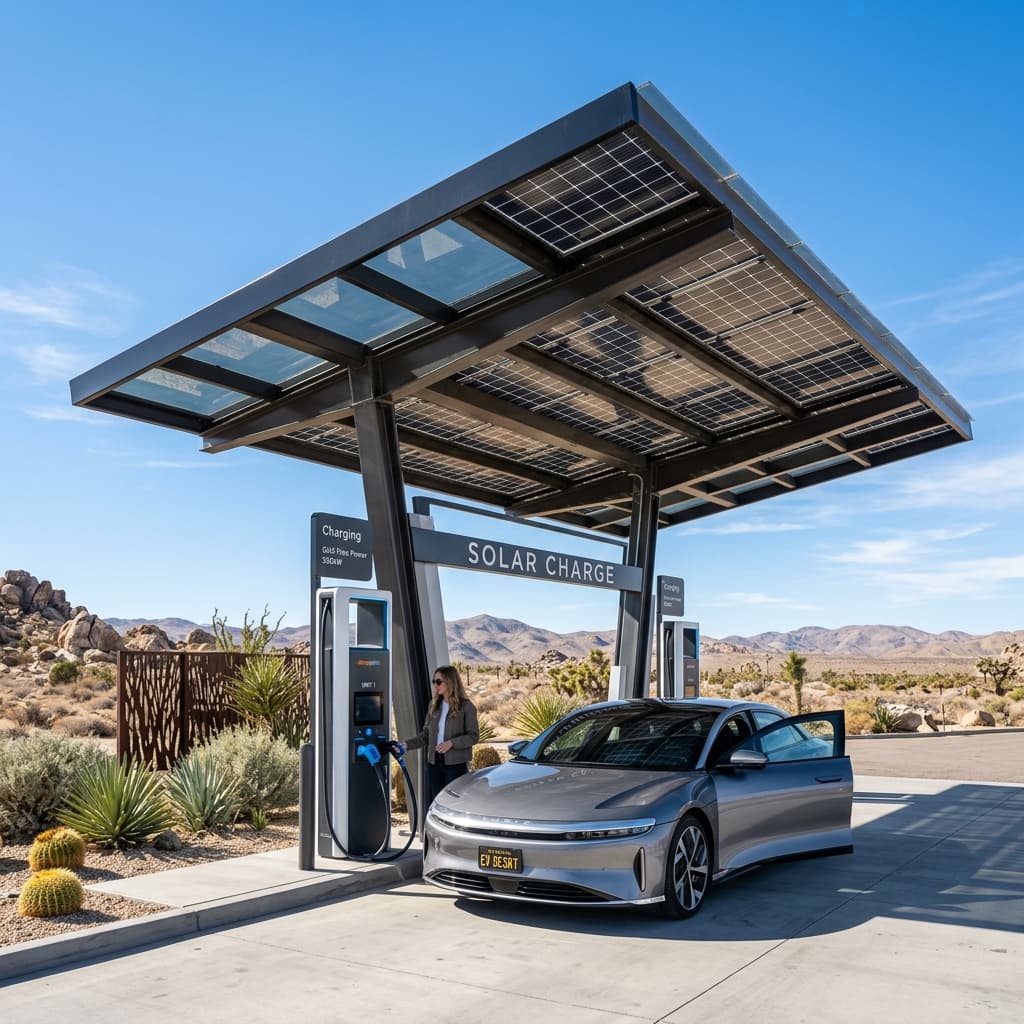
New Off-Grid EV Charger Runs on Sunshine and Costs You Nothing - AOL.com
Beyond the Plug: The Physics, Economics, and Autonomy of Solar-Powered Nomadism in 2026 A Technical Analysis for the Energy-Independent Traveler The convergence...
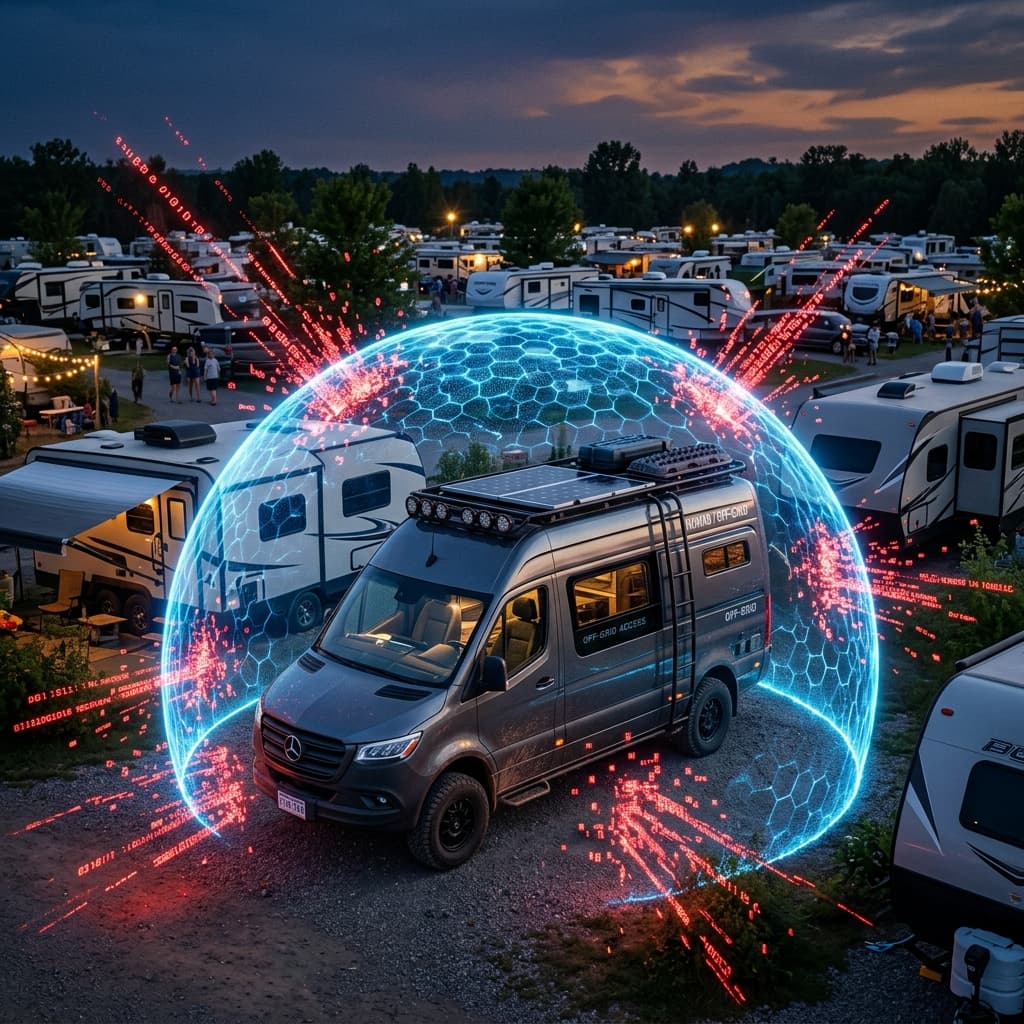
Smart RV Cybersecurity: Protecting Your Off-Grid Network in 2026
Your camper is a rolling data target. Learn how to physically and digitally secure your Starlink, Victron Gateway, and IoT devices from malicious actors roaming crowded RV parks.

The End of LiFePO4? Solid State Batteries Arrive in the 2026 Caravaning Market
Twice the energy density, half the weight, and zero fire risk. Solid-state technology is no longer a dream, it's the 2026 reality for high-end RV builds.