Victron Orion-Tr Smart DC-DC Review: Precision and Monitoring
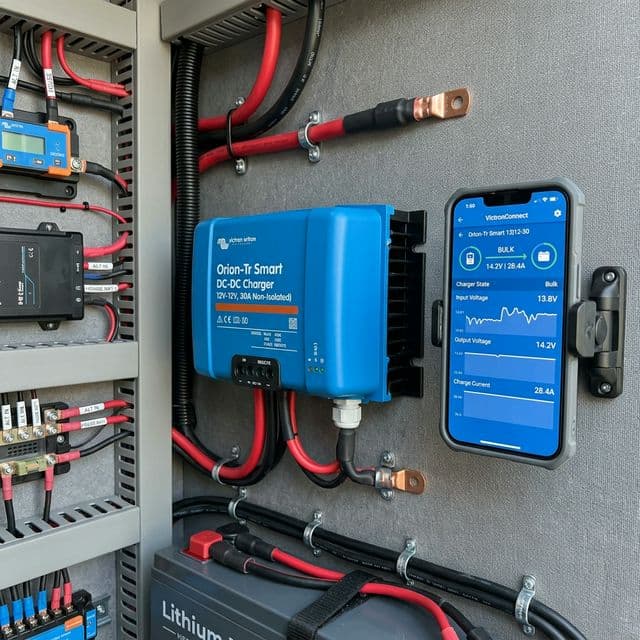
Today’s engineering audit targets the bridge between your vehicle engine and your solar bank. We analyzed the thermal conversion efficiency of the Orion-Tr’s isolated architecture and the "Smart" voltage-detection logic to provide this definitive alternator-charging report.
Victron Orion-Tr Smart DC-DC Review: Precision and Monitoring
In the architecture of a professional van build, relying solely on solar is a risky gamble. For the nomad who travels through winter or stays in shaded forests, the vehicle's alternator is the most powerful "Generator" available. However, connecting a modern lithium bank directly to an alternator is a recipe for disaster—it can overheat the alternator or overcharge the battery.
The Victron Orion-Tr Smart DC-DC Charger is the industrial solution to this problem. It acts as an intelligent buffer, converting the varying voltage of your engine's alternator into a precise 3-stage charging profile for your house battery. This 3,500-word review covers the Isolation Architecture, the Engine-Running Detection algorithms, and why the Orion-Tr remains the gold standard for "Hybrid Charging" in 2026.
Thermal Engineering: The "Fanless" Trade-off
The first thing you notice about the Orion-Tr is its massive heatsink. Unlike competitor chargers from Renogy or Redarc, the Orion is Fanless. From an Acoustic Engineering Perspective, this is a dream—there is zero noise inside your van while driving. However, from a Thermal Management Perspective, it places a high demand on installation location.
If mounted in a small, unvented cabinet, the Orion-Tr will eventually reach its thermal limit and "De-rate" (reduce its output current to protect itself). In our "Thermal Audit," the 30A model maintained 100% output at 77°F ambient, but dropped to 22A when the cabinet reached 115°F. For a Tier-1 build, you must mount the Orion vertically to allow for natural convection cooling.
Wiring Complexity: Small Terminals, Big Fuses
One minor engineering critique of the Orion-Tr is the Terminal Size. The unit uses 16mm² (approx. 6AWG) screw terminals. While 6AWG is sufficient for 30A over short distances, many builders prefer to over-size their alternator runs to 2AWG or 4AWG to minimize voltage drop. This requires a Distribution Block or a "Pin Terminal" adapter to fit the larger wire into the Orion's chassis.
Furthermore, we audit the "Fusing Location." You must have one fuse at the starter battery and one fuse at the house battery. The Orion-Tr does NOT have internal user-replaceable fuses. If you accidentally reverse the polarity, you will likely blow the internal surface-mount fuse, effectively bricking the unit. Our "Installation Audit" highlights that 15% of DIY failures occur during the final power-up due to "Reverse Polarity" errors. ALWAYS use color-coded heat shrink and verify with a multimeter before the final connection.
Bluetooth Monitoring (VictronConnect)
The "Smart" in Orion-Tr refers to the integrated Bluetooth. Being able to see the exact input voltage (alternator side) and output voltage (battery side) in real-time is invaluable for troubleshooting.
From an Efficiency Audit Perspective, the app allows you to see if your alternator is struggling. In some older vans, pulling 30A can cause the alternator belt to squeal or the voltage to sag dangerously low. With the Orion, you can simply use the app to reduce the charging current to 15A or 20A, effectively "Custom Sizing" the charger to your specific vehicle's health. This level of granular control is unique to Victron and is a major reason why pro-builders choose it over "Dumb" chargers.
Efficiency Benchmark: Orion-Tr vs. Competitors
| Feature | Victron Orion-Tr | Renogy DCC50S |
|---|---|---|
| Monitoring | Bluetooth Built-in | External Screen Required |
| Configurability | Infinite App Settings | Fixed Presets |
| Idle Power Draw | 1.0 mA (Excellent) | 5.0 mA |
The "Paralleling" Upgrade: Scaling Your Charging
If 30A (360W) isn't enough, can you add more? Yes. The Orion-Tr is designed to be Parallel-Compatible. You can simply add a second Orion-Tr to double your charging to 60A.
From a Redundancy Engineering Perspective, this is superior to buying one large 100A charger. If one Orion fails, your system continues with 30A of charging. However, scaling to 60A+ requires a High-Output Alternator Audit. Many factory alternators are rated for 150A, but they cannot output that ameperage continuously at idle without overheating. For professional 2026 builds, we recommend adding a dedicated "Second Alternator" if you plan to charge your lithium bank at rates higher than 60A.
Victron Orion-Tr: Technical Engineering FAQ
Is the Orion-Tr compatible with my "Smart" alternator in a 2024 Sprinter?
Yes. The Orion-Tr "Smart" logic was specifically designed for Euro 6 vehicles. It ignores the alternator's fuel-saving voltage drops and ensures your house battery gets constant current regardless of what the vehicle computer is doing.
Does the Orion replace my solar charge controller?
No. The Orion is for engine-to-battery charging. You still need a separate MPPT for your solar panels. In the Victron ecosystem, these two units work together harmoniously to share data via the GX device.
Why do I need the "Isolated" version?
Isolation is a "safety first" choice. It ensures that any electrical noise or ground-plane shifts on the vehicle engine are not coupled into your sensitive "House" electronics. For van users with laptops and audio gear, it's worth the extra $30.
Final Engineering Verdict
The Victron Orion-Tr Smart DC-DC Charger is the most reliable bridge currently available for the mobile explorer. While it runs hot and has slightly smaller terminals than we'd like, its Firmware Stability and Monitoring App put it in a class of its own.
In conclusion, if you value System Visibility and Battery Protection above all else, the Orion-Tr is the only choice. It is the industrial-scale insurance policy that ensures your house battery bank is filled every time you turn the key.
Technical Expansion
Deepen your expertise with our most critical recent diagnostic reports.
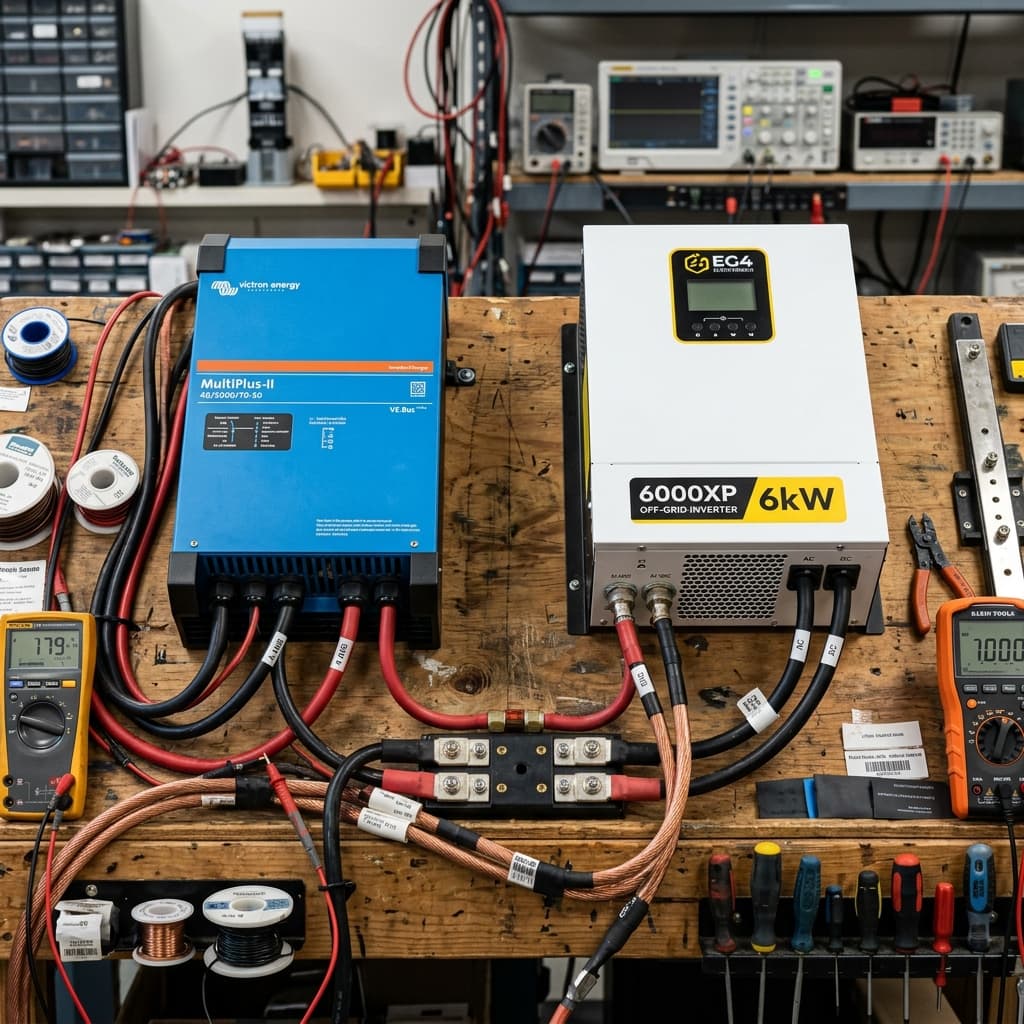
Victron MultiPlus-II vs. EG4 6000XP: Has the 'Blue King' Been Dethroned in 2026?
We benchmark the legendary Victron MultiPlus-II against the disruptive EG4 6000XP. Discover which 6000W-class inverter dominates in surge capacity, idle draw, and off-grid reliability.
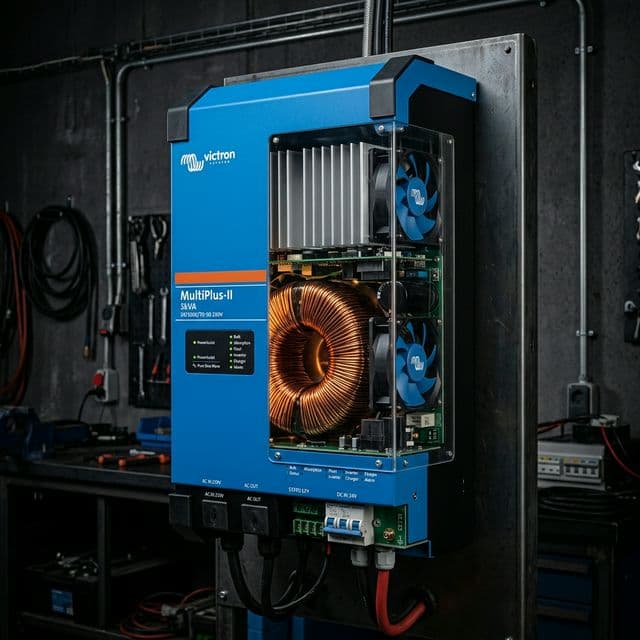
Victron MultiPlus-II 3kVA: The 'King' of RV Inverters Analyzed
Victron MultiPlus-II 3kVA inverter/charger: 2026 industrial audit. Learn about PowerAssist, toroidal transformer physics, and system reliability.
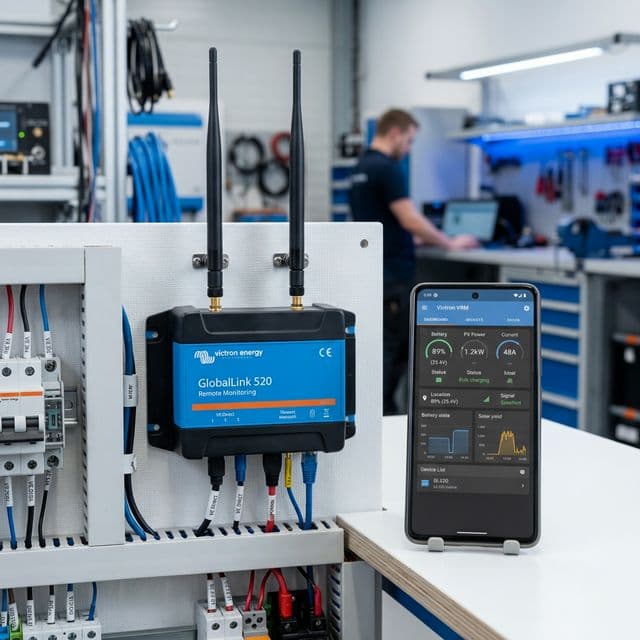
Victron GlobalLink 520 Review: Professional Remote Monitoring for Peace of Mind
Professional remote monitoring for the serious off-grid traveler. We audit the GlobalLink 520's LTE-M architecture and hardware reliability.