Sodium-Ion Batteries for RVs: The End of Lithium Phosphorus?
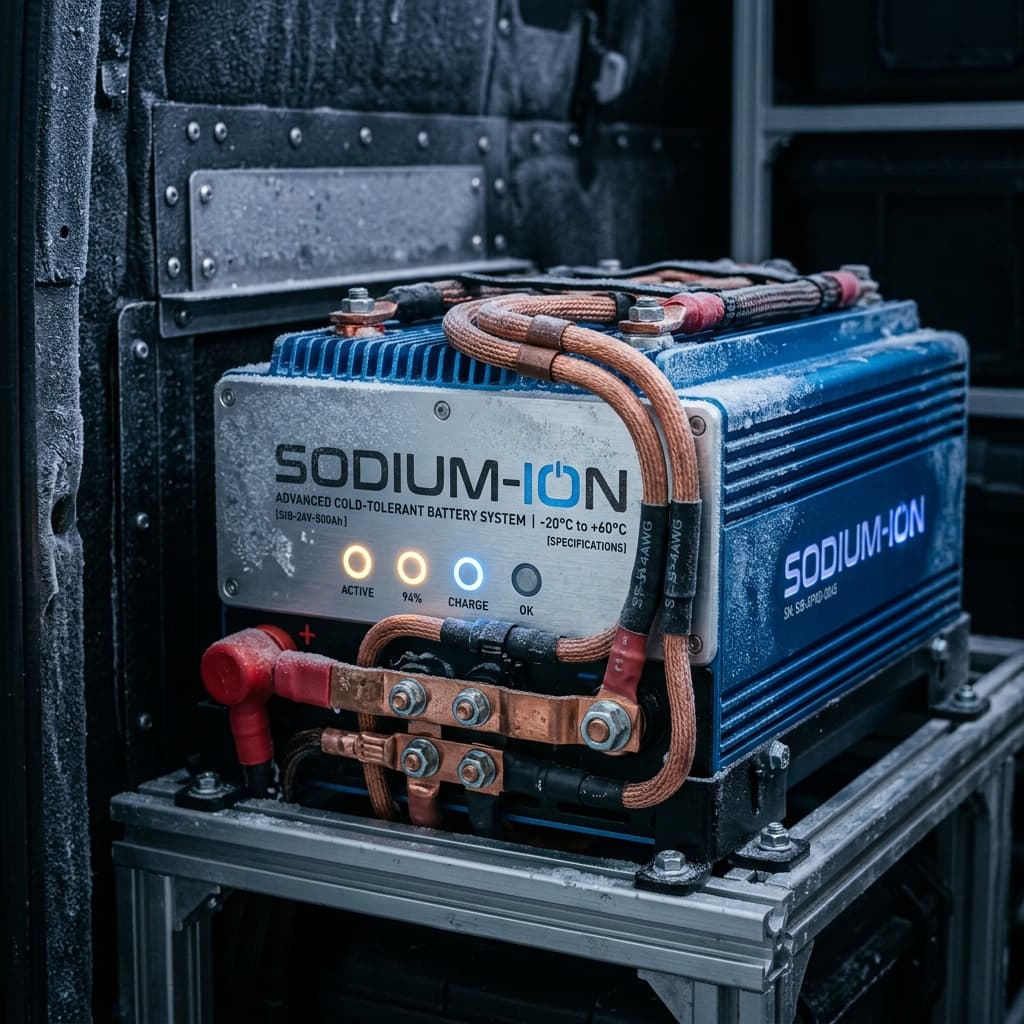
For half a decade, Lithium Iron Phosphate (LiFePO4) has unequivocally reigned supreme as the gold standard of RV energy storage. Yet, as the planet desperately scrambles for scarce lithium reserves, a silent revolution built upon the second most abundant element in our oceans, Sodium, is aggressively driving down storage costs. Has lithium met its match? This comprehensive technical audit examines the 2026 Sodium-Ion landscape, dissecting the chemistry, the economics, and the real-world RV viability.
Any serious off-grid nomad is profoundly aware of the massive upfront investment required to build a worthy battery bank. Securing a 400Ah capacity at 12V often entails parting with thousands of hard-earned dollars. But scaling is necessary to support induction stoves, relentless Starlink nodes, and continuous air conditioning. Enter the Sodium-Ion (Na-Ion) battery: a technology prioritizing radical affordability and extreme safety over ultra-compactness. For the first time since the mass adoption of LiFePO4, a genuine contender has emerged that doesn't just compete on price, it fundamentally redefines the entry barrier to large-scale off-grid living.
The question isn't whether Sodium-Ion will replace Lithium in all applications. It won't. The question is whether it will dominate the specific niche where weight is secondary to cost and cold-weather performance. For the vast majority of RV owners, those with Class A motorhomes, fifth-wheel trailers, and converted school buses, the answer is increasingly a resounding "yes." Let's dissect exactly why this alternative chemistry is poised to reshape the mobile energy market by 2027.
What Are Sodium-Ion Batteries? The Atomic Swap
Similar to lithium-ion architectures, sodium-ion batteries shuffle ions between an anode and a cathode via a liquid electrolyte. The disruptive magic lies simply in the atomic substitution: swapping scarce, geopolitically contentious Lithium for Salt (Sodium). Because sodium is inherently heavier and bulkier at the atomic level, these batteries possess a measurably lower energy density. You will physically need a larger box to store the exact same amount of wattage. A 100Ah Sodium-Ion battery is roughly 10-15% larger and 20-25% heavier than its LiFePO4 equivalent.
However, for medium-to-large recreational vehicles, Skoolies (converted school buses), and fifth-wheel trailers where cargo weight capacities are monumental, sacrificing a small amount of physical volume for exceptional cost savings is the ultimate strategic trade-off. A typical 40-foot diesel pusher has a cargo carrying capacity (CCC) of 5,000 to 10,000 lbs. Adding an extra 100 lbs of battery weight to save $1,500 is a financial no-brainer. The equation only becomes unfavorable in weight-critical applications like truck campers or small Class B vans built on 3/4-ton chassis.
The specific Sodium-Ion chemistry entering the RV market in 2026 is predominantly Prussian White Analogue cathodes paired with Hard Carbon anodes. This combination delivers a nominal voltage of 3.0V per cell (compared to LiFePO4's 3.2V), which means a 4S (four cells in series) Sodium pack has a nominal voltage of 12.0V, aligning almost perfectly with legacy lead-acid and LiFePO4 12V systems. This voltage compatibility is a deliberate engineering choice that allows Sodium batteries to drop into existing RV electrical architectures with minimal modification to charging parameters.
❄️ The -20°C Miracle: Winter Camping Without Anxiety
The Achilles heel of LiFePO4 is its inability to charge in freezing conditions. Charging a cold lithium battery destroys it instantly due to "lithium plating", metallic lithium forming on the anode, puncturing the separator, and causing internal short circuits. Heating pads and self-warming sensors add complexity, cost, and parasitic battery drain (often 4-8W continuously).
Sodium-Ion can natively charge at a staggering -20°C (-4°F) without suffering internal damage. The larger ionic radius of sodium prevents the plating phenomenon. For winter campers, ski bums, and ice fishers, this is a transformational advantage. You can park at a ski resort for a week, let the battery freeze solid, and still harvest every watt of solar power the moment the sun hits the panels.
⚖️ The Heavy Reality: Density Trade-offs
Na-Ion averages around 140-160 Wh/kg in density, notably lagging behind premium LiFePO4 cells hitting 200+ Wh/kg, or high-end solid-state EV batteries topping 300 Wh/kg. A 100Ah Sodium battery weighs approximately 28-32 lbs, while a comparable LiFePO4 weighs 22-25 lbs.
If you are building an ultralight stealth campervan (like a micro Ford Transit Connect), Na-Ion might monopolize too much of your payload. For large Class A RVs? You won't even feel the difference. The weight penalty is easily offset by the savings in your wallet and the peace of mind in freezing temperatures.
The Financial Collapse of Battery Pricing: Why Sodium is Cheaper
Because Sodium is harvested everywhere (even extracted directly from seawater refinement) and utilizes significantly cheaper aluminum foils instead of exorbitant copper current collectors, raw production costs plummet. Lithium's price volatility is legendary, it has swung from $6,000 to $80,000 per ton in the last five years due to geopolitical tensions and mining bottlenecks. Sodium chloride (table salt) costs roughly $100 per ton and is available in effectively infinite quantities.
As mega-factories ramp up operations through 2026 and 2027, experts project a staggering 30% to 50% price reduction per kWh compared to standard entry-level lithium cells on the DIY manufacturing market. We are already seeing 100Ah Sodium-Ion batteries with built-in BMS retailing for $250-$300, while equivalent quality LiFePO4 units still hover around $400-$500. At the raw cell level, Sodium is approaching $50/kWh, a price point that was unthinkable for any lithium chemistry just five years ago.
This cost differential has profound implications for RV system design. A 600Ah LiFePO4 bank (three 200Ah batteries) costs approximately $2,100-$2,700. A comparable 600Ah Sodium-Ion bank costs $1,500-$1,800. That $600-$900 savings can be redirected into more solar panels, a better inverter, or simply kept in the travel fund. For full-time RVers on a fixed income, this is the difference between a comfortable off-grid experience and constant generator dependency.
| Specification | Deep Cycle AGM (Lead Acid) | Premium LiFePO4 | Sodium-Ion (Na-Ion) |
|---|---|---|---|
| Usable Capacity (DoD) | 50% (Severely Limited) | 90-95% | 90-95% |
| Cycle Life (to 80% Capacity) | 300-500 cycles | 3,000-5,000 cycles | 2,000-3,000 cycles (Projected) |
| Cold Charging Performance | Yes, but inefficient | NO (Fatal damage under 0°C) | YES (Safe down to -20°C) |
| Thermal Runaway Risk | Low (Hydrogen Outgassing) | Very Low (Stable Chemistry) | Extremely Low (Inert Chemistry) |
| Price per kWh (Estimated 2026) | $120 | $300 - $450 | $150 - $200 |
| Voltage Range (12V Nominal) | 10.5V - 12.8V | 10.0V - 14.6V | 10.5V - 14.4V (Compatible) |
Cycle Life Deep Dive: Longevity Under Real-World RV Use
One of the remaining question marks surrounding Sodium-Ion is long-term cycle life. LiFePO4 has a proven track record of 3,000-5,000 cycles to 80% capacity retention, with some premium cells exceeding 8,000 cycles in laboratory conditions. Sodium-Ion is newer, so real-world data is limited. However, accelerated aging tests from manufacturers like CATL and HiNa Battery indicate that Sodium-Ion cells can achieve 2,000-3,000 cycles to 80% capacity.
For context, 2,000 cycles represents roughly 5.5 years of daily full discharge, a usage pattern that almost no RVer actually experiences. Most RV batteries are cycled 50-150 times per year (weekend trips plus a few longer vacations). At 100 cycles per year, a 2,000-cycle battery lasts 20 years. Calendar aging, the gradual degradation of the electrolyte and electrodes over time regardless of use, will likely claim the battery long before cycle life becomes the limiting factor. Therefore, for the vast majority of RV users, the cycle life difference between LiFePO4 and Sodium-Ion is academic, not practical.
Additionally, Sodium-Ion cells exhibit a flatter voltage curve than LiFePO4. This means the voltage remains more stable across the state of charge range, from 90% down to 20%. This is beneficial for inverter efficiency (which operates best at higher voltages) and makes state-of-charge estimation via voltage slightly more challenging. A quality battery monitor with a shunt (like the Victron BMV-712) is essential for accurate tracking.
Safety: The Often Overlooked Sodium Advantage
While LiFePO4 is already considered a "safe" lithium chemistry (far safer than the NMC batteries in laptops and EVs), it is not entirely immune to thermal runaway. A severe internal short circuit caused by a manufacturing defect or a catastrophic physical impact can still generate enough heat to vent flammable electrolyte. Sodium-Ion takes safety a step further. The electrolyte used in most Sodium-Ion cells has a higher flash point and is inherently less flammable. Furthermore, Sodium-Ion cells can be safely discharged to 0V (zero volts) without suffering permanent damage. This is a unique characteristic that eliminates the risk of "bricking" a battery by leaving it in storage for too long.
For RV applications, where the battery is often stored unattended for months at a time, this 0V tolerance is a significant practical advantage. You can disconnect the battery, leave it in the RV over winter, and even if the BMS parasitic draw slowly drains it to zero, the cells will recover fully when recharged. A LiFePO4 battery drained to 0V is often permanently damaged and may need to be replaced or professionally revived. This "foolproof" nature of Sodium-Ion makes it an excellent choice for seasonal RVers who aren't meticulous about battery maintenance.
🧪 0V Storage Tolerance
Sodium-Ion cells can be discharged to 0.0V without copper dissolution or permanent capacity loss. This eliminates the "vampire drain" anxiety that plagues lithium owners who store their RVs without shore power. Disconnect and forget.
🔥 Inherent Fire Resistance
The electrolyte chemistry has a significantly higher thermal runaway onset temperature and lower total heat release. Independent nail penetration tests show Sodium-Ion cells reach peak temperatures of only 80-100°C, compared to 300-500°C for NMC lithium cells.
Integration: Drop-In Replacement or New Build?
The voltage curve of a 4S Sodium-Ion pack (12.0V nominal, 10.5V-14.4V operating range) is remarkably compatible with existing LiFePO4 charging profiles. Most LiFePO4 chargers use an absorption voltage of 14.2V-14.6V and a float voltage of 13.5V-13.8V. Sodium-Ion is perfectly comfortable within these ranges. However, the lower nominal voltage means that at 50% state of charge, a Sodium battery might read 12.4V instead of 13.2V. This can cause some older battery monitors (that use voltage-only estimation) to misreport capacity. A shunt-based monitor is strongly recommended.
For new builds, pairing a large Sodium-Ion bank with a modern inverter/charger (like the Victron MultiPlus-II) that allows custom charge profiles is ideal. You can set the absorption voltage to 14.2V, absorption time to 30 minutes, and float to 13.5V. This gentle charging profile extends cell life. For alternator charging, a DC-DC charger with a user-configurable lithium profile (like the Victron Orion-Tr Smart) is essential to prevent the alternator from overworking. The lower internal resistance of Sodium cells means they can accept high charge currents (up to 1C), so a 50A DC-DC charger pairs perfectly with a 100Ah Sodium bank.
The Verdict for RV Constructors: A Strategic Pivot
Sodium-Ion represents the total democratization of massive energy storage. It removes the luxury tax associated with off-grid survival. While lithium will indefinitely reign supreme in applications where every single ounce matters (e.g., aerospace, smartphones, mountain biking e-bikes), the RV sector represents the immaculate landing zone for Sodium. The combination of lower cost, superior cold-weather performance, and inherent safety creates a value proposition that is impossible to ignore for anyone building or upgrading a medium-to-large RV.
Prepare to see 10kWh up to 30kWh residential-style racks migrating into the cargo bays of standard motorhomes without requiring a second mortgage. The era of rationing wattage is officially over. A 20kWh Sodium-Ion bank (approximately $3,000 in 2026) can power a 15k BTU air conditioner for 8-10 hours continuously, or run a residential fridge, Starlink, and all LED lighting for a week without a single ray of sun. This level of energy autonomy was previously reserved for six-figure expedition vehicles. Now it's accessible to the weekend warrior with a used travel trailer and a DIY spirit.
The smart money in 2026 is watching Sodium-Ion closely. Early adopters who embrace this chemistry will enjoy a significant cost advantage over those clinging to lithium. And as manufacturing scales and cycle life data accumulates, Sodium-Ion is poised to become the default chemistry for stationary and semi-mobile energy storage, leaving lithium to serve the applications where weight truly is the primary constraint.
🧂 Key Takeaway: Sodium-Ion for RVers
If you have a large RV (Class A, Fifth Wheel, Skoolie) and you camp in cold climates, Sodium-Ion is arguably the superior choice to LiFePO4. The weight penalty is negligible, the cost savings are substantial, and the cold-weather charging capability eliminates the need for battery heaters. If you have a small, weight-sensitive van, LiFePO4 remains the better fit. For everyone else, the Sodium revolution has arrived.
Technical Expansion
Deepen your expertise with our most critical recent diagnostic reports.

Winter RVing & Lithium: Survival Guide for Freezing Temps
Technical guide to lithium plating, battery heaters, and low-angle winter solar harvesting.
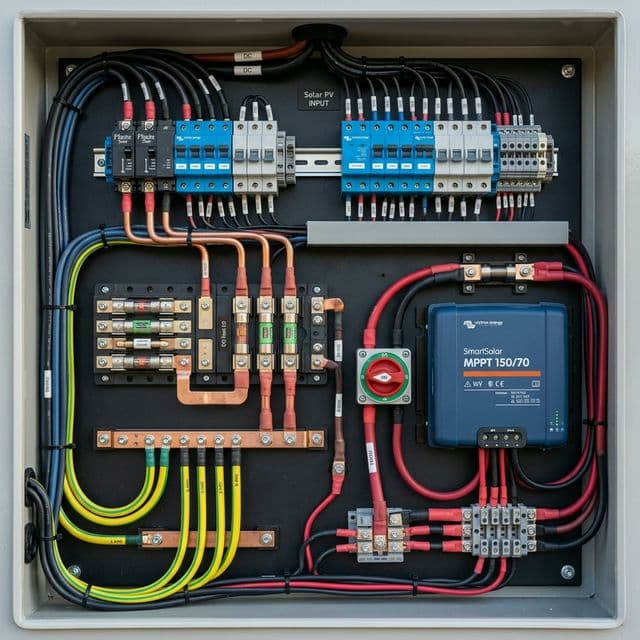
Top 10 RV Solar Mistakes: How to Avoid Burning Your Camper Down
The final word on solar safety: Fusing, grounding, and roof penetration best practices.

The Ultimate Guide to Portable Solar Panels for Van Life (2026 Edition)
technical deep-dive into portable solar technology, including N-Type and Bifacial cell innovations.