High Voltage Hazards: Does Excessive Solar Input Damage Your Batteries?
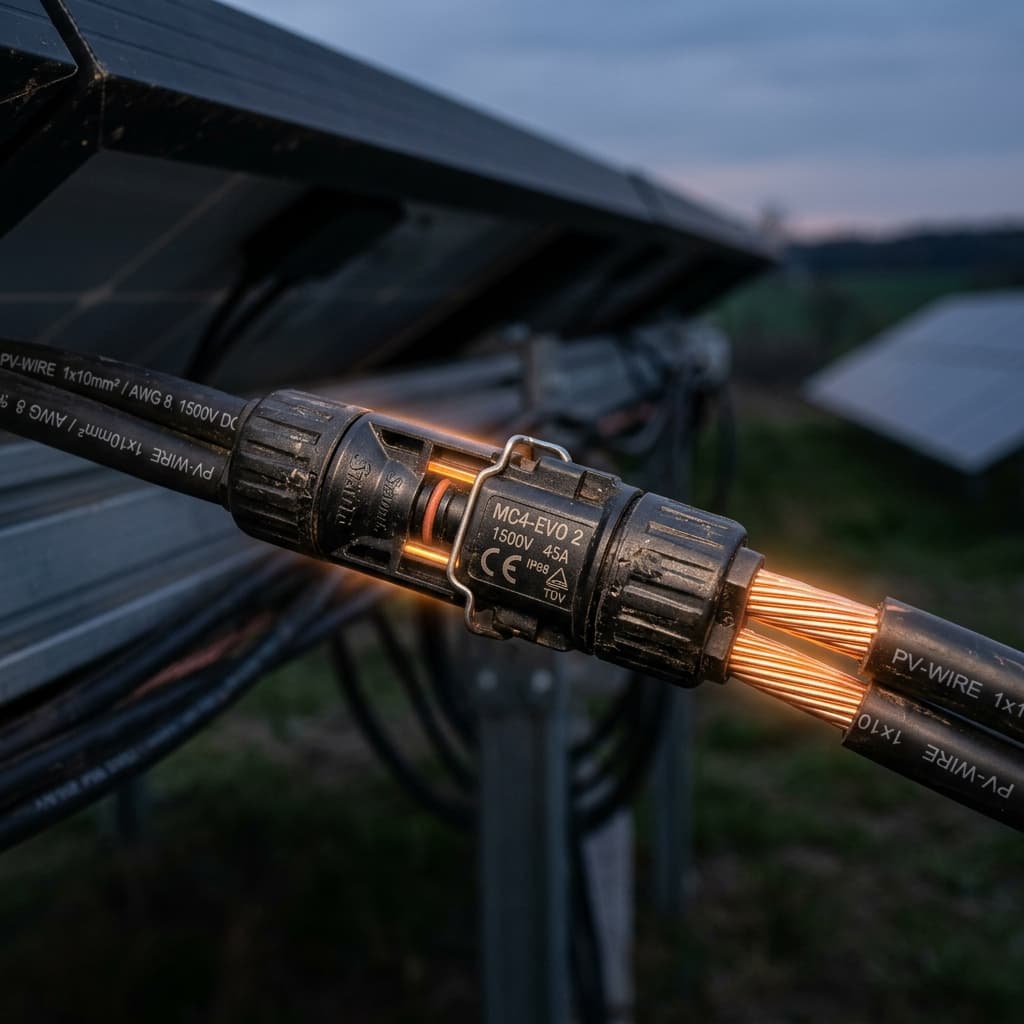
As nomadic solar installations push beyond traditional 12V limits, the interplay between high-voltage panels, advanced charge controllers, and next-generation battery chemistries is rewriting the physics of off-grid energy independence. This article decodes the technical, economic, and lifestyle implications of elevated solar array voltages for the RV and van‑dwelling community in 2026 and beyond.
Introduction: The Voltage Revolution in Mobile Solar
The humble 12V solar panel has been a mainstay of recreational vehicles and camper vans for decades. Its compatibility with lead-acid batteries and simple PWM controllers made it the default choice for off-grid pioneers. But by 2026, the landscape has shifted dramatically. Modern high-voltage solar panels — rated at 40V to 60V open-circuit voltage (Voc) — are becoming standard, driven by the proliferation of MPPT charge controllers, the rise of 48V battery banks, and the relentless pursuit of higher system efficiency.
A single high-voltage panel can deliver the same power as two or three standard 12V panels, yet with less copper, fewer connectors, and lower resistive losses. But this transition is not without its challenges. The physics of voltage conversion, battery charging profiles, and system compatibility requires careful consideration. In this article, we explore the technical underpinnings of high-voltage solar in RVs, dissect the industry trends shaping the market, and examine how these innovations are transforming the socio-economic fabric of nomadic life.
1. The Physics of High Voltage Solar on Battery Systems
The relationship between solar panel voltage and battery charging is governed by the principles of maximum power point tracking (MPPT) and the voltage-current characteristics of photovoltaic cells. A standard 12V panel has a Vmp (voltage at maximum power) of around 18V, which is sufficient to charge a 12V battery through a PWM controller by simply dropping excess voltage as heat. High-voltage panels, with Vmp of 35V-55V, require an MPPT controller to efficiently convert the extra voltage into usable current for the battery.
The impact on battery use is profound. When a high-voltage array is connected to a 12V battery bank via a quality MPPT charger, the controller operates as a buck converter, stepping down voltage while boosting current. This conversion process yields up to 30% more harvested energy than a PWM system under cold or low-light conditions. However, the same voltage can be destructive if the controller fails or if the battery is not designed to accept high current inrush. Lithium iron phosphate (LFP) batteries, with their built-in BMS, handle this well, but older lead-acid batteries may suffer from excessive gassing or thermal runaway.
Another subtle but critical effect is the reduction of wiring losses. For a given power output, higher voltage means lower current. A 400W array at 40V carries only 10A, versus 33A at 12V. This allows the use of lighter, cheaper wiring and reduces voltage drop over long runs — a common issue in large RVs and trailers where the solar array might be mounted far from the battery bank. The result is a safer, more efficient system that is easier to install.
MPPT vs. PWM Efficiency Across Voltage Ratios
| Panel Voc | PWM Efficiency | MPPT Efficiency | Energy Gain with MPPT |
|---|---|---|---|
| 22V (12V panel) | ~95% | ~97% | +2% |
| 40V (high voltage panel) | ~65% | ~96% | +31% |
| 60V (large panel) | ~45% | ~95% | +50% |
The data above clearly demonstrates why PWM controllers quickly become inefficient as panel voltage rises. For a 60V panel — common in high-output residential-size modules adapted for RV use — a PWM controller wastes over half the potential energy. MPPT is mandatory. Moreover, the ability of modern MPPT controllers to handle input voltages up to 150V or 250V allows for series-string configurations that keep wiring simple and currents low.
Pros and Cons: High Voltage vs. Low Voltage Solar in RVs
High Voltage Solar ✓
- Efficiency: Reduced I²R losses in wiring, smaller gauge cable needed.
- More Power per Panel: 400W+ panels fit limited roof space.
- Better Low-Light Performance: MPPT harvests voltage even in shade.
- Future-Proof: Compatible with 48V batteries and high-power inverters.
High Voltage Solar ✗
- Cost: MPPT controllers are more expensive than PWM.
- Safety: Higher DC voltage (40-60V) requires careful handling and fusing.
- Battery Compatibility: Older 12V lead-acid banks may not tolerate high charge currents.
- Complexity: Series wiring requires matching panels to avoid mismatch losses.
2. Industry Trends Shaping Mobile Solar in 2026
The RV and van conversion industry is experiencing a convergence of innovations. The most significant trend is the shift toward 48V DC systems, which virtually eliminate the need for DC-DC converters between solar, battery, and inverter. High-voltage solar panels (typically 40-60V Voc) are an ideal match for 48V battery banks, as the MPPT controller can operate with minimal voltage conversion loss. Major RV manufacturers now offer 48V electrical packages as a factory option, and the aftermarket is flooded with 48V LiFePO4 batteries and all-in-one inverters.
Gallium Nitride (GaN) transistors are another game-changer. GaN-based MPPT controllers and inverters can switch at frequencies above 1 MHz, allowing dramatically smaller inductors and capacitors. This reduces the physical footprint of the charge controller by up to 60% while improving efficiency to 98-99%. For nomads with limited space, GaN technology means more power in a smaller, lighter box. Several manufacturers have released GaN solar chargers specifically designed for high-voltage panels, and we anticipate nearly all premium controllers will adopt GaN by 2027.
Photovoltaic cell technology is also evolving rapidly. Perovskite-silicon tandem cells are entering commercial production, with laboratory efficiencies exceeding 33%. These cells perform exceptionally well under diffuse light and partial shade — common conditions in wooded campsites. A perovskite-based 400W panel could produce the same daily energy as a conventional 500W panel, making it ideal for roof-constrained RVs. Though still expensive, prices are expected to drop by 50% within two years, thanks to scaling and improved deposition techniques.
Battery Chemistries for High-Voltage Solar Systems
| Chemistry | Nominal Voltage | Cycle Life | Energy Density (Wh/L) | Cost per kWh |
|---|---|---|---|---|
| LiFePO4 (LFP) | 12.8V / 25.6V / 51.2V | 4000-6000 | ~250 | $150-200 |
| NMC (Lithium-ion) | 14.4V / 28.8V / 57.6V | 2000-3000 | ~600 | $200-300 |
| Sodium-Ion (Emerging) | 12V / 24V / 48V | 3000-5000 | ~160 | $80-120** |
| ** Projected cost at scale, 2026-2027. | ||||
Sodium-ion batteries deserve special attention. With abundant raw materials (sodium, iron, carbon), they offer a cheaper and more sustainable alternative to lithium. Although their energy density is lower, for stationary RV storage where weight is less critical, sodium-ion can be a cost-effective solution. Several Chinese and European manufacturers have announced sodium-ion packs specifically for solar storage, with a 48V 100Ah unit expected to retail for under $1,000 by late 2026. When paired with high-voltage solar panels, the round-trip efficiency of sodium-ion is comparable to LFP at around 85-90%, and the thermal stability is excellent.
3. Socio-Economic Impact: Empowering the Nomadic Lifestyle
The adoption of high-voltage solar technology is not merely a technical exercise — it has profound implications for the growing community of full-time RVers, van dwellers, and off-grid nomads. Energy independence is the cornerstone of this lifestyle, and the ability to generate and store more power with less equipment translates directly to greater freedom. A van equipped with two 400W high-voltage panels and a 48V 200Ah LFP battery can comfortably run a mid-sized air conditioner, induction cooktop, and laptop workstation for days without shore power. This shifts the nomadic experience from one of scarcity and compromise to one of abundance and comfort.
Economically, the total cost of ownership for a high-voltage solar system has fallen dramatically. In 2026, a complete 800W solar setup with MPPT controller, wiring, and mounting hardware can be purchased for under $1,500, while a comparable 12V system with PWM might cost $300 less but harvest 30% less energy annually. Over a five-year period, the high-voltage system pays for itself in reduced generator fuel, fewer campground fees, and longer battery life. For nomads living on modest budgets, this is a transformative equation.
Socially, the ability to remain off-grid for weeks or months at a time allows people to live in more remote and beautiful locations, often with lower living costs. This trend has contributed to the rise of digital nomad hubs in national forests, desert boondocking areas, and coastal BLM lands. High-voltage solar systems enable the use of power-hungry equipment like satellite internet, medical devices, and electric cooking, which were previously difficult to sustain. As a result, a more diverse demographic — including families, retirees, and remote workers — can embrace the nomadic life.
However, there are challenges. The upfront cost of a high-voltage MPPT controller and 48V battery bank remains a barrier for some. Additionally, the technical knowledge required to design and install a high-voltage system safely is greater than for a simple 12V setup. Education and community support are essential. Online forums, YouTube tutorials, and mobile solar workshops have sprung up to bridge this gap. Manufacturers are also producing plug-and-play high-voltage kits with pre-wired components and explicit safety instructions, making the technology accessible to the average DIYer.
Socio-Economic Balance Sheet
Empowering Aspects ✓
- Lower long-term cost per kWh harvested.
- Enables full-time off-grid living with modern appliances.
- Reduces reliance on fossil fuel generators.
- Increases property value and versatility of the vehicle.
Barriers ✗
- Higher initial investment ($800–$2,000 more than 12V).
- Requires technical knowledge for safe installation.
- Compatibility issues with legacy 12V appliances.
- Heavier batteries (48V LFP vs 12V lead-acid) may affect vehicle payload.
4. Next-Generation Perspective: Beyond 2026
Looking ahead, the convergence of GaN electronics, perovskite solar cells, and sodium-ion batteries will fundamentally reshape what is possible for nomadic energy. GaN-based MPPT controllers will shrink to the size of a smartphone while handling 1500W of solar input. Perovskite flexible panels, with efficiencies above 25% and the ability to be integrated into RV roofs, awnings, and even tent walls, will allow energy harvesting from almost every surface. Sodium-ion battery costs are projected to drop below $50/kWh, making large 48V banks affordable for the budget-conscious nomad.
Another emerging trend is vehicle-to-grid (V2G) and vehicle-to-load (V2L) capabilities integrated with solar. Electric RVs with bidirectional inverters can use their high-voltage traction battery (400-800V) as a massive energy reservoir. Solar panels feeding the traction battery via a high-voltage MPPT can then power the RV's 48V house system through a DC-DC converter. This reduces the need for a separate house battery bank and simplifies the electrical architecture. Several manufacturers have announced such integrated systems for 2027 model year RVs.
The socio-economic impact of these next-gen technologies will be equally profound. As the cost of solar electricity falls below $0.03 per kWh, off-grid living becomes not only feasible but financially superior to traditional housing in many regions. We may see the rise of “solar neighborhoods” — groups of RV nomads camping together, sharing a microgrid powered by high-voltage solar arrays and sodium-ion storage. This communal approach reduces individual costs and fosters a resilient, decentralized energy network.
Ultimately, the question posed by the Reddit thread — “What is the impact of high solar panel voltage on battery use?” — is a gateway to understanding a broader revolution. High voltage is not a complication but an optimization. It forces us to adopt better controllers, smarter batteries, and more efficient layouts. The result is a solar system that is more powerful, more reliable, and more economical than anything a 12V system could offer. For the nomadic community, this translates into the ability to go further, stay longer, and live more comfortably — while leaving a lighter footprint on the planet.
The high-voltage shift is already underway. By understanding the physics, embracing the trends, and leveraging next-generation components, the off-grid nomad can achieve a level of energy independence that was once the domain of only the most dedicated tech enthusiasts. The future of RV solar is bright — and it operates at a higher voltage.
Technical Expansion
Deepen your expertise with our most critical recent diagnostic reports.
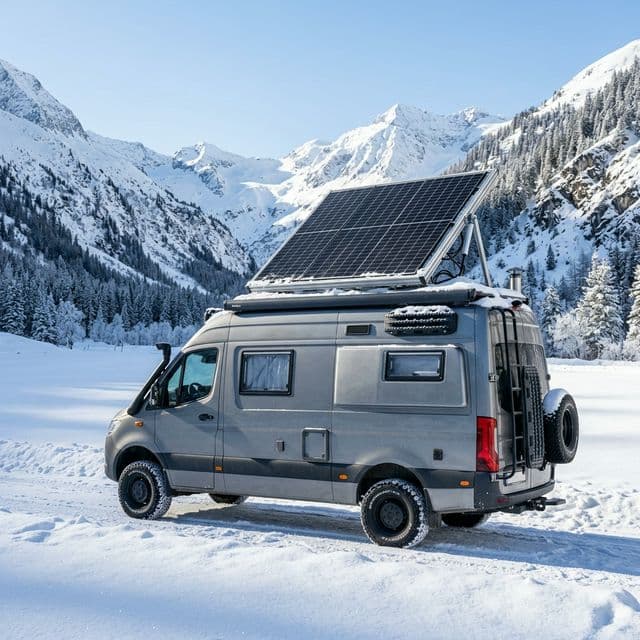
Winter RVing & Lithium: Survival Guide for Freezing Temps
Technical guide to lithium plating, battery heaters, and low-angle winter solar harvesting.
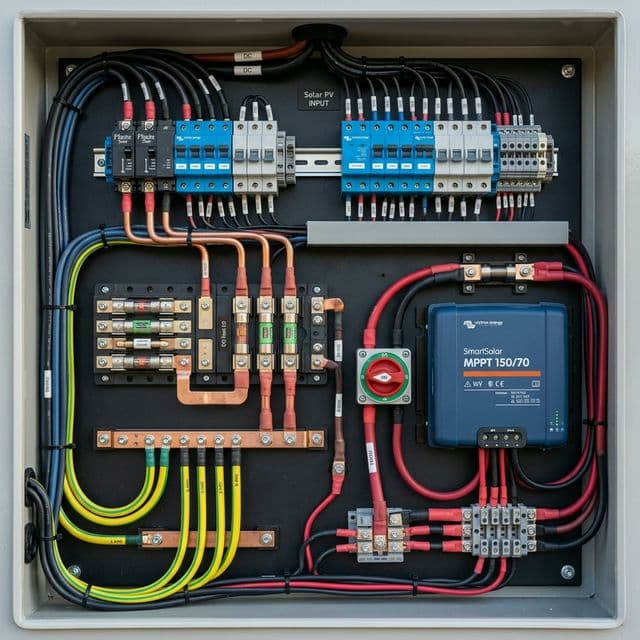
Top 10 RV Solar Mistakes: How to Avoid Burning Your Camper Down
The final word on solar safety: Fusing, grounding, and roof penetration best practices.

The Ultimate Guide to Portable Solar Panels for Van Life (2026 Edition)
technical deep-dive into portable solar technology, including N-Type and Bifacial cell innovations.