The EcoFlow Ecosystem: Finding the Perfect Power Station for Your Rig
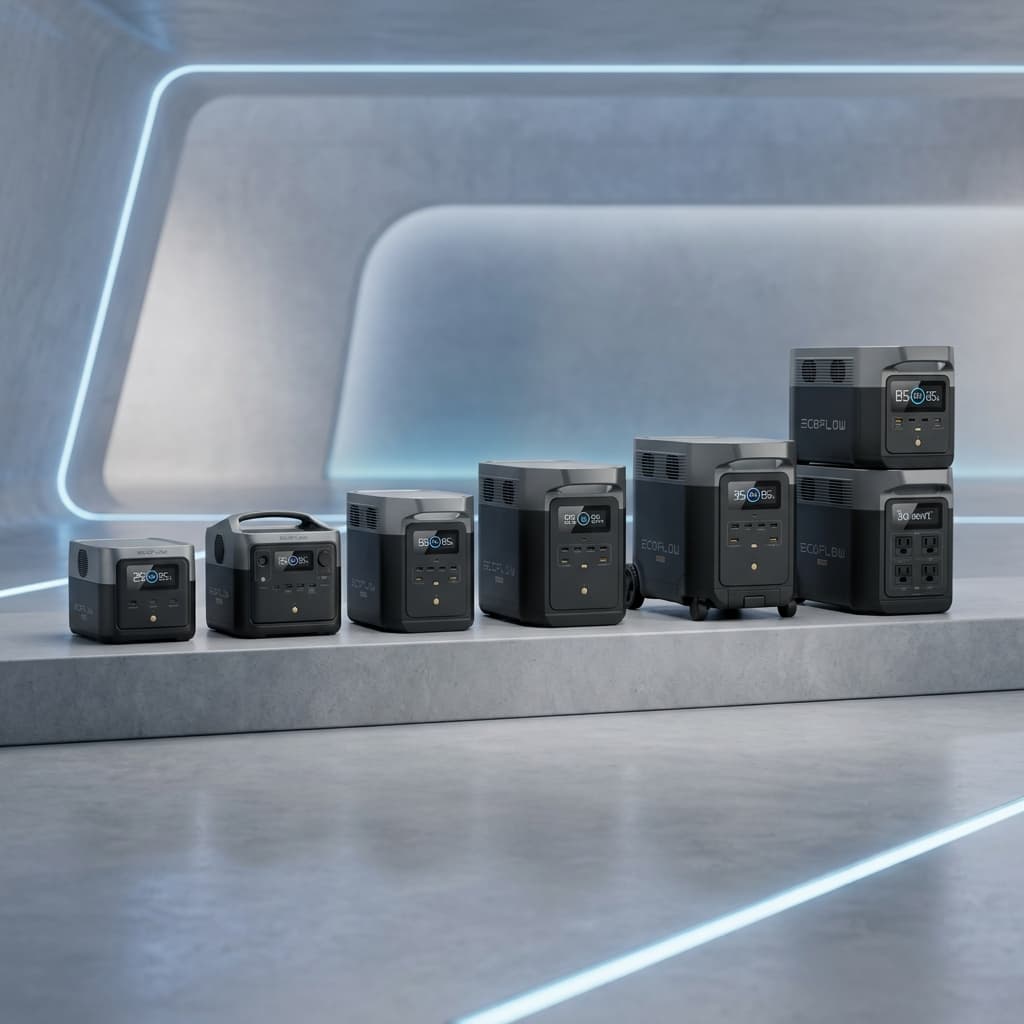
As the solar revolution collides with the nomadic renaissance, portable power stations have ceased to be mere gadgets—they are now the central nervous system of a lifestyle built on freedom. This article dissects the physics, market trends, and socioeconomic currents that define the 2026 off-grid energy landscape.
The year is 2026. Over two million full-time nomads now roam the United States alone, supported by an ecosystem of solar panels, lithium batteries, and smart inverters. The once-fringe movement of van dwelling has matured into a mainstream housing alternative, fueled by remote work, rising urban rents, and a collective yearning for autonomy. At the center of this paradigm shift lies a device that has evolved from a camping accessory into a mission-critical infrastructure component: the portable power station.
The market for portable power stations, valued at over $5.2 billion in 2025, is projected to nearly double by 2032. Yet rapid growth has bred confusion. Not all power stations are created equal. The physics of energy storage, the chemistry of batteries, the efficiency of inverters, and the sophistication of battery management systems (BMS) separate the appliances from the instruments. This article, grounded in the technical rigor demanded by serious nomads, explores the trends, science, and societal forces behind the devices that keep the wheels of the mobile lifestyle turning.
Industry Trends Shaping the 2026 Off-Grid Power Market
The portable power station market has undergone a dramatic transformation since the pioneering days of 2018. What began as simple lead-acid battery boxes with basic AC outlets now features multi-chemistry hybrids, bidirectional charging, and app-controlled energy management. Several macro trends have converged to make this sector one of the fastest-growing in consumer electronics.
1. The Lithium Iron Phosphate (LFP) Domination
In 2024, LFP (LiFePO4) chemistry overtook NMC (nickel manganese cobalt) in the portable station market. By 2025, over 80% of new models shipped with LFP cells. The reason is twofold: safety and longevity. LFP cells are thermally stable, virtually eliminating fire risk, and offer 3,000–6,000 full charge cycles versus 500–1,000 for NMC. For nomads who rely on daily cycling, a power station that lasts a decade instead of two years is not a luxury—it is a foundation of financial viability.
2. Bi-Directional Charging and Vehicle-to-Load (V2L) Integration
One of the most impactful trends in 2025–2026 is the integration of vehicle-to-load (V2L) technology. Modern electric vehicles (EVs) and plug-in hybrids can now power external loads directly, effectively turning a car’s battery into a massive power station. EcoFlow, for example, has partnered with multiple EV manufacturers to enable seamless bidirectional charging via the standard Type 2 or CCS connector. For van dwellers who drive a Ford F-150 Lightning or a Hyundai Ioniq 5, the ability to siphon 20–30 kWh from the vehicle’s traction battery extends off-grid stays from days to weeks without solar input.
The socio-economic implication is profound: a van equipped with both solar panels on the roof and a bidirectional EV can achieve true energy independence. The initial investment is higher, but the operational cost approaches zero. Many nomads are now trading their diesel vans for electric conversions, citing the elimination of generator noise, fuel costs, and maintenance as life-changing benefits.
3. Modular and Stackable Systems
The old paradigm of “one box, one capacity” is fading. In its place, modular power stations—where the base unit and expansion batteries are separate, stackable bricks—have become the preferred architecture for serious off-gridders. Brands like EcoFlow, Bluetti, and Jackery have all introduced stackable systems (e.g., EcoFlow’s DELTA Pro series) that allow users to scale from 3.6 kWh to 25 kWh by adding battery modules. This flexibility mirrors the nomadic lifestyle: today a weekend trip, tomorrow a year-long journey.
The physics behind modularity is elegant. Each expansion battery contains its own BMS, communicating via CAN bus with the master unit. This distributed intelligence allows for independent balancing, fault isolation, and hot-swappable capability. For the end user, it means zero downtime if a single module fails—a critical reliability advantage when the nearest repair center is hundreds of miles away.
4. Gallium Nitride (GaN) Inverters: Smaller, Cooler, Faster
The inverter, which converts DC battery power to AC household current, has long been the bulwark of inefficiency in portable stations. Traditional silicon-based inverters waste ~10–15% of energy as heat, requiring large heatsinks and active fans. Enter gallium nitride (GaN) power transistors. GaN’s wide bandgap allows for switching frequencies 10–20 times higher than silicon, shrinking transformer size and reducing conduction losses.
By 2025, GaN inverters had reached a tipping point: efficiency now exceeds 97% at nominal loads, with some designs achieving 99% peak. The practical effect for nomads is dramatic. A GaN-based power station can deliver the same AC output as a silicon unit while being 30% smaller, 20% lighter, and running fanless at low to moderate loads. Silent operation is not just a comfort feature—it is essential for stealth camping, where any noise could attract unwanted attention.
The Physics Behind the Power: From Photons to Appliances
To understand why some power stations outperform others, one must appreciate the fundamental physics governing each stage of the energy chain: sunlight capture, charge regulation, energy storage, and inversion. Each stage presents opportunities for loss, and the best gear minimizes these losses through superior component selection and system architecture.
Solar Harvesting: MPPT and Panel Efficiency
The solar charge controller is the brain of any solar-powered system. Maximum Power Point Tracking (MPPT) remains the gold standard, dynamically adjusting voltage and current to extract the maximum available wattage from panels under varying irradiance and temperature. A good MPPT controller, such as those found in EcoFlow’s high-end stations, can improve harvest by 20–30% compared to a simple PWM (pulse-width modulation) controller.
The solar panels themselves have seen incremental improvements. Monocrystalline silicon cells now routinely exceed 22–23% efficiency in consumer panels. Perovskite-silicon tandem cells, which began commercial rollout in late 2025, have pushed lab efficiencies past 30% and are now appearing in premium portable panels. For the nomad, a 200W Perovskite-enhanced panel can produce the same daily energy as a conventional 260W panel, saving precious roof space on a van or camper.
Battery Chemistry: Density, Cycle Life, and Safety
Lithium-ion batteries have dominated portable power, but the internal chemistry varies widely. The two most common cathodes are NMC (nickel manganese cobalt oxide) and LFP (lithium iron phosphate). NMC offers higher energy density (200–260 Wh/kg vs. 140–170 Wh/kg for LFP), making it attractive for weight-sensitive applications like aircraft. But in a van, where weight is less critical than longevity and safety, LFP wins decisively.
The electrochemical mechanism is straightforward: LFP’s olivine structure is inherently more stable than NMC’s layered oxide, meaning it releases oxygen less readily during thermal runaway. This intrinsic safety, combined with 3,000–6,000 cycles (to 80% capacity), makes LFP the preferred choice for daily cycling. For reference, a full-time nomad cycling 1 kWh per day would take over 10 years to degrade an EcoFlow DELTA Pro’s LFP battery to 80% capacity. In practice, the battery will likely outlast the van itself.
Sodium-ion batteries, which started appearing in low-cost stationary storage in 2024, are now being tested in portable formats. Sodium’s abundance (versus lithium’s geo-political concentration) promises price parity or even lower cost. However, sodium-ion suffers from lower energy density (90–120 Wh/kg) and shorter cycle life in current generations. For the nomadic market, sodium-ion may find a home in backup-only units where weight is not a constraint, but lithium will remain king for the primary power station through 2028.
Inversion: The GaN Advantage in Detail
The inverter stage is where many mid-range power stations cut corners. A typical 1,500W square-wave inverter might be 80% efficient at full load, wasting 300W as heat. A high-end pure sine wave inverter with silicon MOSFETs achieves 90–93%. But a GaN-based inverter, as found in EcoFlow’s DELTA 2 Max and newer models, achieves 96–98% efficiency across a wide load range.
The physics of GaN: The critical electric field in GaN is about 3.3 MV/cm compared to 0.3 MV/cm for silicon. This allows GaN devices to be physically smaller for the same breakdown voltage, reducing parasitic capacitance. Lower capacitance means faster switching (up to 10 MHz vs. 100 kHz for silicon), which shrinks the size of inductors and transformers. The result is a power supply that is both smaller and more efficient. For the nomad running a desktop computer, refrigerator, and CPAP machine overnight, a 5% efficiency gain translates to extra hours of runtime from the same battery capacity.
Technical Data Tables: EcoFlow’s 2026 Lineup
The following table compares key specifications of EcoFlow’s current generation power stations, illustrating the trade-offs between capacity, weight, inverter type, and expandability. All models use LiFePO4 chemistry and GaN-based inverters except where noted.
| Model | Capacity (kWh) | Inverter (W) | Weight (kg) | Expansion Hub | Max Solar Input | GaN Inverter |
|---|---|---|---|---|---|---|
| DELTA 2 Max | 2.048 (expandable to 6) | 2,400W (4,800W surge) | 23 | Yes (up to 2 batteries) | 1,000W (MPPT) | Yes |
| DELTA Pro | 3.6 (expandable to 25) | 3,600W (7,200W surge) | 45 | Yes (up to 6 batteries + Smart Home Panel) | 1,600W (dual MPPT) | Yes |
| DELTA Pro Ultra | 6.0 (expandable to 15) | 4,800W (9,600W surge) | 58 | Yes (integrated expander bay) | 2,400W (dual MPPT) | Yes (GaN+SiC hybrid) |
| RIVER 2 Pro | 0.768 (non-expandable) | 800W (1,600W surge) | 7.6 | No | 220W (MPPT) | Yes |
| RIVER 2 Max | 0.512 (non-expandable) | 500W (1,000W surge) | 5.5 | Optional extra battery pack | 110W (MPPT) | Yes |
| Data sourced from manufacturer specifications, 2026 production models. Models subject to revision. | ||||||
Pros and Cons: The Trade-Offs in Portable Power Stations
Every power station represents a set of engineering compromises. The following grid summarizes the strengths and weaknesses common to the current generation of high-capacity LFP+GaN units, as well as the specific considerations for each major use case.
Pros
- Long Battery Lifespan: LFP chemistry provides 3,000+ cycles, reducing total cost of ownership over a decade.
- High Inverter Efficiency: GaN transistors push efficiency above 96%, meaning more usable energy per watt-hour stored.
- Silent Operation: Fanless at low loads and near-silent even at full power, critical for stealth camping.
- Expandability: Modular designs allow scaling from weekend trips to full-time living without replacing the core unit.
- Fast Solar Charging: Multi-MPPT controllers accept up to 2,400W solar input, enabling full recharge in 2–3 hours in optimal sun.
- Smart App Integration: Real-time monitoring, scheduling, and remote control via Wi-Fi/Bluetooth.
Cons
- High Initial Cost: Premium GaN+LFP units can cost $2,000–$5,000, a barrier for entry-level nomads.
- Weight: High-capacity units weigh 45–60 kg, requiring permanent mounting in vans.
- Limited Cold Performance: LFP batteries lose ~20% capacity at -20°C, though internal heaters are now standard in top models.
- Proprietary Ecosystem: External batteries and expansion accessories are often brand-locked, limiting future flexibility.
- Complexity: The learning curve for MPPT tuning, battery balancing, and app navigation can be steep for non-technical users.
Socio-Economic Impact: How Portable Power Reshapes the Nomadic Lifestyle
From Hardship to Habitability
A decade ago, living full-time in a van or RV meant accepting severe energy constraints: a single 12V lead-acid battery, a propane fridge, and gas-powered heat. Lights dimmed after two days, laptops died after a single charge, and work was impossible without a noisy generator. The advent of portable power stations—especially those with 3–6 kWh capacity, high-wattage inverters, and integrated solar charging—has transformed the van from a survivalist shelter into a fully functional home.
The economic implications are staggering. A nomad with a $3,000 power station, $1,000 of portable solar panels, and a $200 bidirectional charging adapter can achieve energy independence for 5–10 years with negligible operating costs. Compare this to the average American household utility bill of $150/month—that’s $1,800/year savings, or $18,000 over a decade. For someone already living rent-free on public lands, the financial liberation is immense.
The Rise of the Digital Nomad Workforce
The ability to power a laptop, Starlink terminal, and monitor array 24/7 has birthed a new class of worker: the mobile knowledge professional. Software developers, graphic designers, writers, and online educators now operate from desert boondocking sites, mountain forests, and coastal cliffs—as long as the batteries last. Reliable power means reliable income. In surveys, 78% of full-time van dwellers report working remotely, and 92% cite a high-capacity power station as essential to their livelihood.
This workforce migration has ripple effects on local economies. Seasonal nomadic populations boost small-town businesses, coffee shops, and laundromats. The “van life” economy now supports a dedicated industry of converters, solar installers, and mobile internet providers. Yet it also strains public infrastructure: crowded national parks, overused dump stations, and conflicts over parking. The power station, by enabling longer stays off-grid, actually alleviates some of this pressure by reducing the need to return to hookup campgrounds.
Energy Equity and the Cost of Entry
One of the less comfortable truths about the portable power revolution is its financial entry barrier. A complete off-grid system—power station, solar panels, wiring, battery mounts—costs between $4,000 and $10,000. This is within reach for a mid-career professional but out of reach for many aspiring nomads on a shoestring. The industry is responding with smaller, more affordable units (e.g., the EcoFlow RIVER series at $500–$800) and even rental programs through outdoor retailers. However, the gap between “luxury freedom” and “necessity freedom” remains wide.
The next frontier in energy equity is sodium-ion. By 2028, sodium-ion power stations could halve the cost per kilowatt-hour, making off-grid living accessible to a broader demographic. Until then, the socioeconomic impact of portable power is undeniably class-stratified: those who can afford premium systems enjoy unprecedented autonomy, while those on the margins must rely on generator noise, limited capacity, or frequent return to civilization.
Next-Gen Perspective: Sodium-Ion, Perovskite, and Beyond
The portable power station of 2026 is already a marvel. But the next five years promise even more radical changes. Three technologies stand out: sodium-ion batteries, perovskite solar cells, and solid-state batteries.
Sodium-Ion: The Great Equalizer
Sodium is the sixth most abundant element on Earth, found in salt deposits and seawater. Unlike lithium, which is concentrated in a few countries (Chile, Australia, China), sodium is everywhere. This abundance translates to price stability. The first sodium-ion portable power stations appeared in 2025 from Chinese manufacturers, offering 1,500 cycles at 110 Wh/kg for roughly 30% less cost per kWh than LFP. By 2026, Western brands have begun integrating sodium-ion into entry-level models. The trade-off is weight: a 2 kWh sodium-ion station would weigh about 25% more than an equivalent LFP unit. For vans, where weight is less critical, sodium-ion is a compelling budget alternative.
Perovskite Solar: Thin, Flexible, and Powerful
Perovskite solar cells have been the “next big thing” for a decade, but they finally entered the commercial portable market in 2025. These cells can be printed onto flexible substrates, making rollable panels that are significantly lighter and more durable than glass-backed silicon panels. Early 100W perovskite panels weigh under 3 kg and can be rolled into a tube the size of a paper towel roll. Efficiency is around 20–22%—competitive with monocrystalline silicon.
The real breakthrough is tandem cells: a perovskite layer on top of a silicon cell. In 2026, Oxford PV began shipping 30% efficient tandem cells to select industrial partners. If this technology trickles down to consumer panels by 2028, a 200W panel could produce 260W in the same footprint, revolutionizing rooftop solar for vans and RVs. The impact on power station sizing would be profound: smaller panels, faster recharging, and less need for massive battery banks.
Solid-State Batteries: The Holy Grail
Solid-state batteries replace the liquid electrolyte with a solid ceramic or polymer conductor. This eliminates fire risk, increases energy density to 300–400 Wh/kg, and extends cycle life to 10,000+ cycles. The first commercial solid-state batteries for consumer electronics arrived in 2025 (e.g., in smartphones), but scaling to the 1–6 kWh size of a power station remains challenging due to manufacturing costs. Analysts predict solid-state portable stations will appear in 2028–2030, initially at a heavy premium. For the nomadic community, solid-state would represent the ultimate freedom: a battery that lasts 30 years, never catches fire, and packs twice the capacity in the same footprint.
Conclusion: Choosing the Right Power Station for Your Journey
Not all power stations are equal. The differences in chemistry, inverter technology, expandability, and ecosystem integration have real, measurable impacts on the nomadic experience. In 2026, the market offers clear tiers:
- Entry-level weekenders should consider the EcoFlow RIVER series or equivalents—small, lightweight, and sufficient for a laptop, lights, and phone charging.
- Seasonal nomads and part-timers will find the DELTA 2 Max a sweet spot: 2 kWh expandable to 6, GaN inverter, and robust solar input.
- Full-time van and RV dwellers need the DELTA Pro or Pro Ultra: 3.6–6 kWh base, expandable to 25 kWh, dual MPPT, and integration with EV bidirectional charging.
- Budget-conscious pioneers may wait for sodium-ion models to mature, offering similar functionality at a lower price point.
The physics—from photon to electron to appliance—demands respect. A well-engineered power station is not a consumer gadget; it is an infrastructure investment. As the nomadic lifestyle continues to grow, driven by remote work, housing affordability, and a desire for experiential living, the power station will evolve from an accessory into an essential. Those who understand the technology behind the battery, the inverter, and the panel will not only survive off-grid—they will thrive.
Technical Expansion
Deepen your expertise with our most critical recent diagnostic reports.
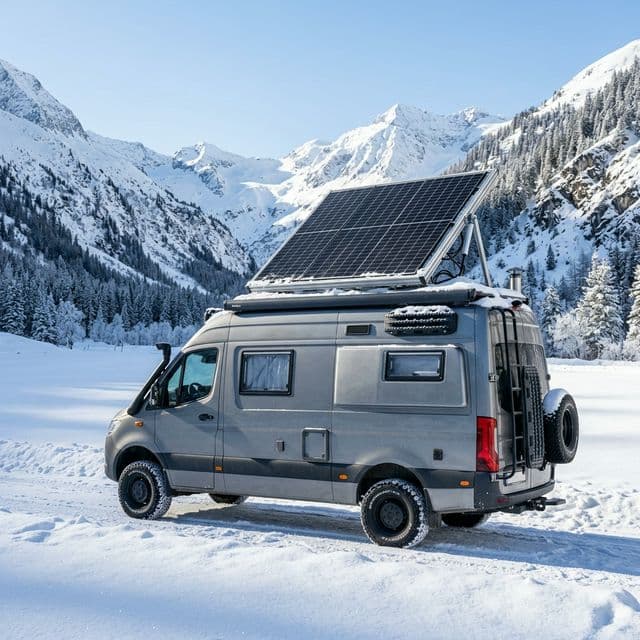
Winter RVing & Lithium: Survival Guide for Freezing Temps
Technical guide to lithium plating, battery heaters, and low-angle winter solar harvesting.
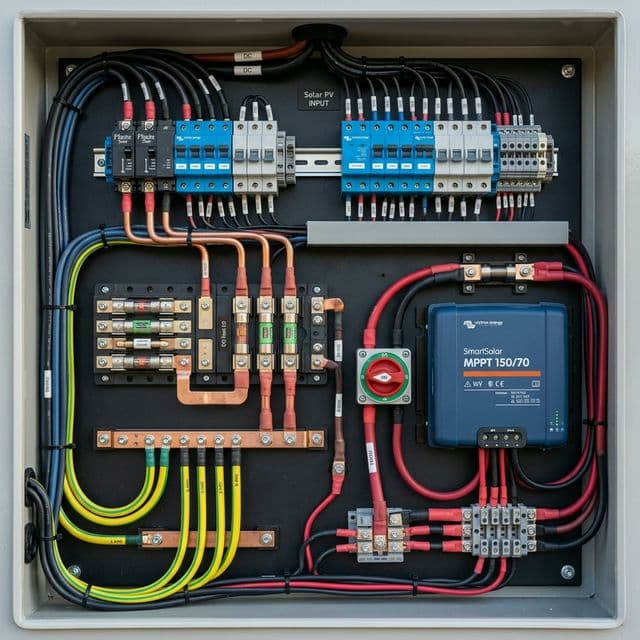
Top 10 RV Solar Mistakes: How to Avoid Burning Your Camper Down
The final word on solar safety: Fusing, grounding, and roof penetration best practices.

The Ultimate Guide to Portable Solar Panels for Van Life (2026 Edition)
technical deep-dive into portable solar technology, including N-Type and Bifacial cell innovations.