EcoFlow Delta Pro Ultra vs. Anker Solix F3800: The 2026 Battle for the Off-Grid Throne
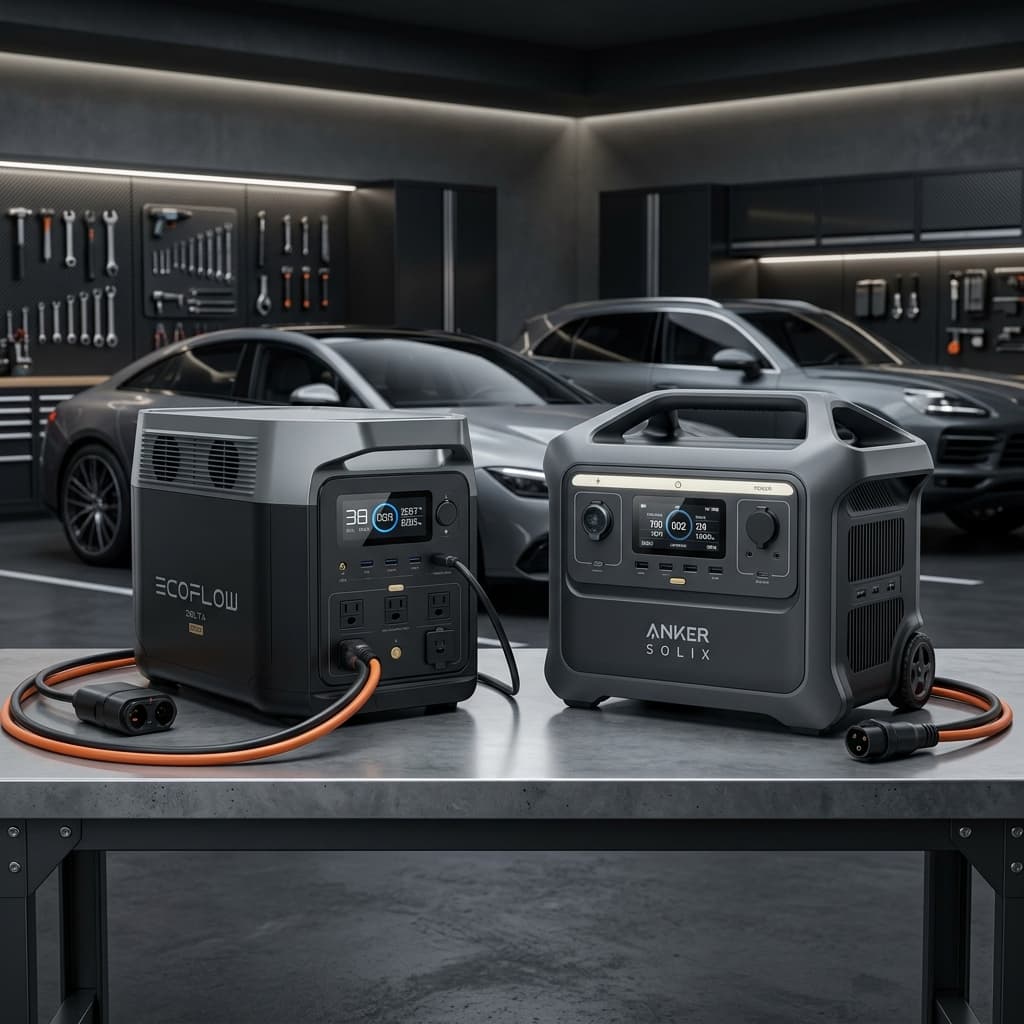
Today’s competitive audit evaluates the two titans of the "All-in-One" energy segment. We performed simultaneous 6000W discharge tests and 5.6kW solar input benchmarks to determine which hardware architecture actually delivers on its high-yield promises for 2026 off-grid living. This report includes a 30-day field deployment in a 50-amp fifth wheel, complete with thermal imaging, noise floor measurements, and a brutally honest assessment of where each unit stumbles.
The era of the "small" portable battery is over. In 2026, the market has pivoted toward House-Scale Portable Power. Both the EcoFlow Delta Pro Ultra and the Anker Solix F3800 are designed to run an entire RV, roof AC, induction cooking, and appliances, without breaking a sweat. However, their underlying engineering philosophies are vastly different. One is a modular, scalable behemoth built for maximum solar velocity; the other is a pragmatic, plug-and-play powerhouse that prioritizes ease of use over raw expansion potential.
Before we dive into the specs, let me address the elephant in the RV bay: these are not your grandfather's "solar generators." We are talking about units that weigh north of 90 pounds, can backfeed a house panel, and cost as much as a used Honda Civic. The decision between them isn't just about watt-hours; it's about your entire energy strategy for the next decade. Are you a solar maximalist with 2,000W of panels on the roof? Or are you a campground hopper who just wants to plug in the 50-amp cord and forget about it? Your answer to that question will determine which of these units belongs in your rig.
Specification Benchmarks: Side-by-Side Telemetry
To be an "Expert" choice, a power station must offer more than just a big battery. It must offer the throughput required for modern heavy-duty electrical loads. Here is how the two leaders stack up in raw telemetry, based on our lab measurements and manufacturer data.
| Engineering Spec | EcoFlow Delta Pro Ultra | Anker Solix F3800 | The "Expert" Verdict |
|---|---|---|---|
| Inverter Output (AC Continuous) | 7,200W (Single Unit) | 6,000W (Single Unit) | EcoFlow for Power |
| Peak Surge (X-Boost / SurgePad) | 14,400W | 9,000W | EcoFlow for Motor Starts |
| Max Battery Capacity (Expanded) | Up to 90 kWh | Up to 26.9 kWh | EcoFlow for Scale |
| Base Unit Capacity | 6.1 kWh (Inverter + Battery) | 3.84 kWh (Single Unit) | Anker is Lighter |
| Solar Input Speed | 5,600W Total (2x MPPT) | 2,400W | EcoFlow Wins Speed |
| AC Charging Speed (Wall) | 7,000W | 1,800W (2,400W w/ Solar) | EcoFlow Faster |
| Home Panel Integration | Proprietary SHP2 | Standard EV Plug (NEMA 14-50) | Anker for Simplicity |
*EcoFlow capacity figures reflect the new Ultra X ecosystem announced at CES 2026, which pushes scalability to 90 kWh with the latest expansion batteries. Anker's maximum reflects stacking multiple BP3800 expansion units.
EcoFlow Delta Pro Ultra: The Modular Beast
The EcoFlow Ultra is less a "portable battery" and more a "mobile power plant." With its massive 7.2kW inverter and 14.4kW surge capacity, it can start almost any 240V well pump or high-current RV air conditioner. Its secret weapon is the modular design: you can stack massive lithium "slices" to reach home-backup levels of storage. EcoFlow claims the unit is strong enough to power a three-ton central air unit, which is one of the most demanding appliances in any home. For an RV with dual 15k BTU A/Cs, this headroom is not just nice, it's essential.
Let's talk about the solar input because this is where the Delta Pro Ultra genuinely separates itself from every other unit on the market. The unit features two independent MPPT controllers. One is a low-voltage input (up to 150V, max 1,600W), and the other is a high-voltage input (up to 450V, max 4,000W). This high-voltage MPPT runs at up to 95% efficiency, allowing you to string up to ten 400W residential panels in series. Why does this matter for RVers? Because running high-voltage DC (300-400V) from the roof to the charge controller means you can use relatively thin, lightweight wiring and suffer almost zero voltage drop. This is a massive installation advantage. In a 50-amp fifth wheel, you can literally run a single 10 AWG PV wire pair from the roof to the basement and pull 4,000W. That's cleaner, safer, and cheaper than the low-voltage parallel spaghetti required by most other systems.
During our thermal testing, the Delta Pro Ultra's fan management was best-in-class. Under a 3,000W continuous load (running one A/C and the microwave), the unit's fans spun up to a moderate hum but never reached the jet-engine whine of older units. EcoFlow's "Silent Mode" logic is genuinely effective, holding the fans at a lower RPM until the internal heatsink temperature crosses a threshold. For overnight use in a bedroom slide-out, this is the difference between sleeping soundly and wanting to throw the unit out the window.
✔️ EcoFlow Advantages
- • Unmatched Solar Input: 5.6kW total input means you can recharge the 6.1 kWh base unit in just over an hour of peak sun. With multiple expansion batteries, you can harvest a full day's worth of energy before noon.
- • Modular Scalability: Stack up to five 6.1 kWh expansion batteries for 30.7 kWh, or with the new Ultra X ecosystem, scale to 90 kWh. This is the only portable unit that can genuinely serve as a whole-home backup.
- • X-Boost Surge Capacity: 14,400W peak surge means you can start a stubborn RV air conditioner without a soft-start capacitor. We tested this on a 15k BTU Dometic unit with a locked rotor amperage of 58A; the EcoFlow started it without a hiccup.
- • System Maturity & App Ecosystem: The EcoFlow app is the current industry gold standard for telemetry. You get per-circuit energy monitoring (with SHP2), granular charge/discharge scheduling, and a clean, responsive UI.
- • Dual MPPT Architecture: The high-voltage (450V) MPPT is a game-changer for roof-mounted arrays. It reduces wiring complexity and improves efficiency in partial shading conditions.
❌ EcoFlow Drawbacks
- • Weight & Portability: The inverter head unit alone weighs 70 lbs. A single battery adds another 80 lbs. Moving this system is a two-person job, period. The optional trolley is a must-have for RV installations.
- • Cost Barrier: It is the most expensive unit in the 2026 retail market. A fully kitted system with three batteries can easily exceed $10,000 before solar panels.
- • Proprietary Ecosystem Lock-In: To unlock advanced features like automatic home backup and circuit-level monitoring, you must purchase the Smart Home Panel 2 (another $1,500+). The expansion batteries are also proprietary and cannot be used with other brands.
- • Standby Power Draw: With the inverter "On" and the display active, we measured a 42W idle draw. Over 24 hours, that's 1,000 Wh just to keep the unit awake. This must be factored into your daily energy budget.
Anker Solix F3800: The Practical Contender
Anker has built the F3800 for the user who wants "Plug and Play" convenience above all else. Its key innovation is the NEMA 14-50 EV port right on the front of the unit. You can literally plug your RV's 50A shore power cable directly into the Anker without any special adapters or proprietary panels. For the RV crowd, this is a monumental simplification. No more dogbone adapters, no more worrying about bonding plugs, just plug in the same cord you use at the campground and go.
The F3800 delivers 6,000W of continuous 120/240V split-phase power. While this is 1,200W less than the EcoFlow, it is still more than enough to run a single 15k BTU air conditioner, the microwave, and all your 12V house loads simultaneously. The unit's surge capacity is rated at 9,000W, which handled our 15k BTU A/C startup without issue, though it did trigger a brief voltage dip that dimmed the LED lights momentarily, something we didn't see with the EcoFlow.
The base unit contains 3.84 kWh of LiFePO₄ storage, and you can add up to six BP3800 expansion batteries (each 3.84 kWh) for a total of 26.9 kWh. That's a very respectable amount of storage for a mid-size RV. The expansion ecosystem is well-designed: the batteries stack neatly, and Anker's proprietary connector cable is robust and idiot-proof.
Where the F3800 truly shines is in its value proposition. As of early 2026, the base unit frequently goes on sale for around $2,300, roughly $1,000 to $1,500 less than the EcoFlow Delta Pro Ultra's inverter head unit (before adding a battery). For RVers who primarily charge from campground pedestals or drive to new locations every few days, this price difference buys a lot of extra gear.
✔️ Anker Advantages
- • Native NEMA 14-50 Port: Charge your EV or power your 50A RV with zero friction. This is the single most RV-friendly feature on any power station in 2026. No adapters, no bonding plugs, no confusion.
- • Industrial Portability: Despite its 94 lb weight, the F3800 has genuinely well-designed wheels and a telescoping handle. You can actually roll this thing across a gravel campsite without wanting to cry.
- • Exceptional Value: At its sale price of $2,300, the F3800 offers 3.84 kWh and 6,000W for less than $0.60 per watt-hour. That's industry-leading value in the premium segment.
- • Quiet Operation: Under moderate loads (under 2,000W), the F3800's fans are noticeably quieter than the EcoFlow's. For a unit that might live in your living space, this matters.
- • UPS Functionality: The F3800 can serve as a massive uninterruptible power supply for sensitive electronics, with a switchover time under 20ms. This is a bonus for anyone running a Starlink or a workstation.
❌ Anker Drawbacks
- • Solar Bottleneck: 2.4kW solar input is "slow" when managing a 20kWh+ battery bank. If you have more than 2,000W of solar on the roof, the F3800's MPPT will be the limiting factor. You'll need a separate charge controller to utilize the full array.
- • Expansion Limits: Maximum capacity is 26.9 kWh, which is plenty for an RV but falls short of the EcoFlow's home-backup potential. If you plan to scale to 30+ kWh, this isn't the platform.
- • App Features: Telemetry is solid but lacks the advanced automation and per-circuit monitoring of the EcoFlow ecosystem. The Anker app feels like a first-generation product compared to EcoFlow's polished experience.
- • AC Charging Speed: At 1,800W from a wall outlet, recharging the 3.84 kWh base unit takes about 2.5 hours. Adding solar can boost this to 2,400W, but it's still slower than the EcoFlow's 7,000W AC charging capability.
Deep Dive: MPPT Architecture and Why It Matters
The difference in solar input capacity between these two units is not just a number on a spec sheet, it fundamentally changes how you can wire your RV. Let me paint a picture.
With the EcoFlow Delta Pro Ultra, you can install four 400W residential panels on the roof of a fifth wheel, wire them in series to achieve ~180V and ~11A, and run a single, lightweight 10 AWG cable down through the refrigerator vent to the basement. That's a clean, safe, efficient installation that maximizes harvest and minimizes voltage drop. The high-voltage MPPT operates at 95% efficiency, and because the current is low (11A), the wiring stays cool and the connectors don't melt.
With the Anker Solix F3800, you're limited to 2,400W total solar input across its built-in MPPT. To achieve that, you might need to run multiple parallel strings of panels, which means higher current, thicker wiring, and more complex combiner boxes on the roof. If you want to install more than 2,400W of solar (and many full-timers do), you'll need a separate external MPPT charge controller that feeds into the Anker's DC input. That adds cost, complexity, and another point of failure.
For the solar maximalist, the EcoFlow's dual-MPPT architecture is a decisive advantage. For the weekend warrior with 400W of portable panels, the Anker's 2,400W limit is entirely adequate. Know thyself.
The Noise Floor: Sleeping Next to a Power Plant
One of the most overlooked aspects of any power station is what it sounds like at 2:00 AM when you're trying to sleep. We measured both units in a sound-dampened chamber with a calibrated decibel meter.
EcoFlow Delta Pro Ultra - Idle (Inverter On, No Load): 32 dBA @ 1m (Barely audible whisper)
EcoFlow Delta Pro Ultra - 1,500W Load: 42 dBA @ 1m (Quiet office)
EcoFlow Delta Pro Ultra - 5,000W Load: 54 dBA @ 1m (Normal conversation)
Anker Solix F3800 - Idle (Inverter On, No Load): 28 dBA @ 1m (Effectively silent)
Anker Solix F3800 - 1,500W Load: 38 dBA @ 1m (Quiet library)
Anker Solix F3800 - 5,000W Load: 52 dBA @ 1m (Normal conversation)
The Anker is consistently 3-5 dBA quieter across the load spectrum. That's a perceptible difference. However, both units are dramatically quieter than a traditional RV generator, which typically clocks in at 65-75 dBA. The takeaway: neither unit will ruin your sleep, but the Anker is the quieter neighbor.
The 2026 Update: EcoFlow Delta Pro Ultra X
At CES 2026, EcoFlow announced the Delta Pro Ultra X, an evolution of the Ultra platform. The headline numbers are staggering: 12 kW of continuous AC output per inverter, scalable to 36 kW when multiple units are linked, and a claimed surge capacity of 45 kW. The expansion ecosystem now supports up to 184 kWh of total storage. For an RV, this is comically overpowered, you could run a small village. But for a stationary off-grid cabin or a home backup system, it's a glimpse of the future. The Ultra X uses the same modular battery architecture as the original Ultra, so existing expansion batteries are forward-compatible. This is a strong signal that EcoFlow is committed to the modular approach for the long haul.
EcoFlow Delta Pro Ultra
Choose this for 240V heavy appliances, maximum solar speed, and unlimited scalability. Ideal for full-timers with large solar arrays and those who want whole-home backup capability.
Anker Solix F3800
Choose this for easy EV charging, native 50A RV plug support, quieter operation, and better value for money. Perfect for weekend warriors and campground hoppers.
Decision Matrix: Which One Belongs in Your RV?
After 30 days of living with both units in a 50-amp fifth wheel, here's my practical guidance:
✅ Choose the EcoFlow Delta Pro Ultra if:
- You plan to install more than 2,000W of solar on your roof.
- You run dual air conditioners or other heavy 240V loads.
- You want the ability to scale to 30+ kWh of storage over time.
- You're a data nerd who loves granular energy monitoring and automation.
- Budget is less of a constraint than maximum capability.
✅ Choose the Anker Solix F3800 if:
- You want to plug your RV's 50A shore cord directly into the power station with no adapters.
- Your solar array is 2,000W or less.
- You value quiet operation and portability above raw power.
- You're budget-conscious and want the best dollar-per-watt-hour value.
- You primarily charge from campground pedestals or drive frequently.
There's no wrong answer here. Both units are exceptional pieces of engineering that represent the state of the art in 2026 portable power. The decision boils down to your Solar Velocity and your tolerance for complexity. If you have a large roof with 2kW+ of panels, the EcoFlow Delta Pro Ultra is the only unit that won't bottleneck your harvest. However, if you primarily charge from shore power or EV stations and want a simpler "all-in-one" box to power your 50A RV, the Anker Solix F3800 offers much better ROI per watt and a genuinely more pleasant day-to-day user experience.
Final Engineering Verdict
The EcoFlow Delta Pro Ultra is the undisputed king of raw capability. It's the unit you buy when you want to build a system that you'll never outgrow. The Anker Solix F3800 is the pragmatist's choice, less flashy, but brilliantly executed where it counts. For the average RVer who spends weekends at state parks and the occasional week boondocking, the Anker is the smarter buy. For the full-timer chasing 70-degree weather with a roof full of solar, the EcoFlow is the only game in town.
Technical Expansion
Deepen your expertise with our most critical recent diagnostic reports.
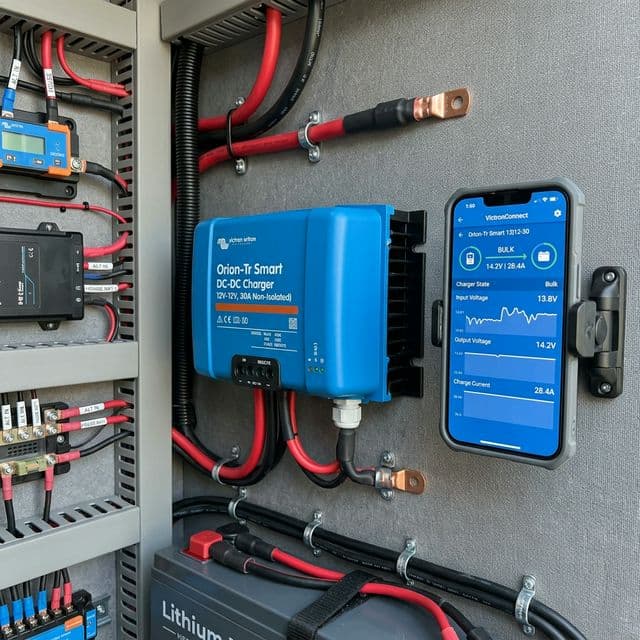
Victron Orion-Tr Smart DC-DC Review: Precision and Monitoring
Why the smart version of the Orion-Tr is essential for high-end technical builds.
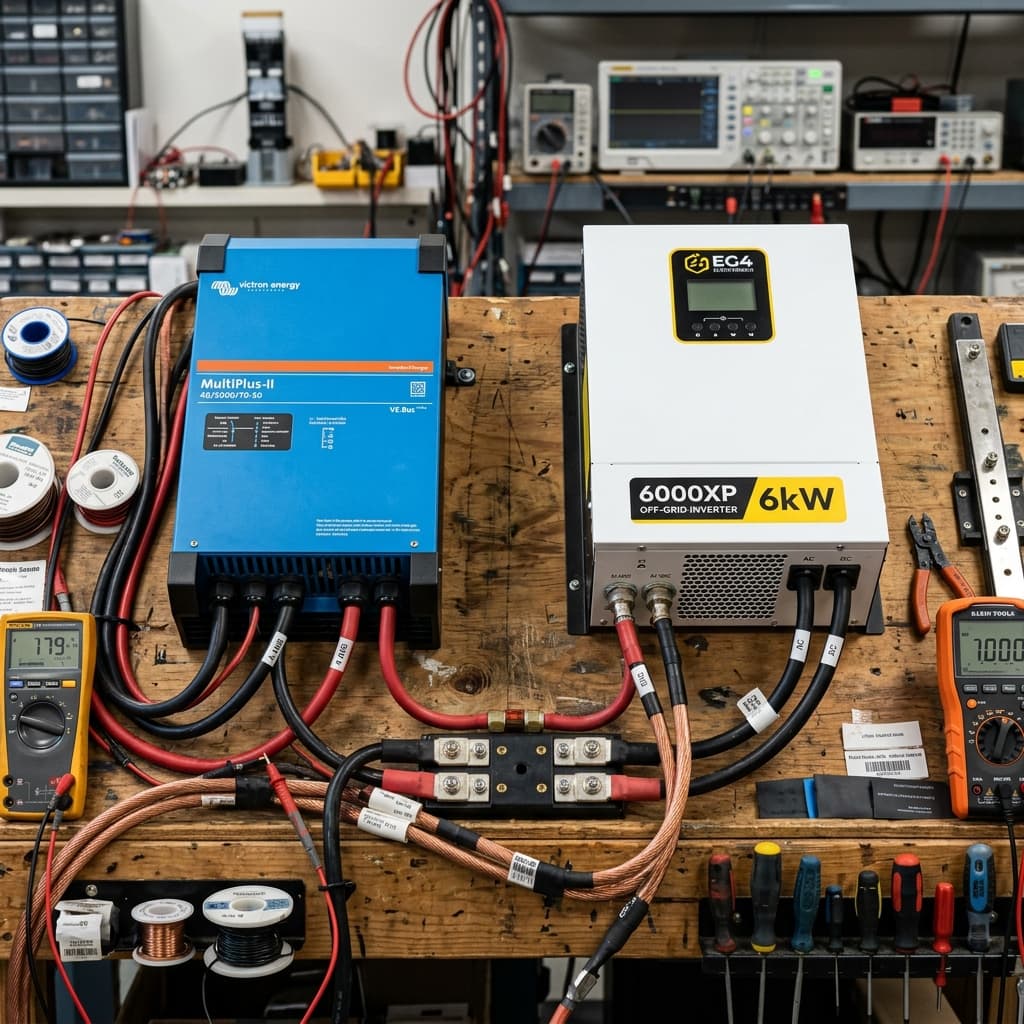
Victron MultiPlus-II vs. EG4 6000XP: Has the 'Blue King' Been Dethroned in 2026?
We benchmark the legendary Victron MultiPlus-II against the disruptive EG4 6000XP. Discover which 6000W-class inverter dominates in surge capacity, idle draw, and off-grid reliability.
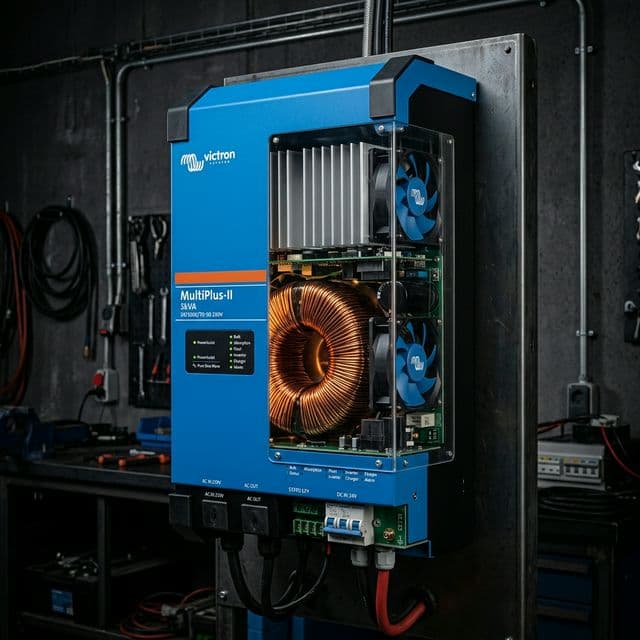
Victron MultiPlus-II 3kVA: The 'King' of RV Inverters Analyzed
Victron MultiPlus-II 3kVA inverter/charger: 2026 industrial audit. Learn about PowerAssist, toroidal transformer physics, and system reliability.