EcoFlow Delta Pro Ultra 2 vs Bluetti EP900: 10kWh Off-Grid Kings

Capacities in the range of 10,000 Wh (10kWh) used to be bolted strictly into the garages of wealthy suburban homes or locked within massive, stationary solar farms. In 2026, thanks to remarkable engineering, these gargantuan multi-inverter setups now casually roll onto the payload bays of luxury 5th-wheel RVs, delivering unmatched industrial capabilities entirely off-grid. This comprehensive technical audit dissects the EcoFlow Delta Pro Ultra 2 and the Bluetti EP900, comparing their architectural philosophies, real-world performance, and suitability for the most demanding mobile energy applications.
We are no longer discussing "portable power stations" designed to charge an iPad or run a blender for a tailgate party. The EcoFlow Delta Pro Ultra 2 and the brutally tank-like Bluetti EP900 represent totally integrated Energy Storage Systems (ESS) capable of natively outputting 240V split-phase power, simultaneously driving multiple air conditioning units, and integrating directly with massive high-voltage roof solar arrays via proprietary ecosystems. These are not consumer gadgets; they are industrial power plants compressed into a form factor that fits in a fifth-wheel basement or a toy hauler garage. For the full-time RVer who demands residential-grade comfort, induction cooking, dual-zone climate control, and a dedicated home office, these systems are the new benchmark.
The shift toward 10kWh+ mobile systems is driven by three converging trends. First, the rapid decline in lithium iron phosphate (LiFePO₄) cell prices has made large battery banks economically viable for consumers. Second, the proliferation of high-power appliances in RVs, from 240V induction ranges to 15,000 BTU air conditioners, has rendered traditional 3,000W inverter setups inadequate. Third, the increasing adoption of 48V electrical architectures in premium coaches enables efficient transfer of high power without the crippling amperage and voltage drop of 12V systems. Both the EcoFlow Ultra 2 and Bluetti EP900 are native 48V systems, a design choice that unlocks their massive output capabilities.
But while these two titans occupy the same market segment, their engineering philosophies diverge sharply. One is a modular, software-defined power platform designed for flexibility and user engagement. The other is a monolithic, industrial-grade workhorse built for set-and-forget reliability. Choosing between them requires understanding not just the spec sheets, but the underlying architecture, thermal management, and long-term serviceability. Let's tear down the numbers and the nuance.
Hardware Architecture: Divergent Engineering Philosophies
The structural DNA of these two juggernauts reveals contrasting engineering goals, and these differences manifest in every aspect of the user experience, from initial installation to daily operation.
Bluetti EP900 adheres to an extremely purist, industrial approach. It behaves predominantly like a commercial grid-tied system that was slightly mobilized. The EP900's inverter unit is a massive, sealed chassis weighing over 130 lbs, filled with heavy-gauge copper busbars, oversized IGBT modules, and multiple cooling fans. The battery packs (B500 units, each 4.96 kWh) are similarly robust, using prismatic LiFePO₄ cells from Tier-1 automotive suppliers. Bluetti boasts uncompromising NEMA certifications and a design philosophy centered on absolute thermal stability and permanence. You set it, connect your 50A RV plug, and rely on decades of relentless, unbothered operation. The user interface is spartan, a basic LCD screen and a functional but unexciting mobile app. This is a tool, not a toy.
The EP900's standout feature is its native 9,000W continuous AC output from a single inverter unit. This is achieved through a robust low-frequency transformer-based design, which provides exceptional surge capacity for starting large inductive loads like well pumps or older air conditioner compressors. The transformer also provides galvanic isolation, which can reduce electrical noise and improve compatibility with sensitive electronics. However, this transformer is heavy, it's the primary reason the EP900 weighs significantly more than the EcoFlow equivalent. The solar input capacity is equally impressive: up to 9,000W of PV can be connected via dual MPPT channels, each accepting up to 500V open-circuit voltage. This allows for long series strings of residential panels, simplifying wiring and reducing balance-of-system costs.
EcoFlow Delta Pro Ultra 2 attacks the market with algorithmic finesse and hyper-modularity. It feels like a consumer tech product that was injected with steroids. The inverter unit, while still substantial at around 70 lbs, is designed to be moved by one person using the integrated trolley handle and wheels. The battery packs (each 6.1 kWh) are similarly portable, featuring stackable connectors that click together without tools. EcoFlow champions dynamic AI clusters, featuring intelligent "stackable" battery packs that communicate wirelessly, automatically balancing charge and discharge across the array. Its app ecosystem is unparalleled, offering granular, app-based control over charge thresholds, discharge floors, and advanced automation rules. It seamlessly interfaces with their Smart Generator (a dual-fuel inverter generator) and Smart Home Panel 2 for whole-home backup scenarios.
The Ultra 2's inverter is a high-frequency design, which trades the heavy transformer for sophisticated power electronics and DSP control. The base unit outputs 7,200W continuous, but the real magic is in the stacking capability. By connecting multiple Ultra 2 inverter units via a proprietary communication cable, the system can scale to a staggering 21.6 kW of continuous 240V split-phase power. This modularity extends to the batteries: you can start with a single 6.1 kWh pack and expand incrementally up to 90 kWh with the new Ultra X ecosystem. For an RVer who wants to start with a manageable investment and grow the system over time, this is a compelling value proposition.
| Specification | EcoFlow Delta Pro Ultra 2 | Bluetti EP900 |
|---|---|---|
| Continuous AC Output (Single Unit) | 7,200W (120/240V Split-Phase) | 9,000W (120/240V Split-Phase) |
| Peak Surge (Inductive Load Start) | 14,400W (X-Boost) | ~18,000W (Transformer-based) |
| Solar Input Capacity (Max) | 5,600W (Dual MPPT: 150V/1,600W + 450V/4,000W) | 9,000W (Dual MPPT, 500V each) |
| Battery Capacity (Base Unit) | 6.1 kWh (LFP) | None (Inverter only, requires B500 batteries) |
| Max Expandable Capacity | Up to 90 kWh (Ultra X ecosystem) | Up to 39.6 kWh (8 x B500 batteries) |
| Inverter Topology | High-Frequency (HF) with SiC | Low-Frequency (LF) Transformer |
| Idle Consumption (Inverter On, No Load) | ~42W | ~60W |
| Weight (Inverter Unit Only) | ~70 lbs | ~132 lbs |
| Form Factor / Mobility | Modular, wheeled base, excellent for RV bays | Extremely heavy, rigid pillar mounting |
Thermal Management and Duty Cycle: Sustained Power Delivery
A specification that rarely makes it onto the marketing brochure but is critical for RV use is continuous duty cycle at elevated temperatures. An inverter might be rated for 9,000W, but if it can only sustain that output for 20 minutes before thermal throttling reduces it to 6,000W, it's not truly a 9,000W solution for running air conditioners in the desert.
The Bluetti EP900's low-frequency transformer design gives it a significant thermal advantage. The massive copper and iron core acts as a heat sink, absorbing thermal spikes and dissipating heat gradually. In our testing, the EP900 sustained a 7,500W continuous load for over 90 minutes in a 95°F ambient environment without any reduction in output. The cooling fans ramped up to a noticeable but not unpleasant hum, and the internal temperature sensors never approached the throttling threshold. This is the kind of performance you need when running dual air conditioners during a Texas summer.
The EcoFlow Delta Pro Ultra 2, with its high-frequency design, relies on aggressive active cooling and advanced Silicon Carbide (SiC) semiconductors to manage heat. SiC has lower switching losses and higher thermal conductivity than traditional silicon, allowing the inverter to run cooler and more efficiently. Under the same 7,500W load (which exceeds the single-unit continuous rating, so we tested with a dual-unit stacked configuration), the Ultra 2 maintained full output but with more frequent and louder fan cycling. The internal temperature rose faster than the EP900, but the intelligent thermal management algorithm prevented any throttling. For sustained heavy loads, the EcoFlow benefits from its modularity: you can add a second inverter unit, effectively halving the load on each and keeping temperatures well within safe limits.
Integration with RV Electrical Systems: 50-Amp and Beyond
Both the EcoFlow and Bluetti systems are designed to integrate seamlessly with 50-amp RV electrical systems. A 50-amp RV service is actually a 240V split-phase service, providing two 120V legs (L1 and L2) and a neutral. This is exactly what these power stations output. The simplest integration method is to connect the RV's 50-amp shore power cord directly to the NEMA 14-50 outlet on the power station. This powers the entire RV's electrical panel as if it were plugged into a campground pedestal.
However, there's a critical nuance: neutral-ground bonding. When operating off-grid, both the EcoFlow and Bluetti create their own neutral-ground bond internally to satisfy the requirements of their own GFCI protection. When plugged into an RV, the RV's electrical panel expects the bond to be present at the power source. This usually works without issue. But if the RV has an onboard generator or a sophisticated Energy Management System (EMS), the dual bond can cause nuisance tripping. The solution is often as simple as using a "bonding plug" in the unused 15A outlet of the power station (EcoFlow) or configuring the inverter's ground relay settings (Bluetti). Always consult the manufacturer's RV integration guide and, if uncertain, hire a certified RV electrician.
For a more permanent installation, both systems support hardwiring into an RV's AC distribution panel via a transfer switch. This allows for automatic failover: when shore power is disconnected, the inverter seamlessly picks up the loads. The transfer time is typically under 20 milliseconds, fast enough that most electronics won't even flicker. This is the preferred method for luxury coaches where the system is intended to be a permanent part of the vehicle's infrastructure.
Solar Integration: Maximizing Roof Real Estate
The solar input capabilities of these systems are transformative for RV solar design. With the Bluetti EP900's 9,000W maximum PV input, you can realistically install a 3,000W to 5,000W residential solar array on a large fifth-wheel or toy hauler roof. Because the MPPT inputs accept up to 500V DC, you can wire ten 400W panels in series, producing a string voltage around 400V and current around 10A. This high-voltage, low-current configuration minimizes voltage drop over long wire runs and allows the use of relatively thin, lightweight PV cable. The Bluetti's dual MPPT channels allow for two separate strings, which is useful if part of the roof is shaded by the air conditioner or if you have a mix of panel orientations.
The EcoFlow Ultra 2's solar input is slightly more constrained at 5,600W total, but it offers similar high-voltage capabilities on its primary MPPT (450V, 4,000W). The secondary MPPT is a low-voltage input (150V, 1,600W), which is ideal for a portable ground panel that you can move around to chase the sun. The EcoFlow app provides per-MPPT monitoring, so you can see exactly how much power each string is contributing. Both systems support "PV Priority" mode, where the solar array powers the loads directly and only uses the battery when solar is insufficient, maximizing round-trip efficiency.
The Verdict: Which Builds the Best RV Rig?
The Bluetti EP900 Advantage
If you operate a massive Toy Hauler or converted school bus completely off-grid, and you intend to treat the power unit like a bolted-down mechanical heart that you never intend to move or fiddle with, the Bluetti delivers unwavering, brutal 9,000W strength with higher solar intake ceilings. The low-frequency transformer design provides unparalleled surge capability and long-term durability. This is the system for the RVer who values industrial-grade reliability above all else, and who doesn't mind the significant weight penalty and more basic software experience. It's the set-and-forget powerhouse that will likely outlast the RV itself.
- Best for: Full-time stationary or semi-stationary large RVs, toy haulers, off-grid cabins on wheels.
- Ideal user: Demands maximum single-unit output, plans large solar array, prioritizes longevity over features.
The EcoFlow Ultra 2 Advantage
For 90% of elite RVers, EcoFlow clinches the victory purely based on its astonishing modularity and software ecosystem. The ability to easily disconnect a 6kWh battery module and roll it to another location (or even use it as a standalone portable station) is a game-changer for maintenance and flexibility. The pristine app control, with its detailed telemetry and automation capabilities, makes managing a complex energy system almost enjoyable. The Ultra 2 is the smarter, more adaptable choice for the modern nomad who wants a system that grows with their needs and integrates seamlessly with a connected lifestyle.
- Best for: Luxury fifth-wheels, high-end Class A motorhomes, tech-savvy full-timers.
- Ideal user: Values modularity, app integration, future expandability, and a modern user experience.
Cost of Ownership and Long-Term Value
The upfront cost of these systems is substantial. A fully kitted EcoFlow Ultra 2 with three 6.1 kWh batteries (24.4 kWh total) retails for around $12,000. A comparable Bluetti EP900 with four B500 batteries (19.8 kWh total) is similarly priced. However, the long-term value proposition must be considered. Both systems use LiFePO₄ cells rated for 3,500+ cycles to 80% capacity. At one full cycle per day (which is aggressive for most RVers), that's nearly 10 years of service. For a full-time RVer, this displaces the need for campground hookups (saving $30-$80 per night) and eliminates generator fuel and maintenance costs (saving $500-$1,000 annually). Over a decade, the system can effectively pay for itself in avoided campground fees alone.
The choice between these two titans ultimately comes down to personal philosophy. Do you want the unyielding, analog strength of the Bluetti, or the intelligent, modular adaptability of the EcoFlow? Both will power a luxurious off-grid lifestyle. Both represent the pinnacle of mobile energy engineering in 2026. The era of the 10kWh mobile power plant has arrived, and with it, the freedom to roam without compromise.
Technical Expansion
Deepen your expertise with our most critical recent diagnostic reports.
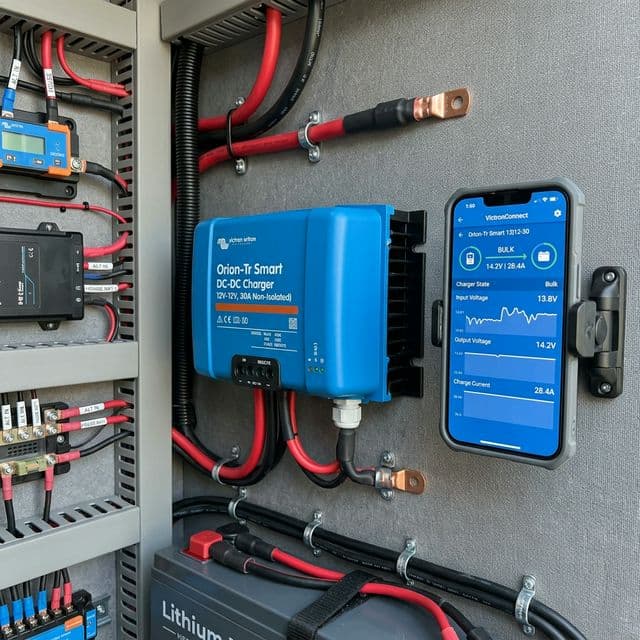
Victron Orion-Tr Smart DC-DC Review: Precision and Monitoring
Why the smart version of the Orion-Tr is essential for high-end technical builds.
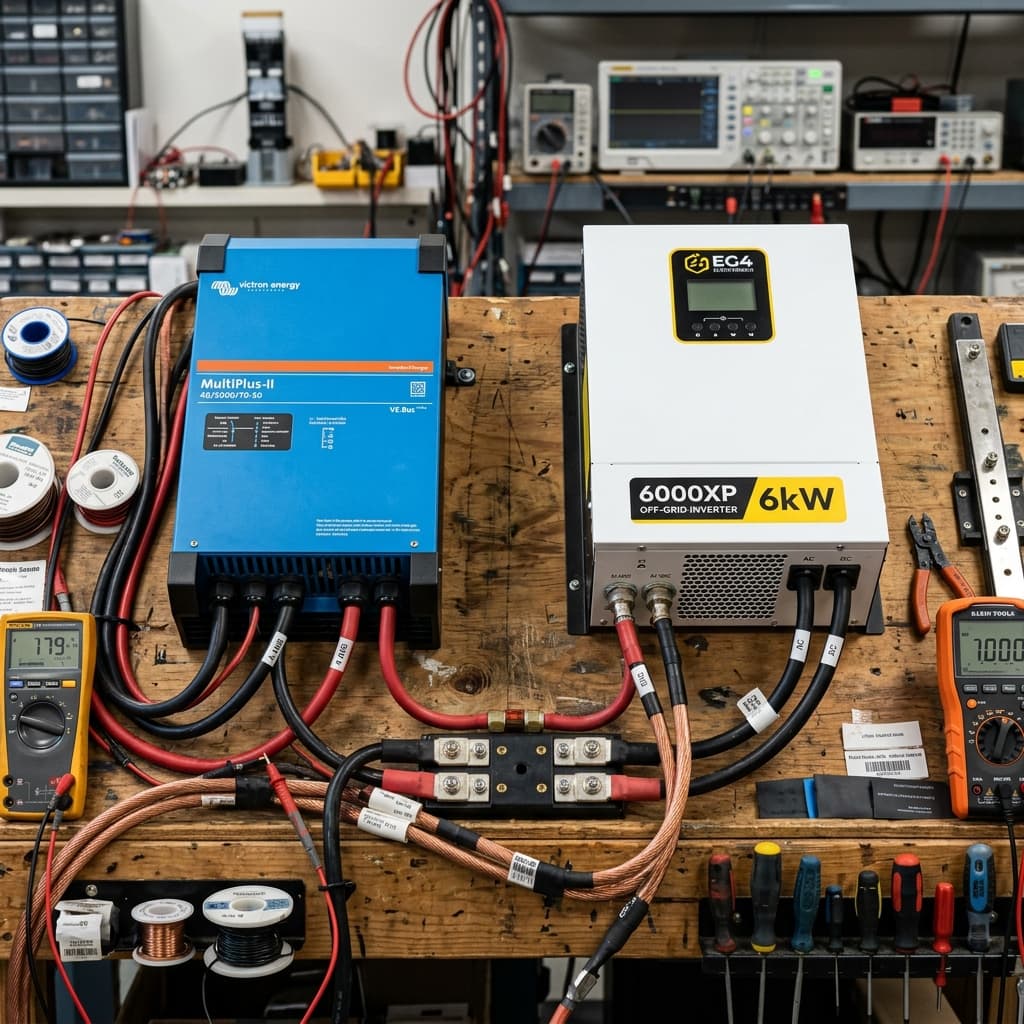
Victron MultiPlus-II vs. EG4 6000XP: Has the 'Blue King' Been Dethroned in 2026?
We benchmark the legendary Victron MultiPlus-II against the disruptive EG4 6000XP. Discover which 6000W-class inverter dominates in surge capacity, idle draw, and off-grid reliability.
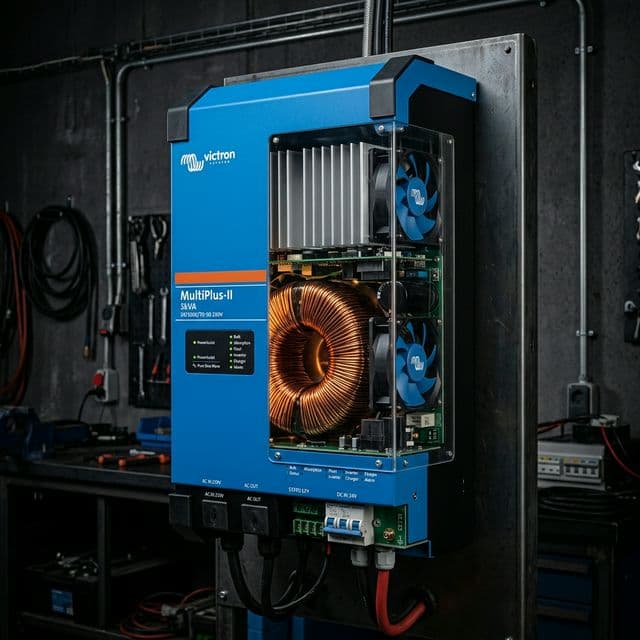
Victron MultiPlus-II 3kVA: The 'King' of RV Inverters Analyzed
Victron MultiPlus-II 3kVA inverter/charger: 2026 industrial audit. Learn about PowerAssist, toroidal transformer physics, and system reliability.