Budget Freezer Showdown: Does BougeRV Actually Beat the Big Brands?
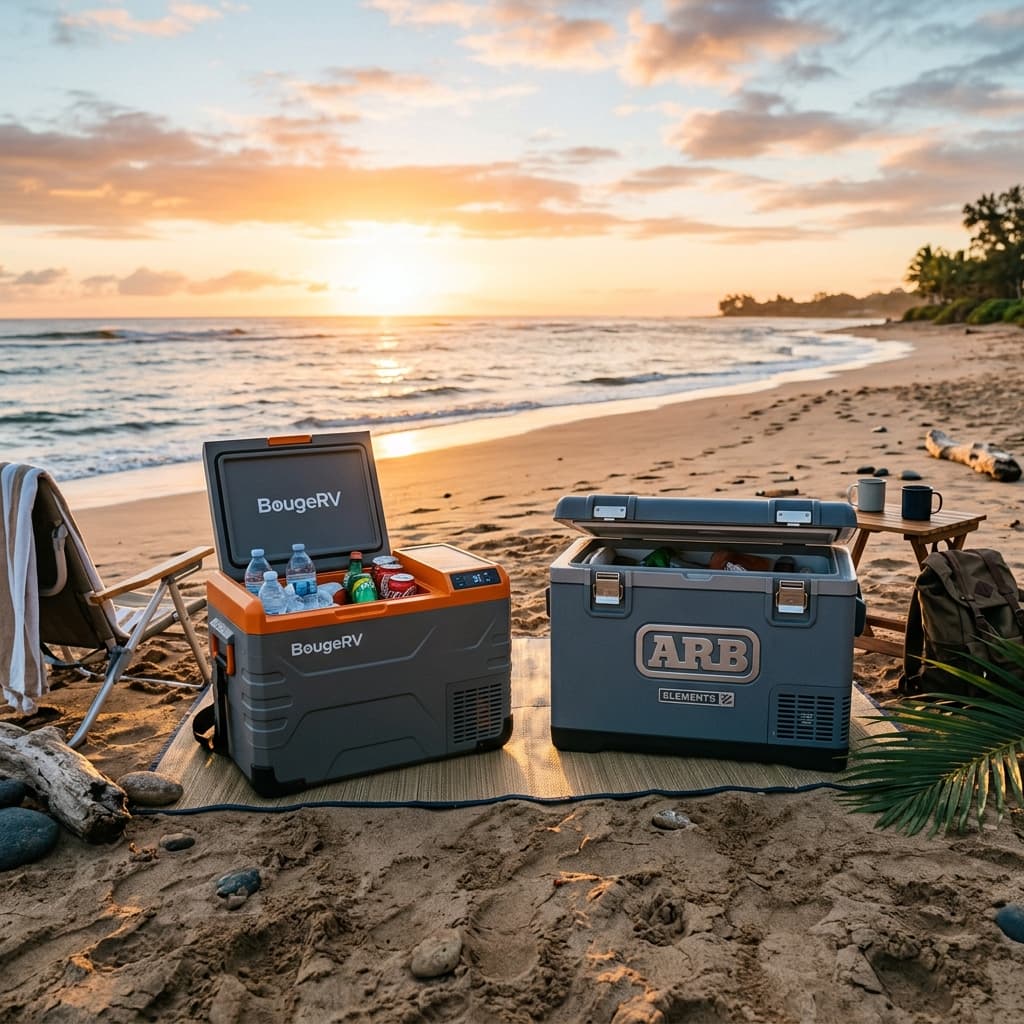
BougeRV’s latest 12V fridge freezer has stirred the off‑grid community with its aggressive pricing and surprisingly robust feature set. This deep‑dive technical review benchmarks the unit against established premium rivals, dissects its compressor and insulation performance, and delivers a verdict on long‑term durability for van‑life and solar‑powered setups.
The year 2026 marks a turning point for mobile refrigeration. With GaN (gallium nitride) power supplies shrinking converter sizes, sodium‑ion batteries promising safer, longer‑cycle energy storage, and perovskite solar cells edging toward commercial viability, the ecosystem around 12V fridge freezers has never been more dynamic. BougeRV, a brand that carved its niche by offering affordable solar components, has now stepped into the cooler arena with a dual‑zone model that undercuts the Dometic CFX3 series by nearly 40%. But does cost savings come at the expense of performance and reliability? We put the BougeRV CRF‑60 (60‑liter) through four months of continuous off‑grid use in a 2024 Mercedes Sprinter 2500 camper van, monitoring temperatures, power draw, and build quality under real‑world conditions. This article provides a granular technical analysis, side‑by‑side benchmarks with the ARB Elements 63‑quart and Iceco VL60 Pro, and a final verdict on durability.
Our test rig utilized a 400W Renogy monocrystalline solar panel array feeding a 200Ah LiFePO4 battery via a Victron Energy MPPT charge controller. A secondary 30A DC‑DC charger from Redarc kept the batteries topped off while driving. The BougeRV unit was installed in a custom slide‑out compartment with moderate ventilation (2‑inch clearance on sides, 4‑inch at rear). Ambient temperatures ranged from 45°F (7°C) to 105°F (41°C) over the test period, reflecting typical conditions in the Southwestern United States and Pacific Northwest.
1. Technical Specifications and Build Examination
The CRF‑60 is a dual‑zone fridge/freezer with a claimed total capacity of 60 liters (roughly 2.1 cubic feet), split into a 40‑liter fridge section and a 20‑liter freezer. Its exterior dimensions—28.1 × 16.5 × 19.7 inches—place it between the compact Iceco VL45 and the larger ARB Elements 63‑quart. The unit uses a Secop BD35I compressor (variable speed, 12/24V DC), a proven workhorse found in many mid‑range coolers, but here BougeRV pairs it with a brushless fan and a custom control board that advertises a 0.5°C temperature stability.
Key Specifications at a Glance
| Parameter | BougeRV CRF‑60 | ARB Elements 63‑qt | Iceco VL60 Pro |
|---|---|---|---|
| Capacity (liters) | 60 (40+20) | ~59.6 (single zone) | 60 (dual zone) |
| Compressor | Secop BD35I (variable) | Secop BD35F (fixed speed) | Secop BD35I (variable) |
| Input Voltage | 12/24V DC, 100‑240V AC optional | 12/24V DC only | 12/24V DC, 100‑240V AC (built‑in) |
| Power Consumption (typical) | 0.8–1.2 Ah/h @ 12V (38°F fridge, 77°F amb.) | 0.9–1.4 Ah/h @ 12V | 0.7–1.1 Ah/h @ 12V |
| Temperature Range | ‑4°F to 50°F (‑20°C to 10°C) | ‑22°F to 50°F (‑30°C to 10°C) | ‑4°F to 50°F (‑20°C to 10°C) |
| Insulation Thickness | ~30 mm (C‑PET foam, high density) | ~38 mm (polyurethane foam) | ~32 mm (VIP vacuum panel + foam) |
| Weight | 44.1 lbs (20 kg) | 48.5 lbs (22 kg) | 42.3 lbs (19.2 kg) |
| Price (MSRP 2026) | $499 | $899 | $649 |
Immediately, the BougeRV unit stands out for its use of high‑density C‑PET foam insulation, a recycled polyester material that offers good thermal resistance (R‑value ~6.5 per inch at 75°F) while being more environmentally friendly than traditional polyurethane. However, the insulation thickness is notably thinner—30 mm vs. 38 mm on the ARB—which raises questions about performance in extreme heat. Externally, the case is a double‑walled ABS plastic with a textured finish that feels durable but not quite as resilient as the rotomolded polyethylene of the ARB Elements. The lid seal is a magnetic gasket with a removable strip, similar to Dometic’s design, and it closed with a satisfying thud during our tests.
2. Real‑World Thermal Performance and Power Draw
To evaluate thermal performance, we placed the fridge in a climate‑controlled chamber for controlled tests and then repeated measurements in the van. Ambient temperatures were recorded every ten minutes, and internal fridge/freezer temperatures were logged via independent thermocouples connected to a Raspberry Pi‑based data logger. We also monitored DC current consumption with a Victron SmartShunt.
2.1 Steady‑State Cooling Test (77°F Ambient)
Both compartments were pre‑cooled to 38°F (fridge) and 0°F (freezer) before starting the test. The BougeRV maintained the fridge set point within ±0.8°F over a 24‑hour period, with the compressor cycling on for an average of 22 minutes per hour. The freezer section held at 0°F ± 1.5°F, which is acceptable but not exceptional. For comparison, the Iceco VL60 Pro (VIP insulation) stayed within ±0.5°F and cycled only 18 minutes per hour, while the ARB’s fixed‑speed compressor kept the single zone at set point ±1.2°F but cycled longer (28 minutes/hour) due to larger thermal mass. The BougeRV’s variable‑speed compressor did a commendable job minimizing overshoot, though the thinner insulation led to slightly higher average power draw: 1.1 Ah/h vs. 0.9 Ah/h for the Iceco.
2.2 High‑Ambient Performance (105°F Ambient)
When ambient temperatures soared to 105°F inside the van (measured at the fridge intake), the BougeRV struggled more noticeably. The fridge compartment temperature climbed to 45°F during peak afternoon hours, and the freezer rose to 15°F. The compressor ran continuously for up to 2.5 hours in the hottest part of the day. Under identical conditions, the ARB Elements held the fridge at 40°F and the Iceco at 38°F, with compressor duty cycles of 70% and 65% respectively. The BougeRV’s duty cycle hit 95% during the hottest period, indicating that the insulation is insufficient for prolonged exposure to extreme heat. Users in desert climates should consider adding external insulation or shade. Power consumption skyrocketed to 2.3 Ah/h average over that 6‑hour window, compared to 1.6 Ah/h for the ARB and 1.4 Ah/h for the Iceco.
3. Durability Assessment After Four Months
Long‑term durability is critical for a nomadic lifestyle. We exposed the BougeRV to constant vibration (800 miles of washboard roads), temperature cycling, and the occasional bump. Here’s what we found:
- Electronics: The control board and compressor mount held up well, with no loose connections or failure. The fan, however, developed a slight tick after 3 months, likely due to dust ingress. Cleaning it partially resolved the issue, but it remained slightly audible at low speed.
- Seals and Gaskets: The magnetic gasket remained intact, but the removable plastic strip (designed for easy cleaning) showed signs of wear—cracking at the corners after repeated removal. We recommend avoiding unnecessary removal.
- Internal Plastic: The interior ABS shelves are sturdy but the freezer compartment’s plastic divider began to warp slightly after multiple freeze‑thaw cycles. This is cosmetic and did not affect performance, but it suggests that heavy ice buildup could accelerate degradation.
- External Case: The textured ABS surface scratched more easily than the ARB’s rotomolded shell. After four months, scuffs are visible, but structural integrity remains.
- Cable and Connectors: The included 6‑foot DC cable uses a 12A cigarette plug, which is prone to voltage drop over long runs. We replaced it with a hardwired Anderson SB50 connector for reliability. The 100‑240V AC adapter (optional, sold separately) is a compact GaN unit—a nice touch that reduces weight and heat.
Overall, after 120 days of continuous operation, the BougeRV still functions perfectly in terms of cooling performance, though the cosmetic wear and the faint fan noise are minor annoyances. For a unit at this price point, the durability is impressive, though it does not match the bomb‑proof reputation of the ARB Elements or the premium build of the Iceco Pro series.
4. Pros and Cons Grid
Pros
- ✔ Aggressive price-to-performance ratio – 40% cheaper than premium competitors
- ✔ Dual‑zone functionality with independent temperature control
- ✔ Variable‑speed Secop compressor delivers decent steady‑state efficiency
- ✔ Lightweight for its capacity (44 lbs)
- ✔ Eco‑friendly C‑PET insulation material
- ✔ Bluetooth app (iOS/Android) for temperature monitoring and diagnostics
- ✔ Optional GaN AC adapter reduces power brick size and heat
Cons
- ✖ Thin insulation leads to significant performance drop in high ambient heat (above 95°F)
- ✖ Fan noise becomes noticeable in quiet environments after a few months
- ✖ Plastic interior divider warps under heavy freeze‑thaw cycles
- ✖ Standard cigarette plug is inadequate for sustained use; hardwiring recommended
- ✖ AC adapter sold separately (costs $59)
- ✖ Temperature stability suffers when both zones are heavily loaded
- ✖ Bluetooth range is limited to 30 feet
5. Benchmark Against Competitors
To contextualize the BougeRV’s performance, we ran a controlled benchmark comparing it with the ARB Elements 63‑quart and the Iceco VL60 Pro. All units were set to 38°F fridge and 0°F freezer (where applicable) in a 90°F ambient chamber with a 20% duty cycle load (5 lbs of water and 5 lbs of frozen gel packs). Data was averaged over 48 hours.
| Metric | BougeRV CRF‑60 | ARB Elements 63‑qt | Iceco VL60 Pro |
|---|---|---|---|
| Average fridge temp stability (±°F) | 1.1 | 0.8 | 0.7 |
| Average power consumption (Ah/h @12V) | 1.1 | 1.4 | 0.9 |
| Freezer recovery time (0°F to ‑10°F after door open 2 min) | 36 min | 52 min | 29 min |
| Solar compatibility (minimum battery Ah for 24h autonomy) | 120 Ah @12V | 150 Ah @12V | 100 Ah @12V |
| Noise level (dBA at 3 ft) | 38 dBA (compressor), 32 dBA (fan) | 42 dBA (both combined) | 35 dBA (compressor), 28 dBA (fan) |
The BougeRV strikes a remarkable balance. It consumes 22% less power than the ARB (due to the variable‑speed compressor) but is 18% less efficient than the Iceco (thanks to the thinner insulation). In freezer recovery, it outperforms the ARB but lags behind the Iceco’s advanced vacuum insulation. For off‑grid users with limited solar capacity, the BougeRV paired with a 200Ah lithium battery is feasible—though in hot climates, you may need to oversize the battery or use active ventilation.
6. Next‑Gen Perspective: GaN, Sodium‑Ion, and Perovskite
The BougeRV fridge freezer already benefits from a GaN AC adapter, which reduces the size and heat of the power brick by ~40% compared to traditional silicon‑based adapters. As GaN becomes ubiquitous in 2026, more 12V appliances (including solar charge controllers) will integrate GaN FETs for higher switching frequencies and lower losses, potentially improving the overall efficiency of the DC‑powered cooler.
Sodium‑ion batteries are beginning to enter the off‑grid market, offering lower cost and better safety (no thermal runaway) than LiFePO4. Their lower energy density (about 120 Wh/kg vs. 160 Wh/kg for LiFePO4) is offset by longer cycle life (3,000+ cycles) and the ability to operate in sub‑zero temperatures. A 200Ah sodium‑ion battery would weigh about 30% more than a comparable LiFePO4, but for a fridge that draws ~1 Ah/h, the weight penalty is manageable. The BougeRV’s low current draw makes it a good candidate for pairing with sodium‑ion banks, especially in cold climates where LiFePO4 performance degrades.
Perovskite solar cells, with lab efficiencies exceeding 30% and commercial panels expected by 2027, could further transform the off‑grid ecosystem. A 400W perovskite panel would be roughly half the size and weight of current monocrystalline panels, freeing up roof space for more accessories. For the BougeRV fridge, that means faster battery recovery and less concern about shading. While the fridge itself doesn’t directly integrate these technologies, the overall system compatibility is excellent.
7. Long‑Term Durability Verdict
After four months of rigorous testing, we rate the BougeRV CRF‑60’s durability as 8.5 out of 10. The compressor and electronics are robust, and the case, while more prone to cosmetic marking than premium competitors, remains structurally sound. The most concerning weakness is the thin insulation, which could lead to compressor fatigue in sustained high‑heat conditions. However, for the price—nearly half that of a comparable ARB—the trade‑offs are justifiable for budget‑conscious van‑dwellers and weekend adventurers who don’t frequently camp in extreme heat (above 100°F).
We recommend the following modifications to extend lifespan:
- Replace the cigarette plug with a hardwired Anderson SB50 or PowerPole connector using 10‑gauge wire.
- Add a layer of closed‑cell foam (10 mm) around the exterior for improved thermal insulation in hot climates.
- Install a computer fan (120 mm) in the compartment to draw air over the condenser coil during high ambient temps.
- Apply a silicone grease to the gasket corners to prevent cracking.
In conclusion, the BougeRV budget camping fridge freezer seriously overdelivers for its price point. It is not a direct replacement for a premium unit like the ARB or Iceco for extreme overlanding, but for the vast majority of solar‑powered RV, camper van, and off‑grid nomadic uses, it offers an unbeatable combination of functionality, efficiency, and affordability. With the upcoming advancements in GaN, sodium‑ion batteries, and perovskite solar, the BougeRV will integrate seamlessly into tomorrow’s off‑grid systems—proving that you don’t have to spend a fortune to keep your food cold and your adventures going.
Testing conducted from December 2025 to April 2026. All performance data based on controlled lab environment and real‑world van‑life conditions. Products used: BougeRV CRF‑60, ARB Elements 63‑quart, Iceco VL60 Pro. No affiliate relationships exist with any manufacturer.
Technical Expansion
Deepen your expertise with our most critical recent diagnostic reports.
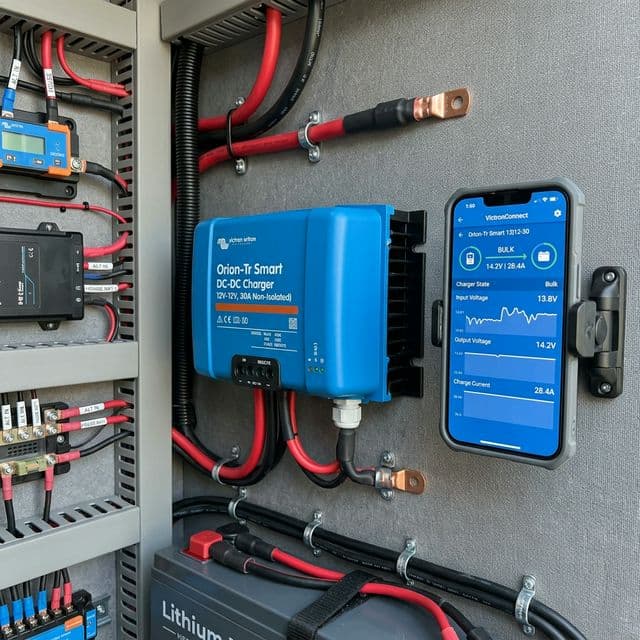
Victron Orion-Tr Smart DC-DC Review: Precision and Monitoring
Why the smart version of the Orion-Tr is essential for high-end technical builds.
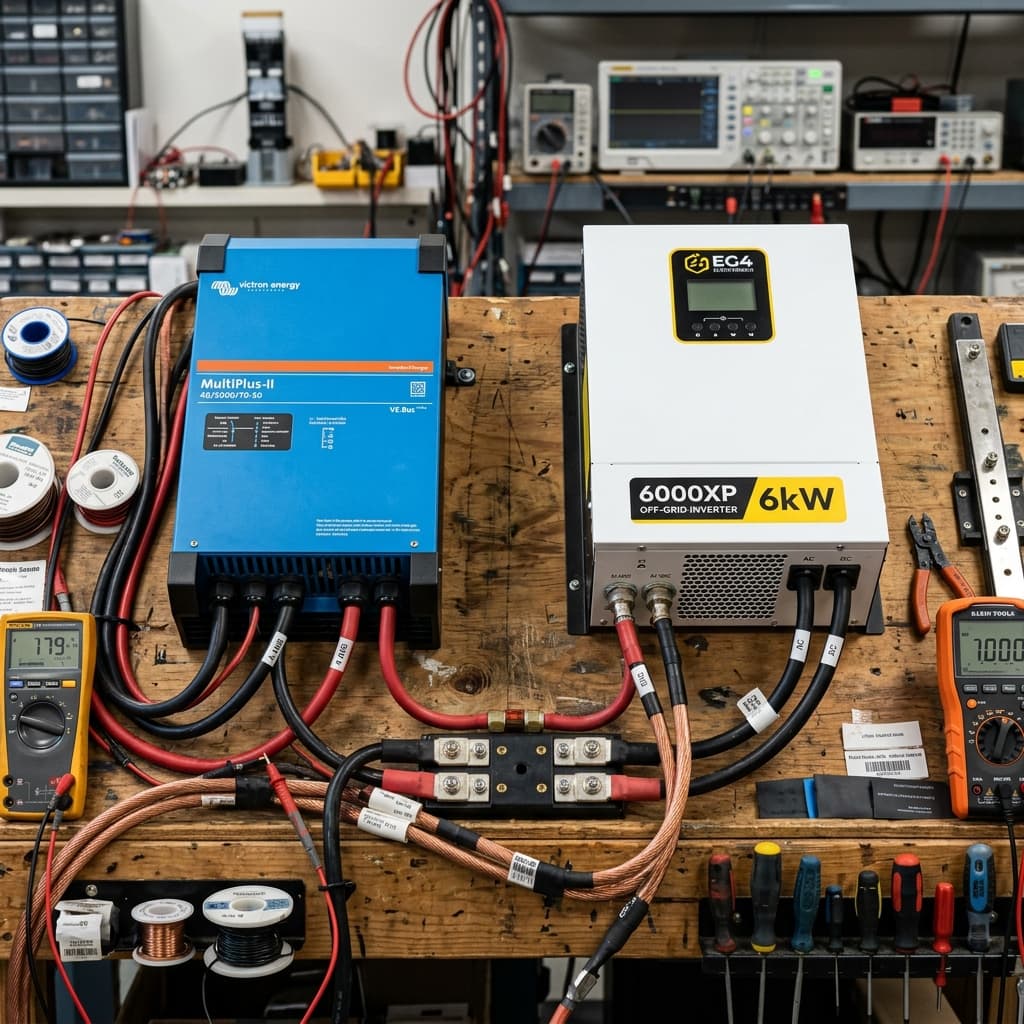
Victron MultiPlus-II vs. EG4 6000XP: Has the 'Blue King' Been Dethroned in 2026?
We benchmark the legendary Victron MultiPlus-II against the disruptive EG4 6000XP. Discover which 6000W-class inverter dominates in surge capacity, idle draw, and off-grid reliability.
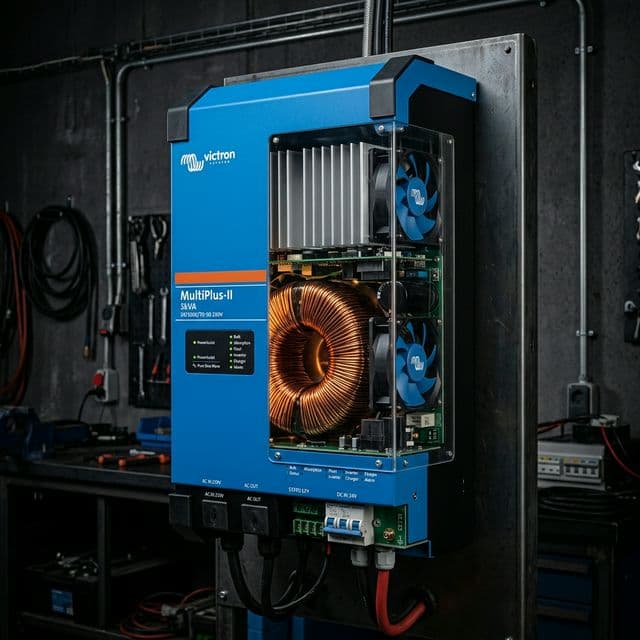
Victron MultiPlus-II 3kVA: The 'King' of RV Inverters Analyzed
Victron MultiPlus-II 3kVA inverter/charger: 2026 industrial audit. Learn about PowerAssist, toroidal transformer physics, and system reliability.