Why Your Solar Panel Output Drops in Winter: 5 Real Causes and Fixes
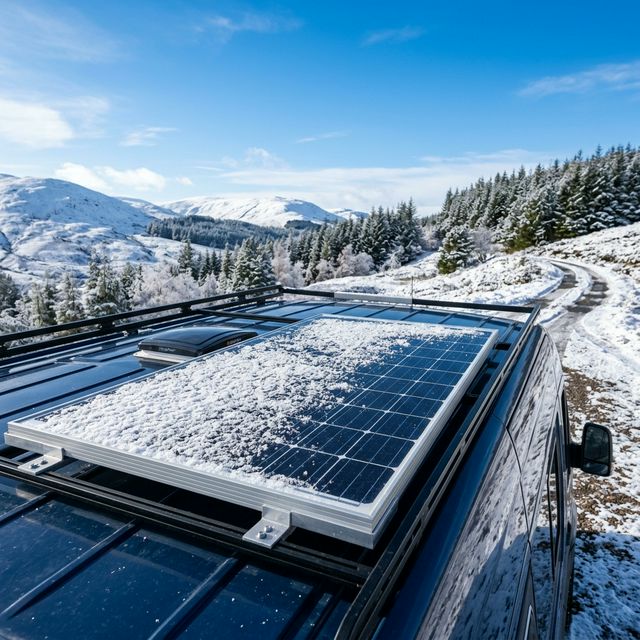
Winter is the ultimate test for any off-grid system. Between shorter days and low sun angles, your production can drop by as much as 70%. Here is how to survive the dark months.
The Science of the Winter Slump
Most beginners think that solar production drops in winter because it's cold. Actually, cold temperature makes solar panels more efficient. The real enemy is the geometry of the planet. Because the Earth is tilted, the sun sits much lower on the horizon during December and January (in the northern hemisphere). This means the sunlight has to travel through more of the Earth's atmosphere to reach your panels, losing energy along the way.
The 5 Reasons Your Production Is Low
The Cosine Effect
When the sun is directly overhead (90 degrees), you get 100% of the potential energy. When it's at a low angle (winter sun), much of that light reflects off the glass. The Fix: Use tilting brackets to point your panels directly at the sun.
Spectral Shift
Winter light is "redder" and less intense. Your panels are tuned for specific parts of the light spectrum. The Fix: There isn't a fix for physics, but ensuring your panels are clean helps maximize what little light you have.
Shortened Daylight Window
In summer, you might have 14 hours of sunlight. In winter, you might have 8. The Fix: Energy management. Turn off the inverter when not needed and use 12V heaters instead of AC units.
💡 The MPPT Secret
In winter, panel voltage usually increases because of the cold, but current (Amps) decreases. A basic PWM controller will waste that extra voltage. Switching to an MPPT charge controller can increase your winter yield by up to 30% because it can convert that "excess" voltage into usable charging current.
Cleaning for Winter: Why it Matters
Even a light layer of morning frost can block 50% of your production. In the vanlife community, "panel clearing" is the morning ritual of a pro. Use a soft squeegee. Don't use hot water on frozen panels as the thermal shock can shatter the tempered glass. Just a simple brush to clear snow and a dry cloth for the ice can mean the difference between running your fridge or having a dead battery by 4 PM.
Summary of Strategies
- Tilt your panels: A 45-degree tilt can double production in January.
- Clean daily: Snow and dirt are energy killers.
- Maximize battery capacity: If you can't produce more, you need to store more from sunny days.
- Downsize consumption: Winter is not the time for induction cooking or long gaming sessions.