Flexible vs Rigid Solar Panels for Camper Roof: The Complete Guide
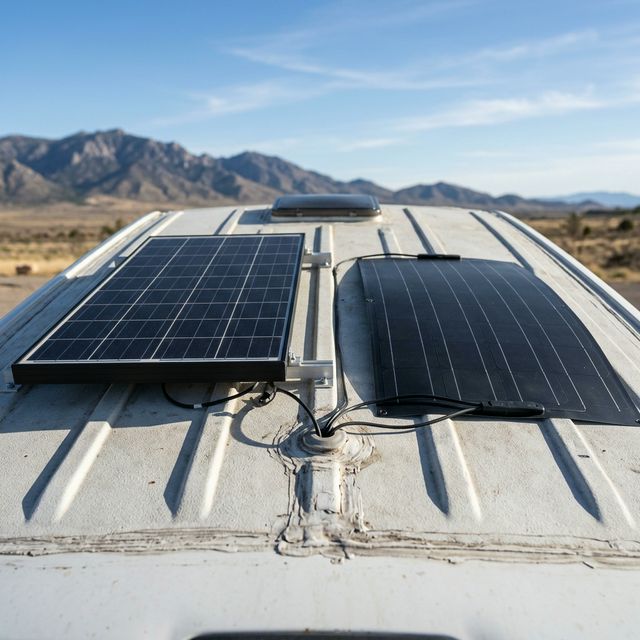
The debate between flexible and rigid solar panels is as old as vanlife itself. Your choice depends on one main factor: your roof type and lifestyle.
The "Stealth" Factor vs. Longevity
One of the most common reasons van lifers choose flexible panels is aesthetics and "stealth." If you are building a city camper and want to park anywhere without looking like a rolling spaceship, flexible panels are nearly invisible from the ground. They are thin, lightweight, and hug the contours of your roof.
However, that aesthetic comes at a major technical cost: Heat. Solar panels work on a temperature coefficient. The hotter they get, the less power they produce. Rigid panels sit on brackets with a 1-2 inch air gap underneath, allowing for natural cooling. Flexible panels are glued directly to the roof, effectively turning your van into an oven and cooking the solar cells, which leads to premature failure.
Quick Verdict:
If you have a flat roof and prioritize longevity (10+ years), go Rigid. If you have a curved roof or value a low profile more than lifespan (3-5 years), go Flexible.
Rigid Panels: The Workhorse
Rigid panels are made of tempered glass and a heavy-duty aluminum frame. They are designed to withstand 50+ lb/sqft of snow load and 1-inch hail. If you plan to live in your van full-time, we almost always recommend rigid panels. They are cheaper per watt and will likely outlast the van itself.
The downside? You have to drill holes in your roof (or use expensive adhesive mounting systems) and they are undeniably more visible.
Technical Comparison Table
| Feature | Rigid Panels | Flexible Panels |
|---|---|---|
| Lifespan | 25+ Years | 3-5 Years |
| Efficiency | High (20%+) | Medium (16-18%) |
| Durability | Hail-proof tempered glass | Plastics prone to yellowing |
| Cooling | Excellent air gap | Poor (heat transfer to roof) |
Installation: The Reality Check
Installing rigid panels requires basic tools but some nerves. You will be using a Lap Sealant (like Dicor) and stainless steel screws. It's a "set and forget" situation. Flexible panels usually come with 3M adhesive tape. While easier to install, the removal process is a nightmare. To replace a dead flexible panel, you often have to scrape the adhesive off for hours, which can ruin your roof's paint job.
Final Recommendation
Don't fall for the "lightweight" marketing unless you are building on a very fragile roof or a trailer with a weight limit. For the average Sprinter, Transit, or Promaster, the extra 20-30 lbs of rigid solar panels is negligible. Go rigid, create a proper air gap, and enjoy free power for decades instead of years.