Best Solar Setup for 200Ah Lithium Battery: Complete Sizing Guide
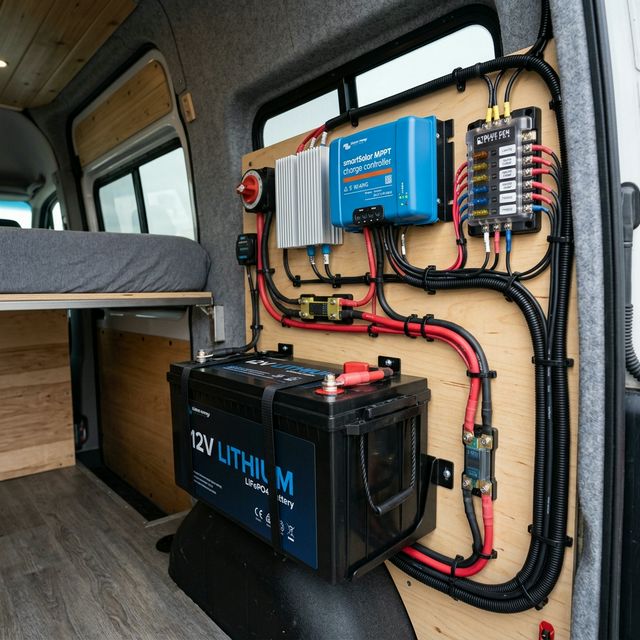
A 200Ah Lithium (LiFePO4) battery is the "Sweet Spot" for most van builds. It holds about 2.5kWh of energy—enough to lead a very comfortable off-grid life.
Understanding 200Ah Capacity
200 Amp Hours at 12.8V gives you 2,560 Watt Hours. To put that in perspective, a standard compressor fridge uses about 30-50Wh/hour. A laptop uses about 60Wh. Totaling your daily consumption is the first step, but for most people, 200Ah provides about 2-3 days of "autonomy" (life without sun).
However, many people make the mistake of undersizing their solar array for such a large battery. If you only have 100W of solar, it would take nearly 30 hours of perfect sun to charge your battery from dead to full. Realisticallly, that's almost a week of parked time.
Sizing Table: How Much Solar Do You Really Need?
| Solar Array | Hours to 100% Charge | Ideal User Profile |
|---|---|---|
| 200W | 12-14 Hours | Weekend warrior with low energy needs. |
| 400W (Recommended) | 6-7 Hours | Full-time vanlife, working remotely. |
| 600W | 4-5 Hours | Heated van, power tools, induction. |
The Importance of Charge Controllers
For a 200Ah lithium bank, a 30A or 40A MPPT charge controller is the minimum. If you have 400W of solar, it can push nearly 30Amps into your battery at the peak of the day. Using a cheap controller will create a bottleneck, causing the wiring to heat up and potentially limiting your charge rate just when the sun is brightest.
Three Rules for a Professional Setup
1. Use 6AWG Wiring
Don't lose power to resistance. Thicker cables are essential for high amp lithium charging.
2. Inline Fuses
A fuse between the panels and controller, and another between controller and battery, is non-negotiable.
3. Monitor Everything
Get a Smart Shunt. Knowing exactly how many amps are coming in vs going out is key.
Final Thoughts
Pairing 200Ah of lithium with 400W of solar is widely considered the "sweet spot" for modern campers. It allows you to run a modern 12V environment without constant stress. If you find yourself frequently dropping below 20% battery, don't buy more batteries first—buy more solar. It is almost always better to have a faster recharge rate than a massive storage bank that you can never fully fill.